Located next to the incredibly popular Hacklebarney State Park is the comparatively unknown Elizabeth D. Kay Environmental Center. This lack of recognition is surprising once you visit, as the Kay Center is just as good as, and arguably better than, Hacklebarney. A relatively easy 3-mile hike takes visitors to a variety of sights, including cottage ruins, multiple waterfalls, and a scenic meadow. If you are a fan of Hacklebarney but want a less crowded experience, this is the perfect park to explore.
Elizabeth D. Kay Environmental Center at Black River County Park
Other Attractions: Cooper Gristmill, Bamboo Brook Outdoor Education Center and Willowwood Arboretum
Nearby Attractions: Hacklebarney State Park
Hike Information
Distance: 3 miles
Ascent: ~450 feet
Difficulty: Easy-Moderate
Background
The Elizabeth D. Kay Environmental Center, more commonly known as the Kay Center, is a section of the much larger Black River County Park complex, which includes the nearby Cooper Gristmill, Bamboo Brook Outdoor Education Center, and Willowwood Arboretum.
The land the Kay Center sits on was once known as Hidden River Farm and was the country estate of Alfred and Elizabeth Kay. Their original home was sold to the Garland School in 1957; today, that property houses an eating disorder treatment center named Hidden River, after the original farm. Following the sale, the Kays built a new, smaller home adjacent to the current parking area, which still stands today. Although the property is designated as an environmental center, this house serves as a field office for The Nature Conservancy and is closed to the public.
The Kays also built a series of carriage roads that still exist today. Additionally, they constructed a small cottage along the Black River (known as the Lamington River downriver in Somerset County), featuring a swimming pool created by damming the water. This hike takes visitors directly to the historic ruins of that cottage and pool.
The Hike
The hike is fairly easy, featuring gentle and wide trails. The full loop is about 3 miles and features an ascent of about 450 feet, mostly towards the end as you hike away from the river. The ascent, however, remains easy and never remotely steep.
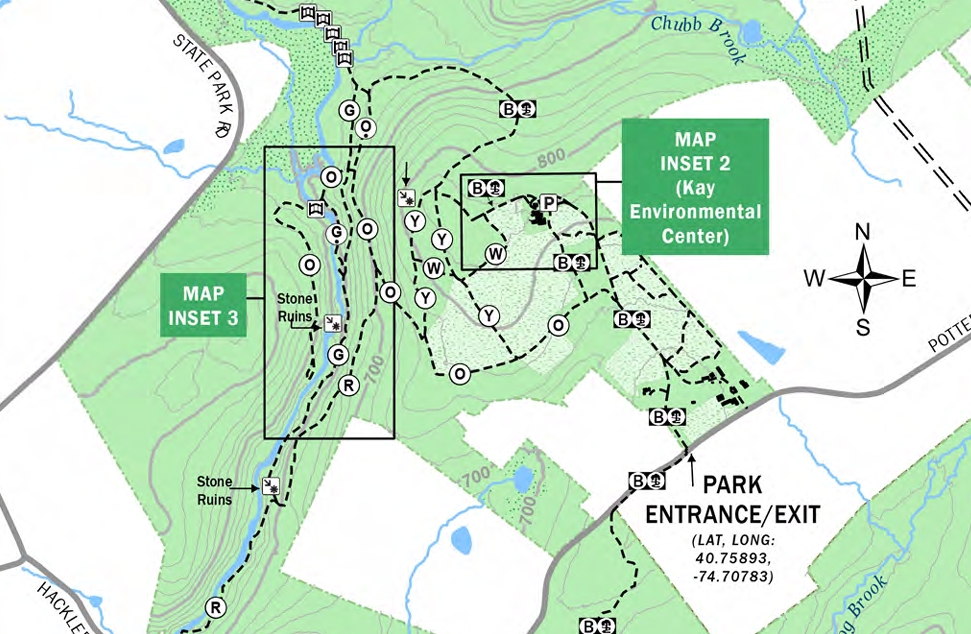
Due to the trail layout and the need to cross the Black River at the only bridge in the park to visit the Kay Cottage Ruins, there is some backtracking on the hike. The official map arguably makes it worse thanks to an unnecessary number of trails. Despite what seems like a complicated layout, the hike is fairly straightforward and intuitive once you actually take it.
Beginning the Hike
From the parking area, find the co-blazed Blue and Patriots Path Trails (marked by a tree and a trail icon). The trail markings here are not very obvious, but the trail itself is. If you see a sign pointing left to a butterfly garden, you are in the right area. The trail continues straight to the right of the sign.
Take the trail, which initially hugs the outside of a large field before heading into the woods. Continue straight for about 0.2 miles until you reach an intersection with the Yellow Trail. This intersection is weird: the Yellow Trail appears twice on the left because it makes a 180-degree turn here. Take the second of these two trails. In person, this is actually fairly intuitive, as the first Yellow Trail (the one you do not want to take) appears to head back the way you came from.
After joining the Yellow Trail, take it for another 0.2 miles until you reach the Orange Trail on the right. Along the way, there is a point on the map labeled as a point of interest. This is what appears to be a large chimney off the trail to the right. It is challenging to see from the trail due to overgrowth and is not very impressive compared to the later ruins on the hike.
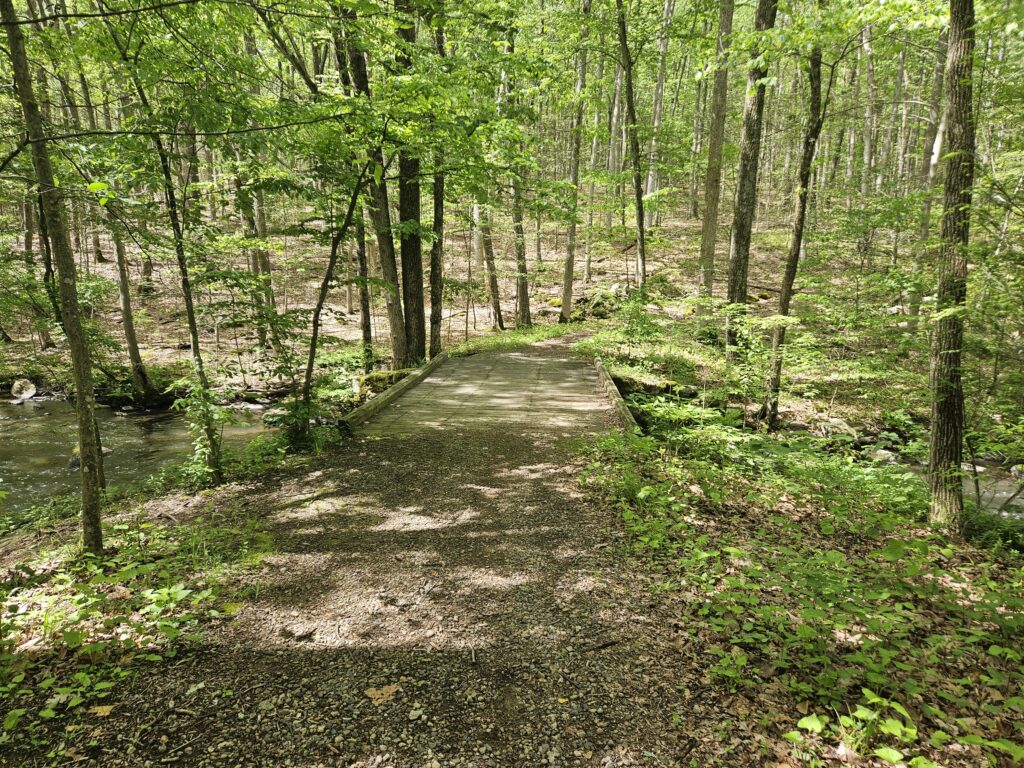
Take the Orange Trail, which gradually brings you down to the Black River. The trail passes a few other trails along the way, but you want to remain on the Orange Trail until you reach a bridge crossing the Black River.
Kay Cottage Ruins
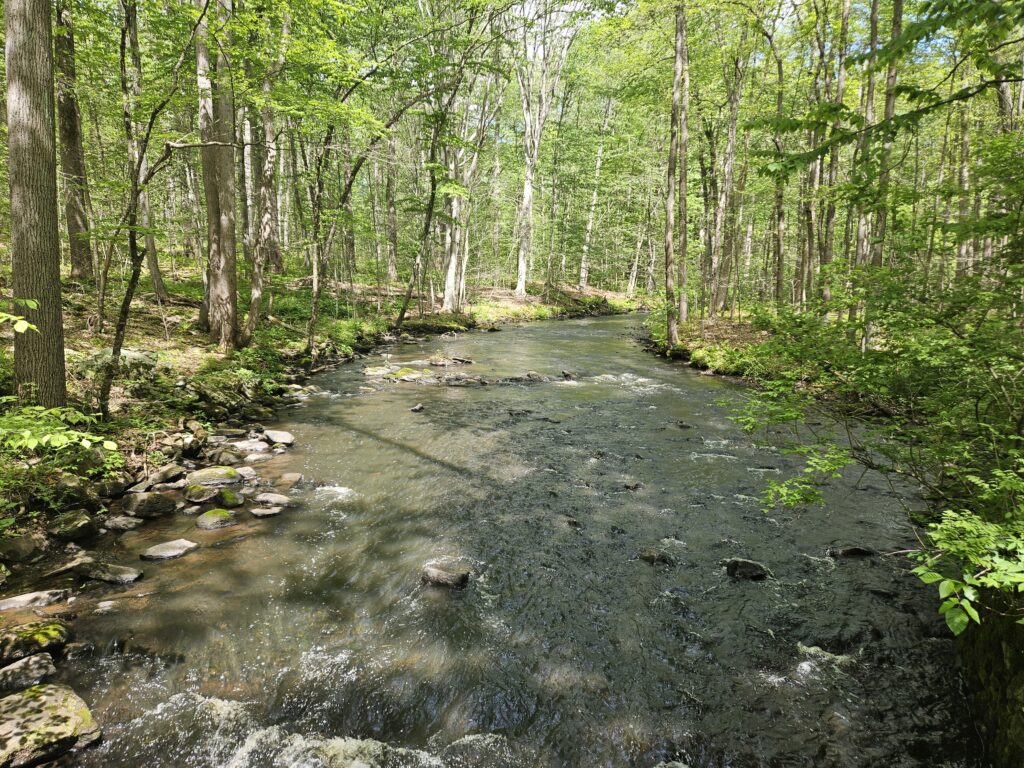
At the water crossing, there are the first of many scenic views of the Black River.
Immediately after crossing the river, the trail unfortunately leaves the river. It gradually rises uphill, but remains easy. After about a quarter mile, you will reach a small side trail to the left. As of my most recent visit in late May 2026, a massive tree had fallen on the Orange Trail right after this side trail. This tree looks like it has been here for some time, and I wonder if the park purposely left it here, as it is a good marker for the side trail.
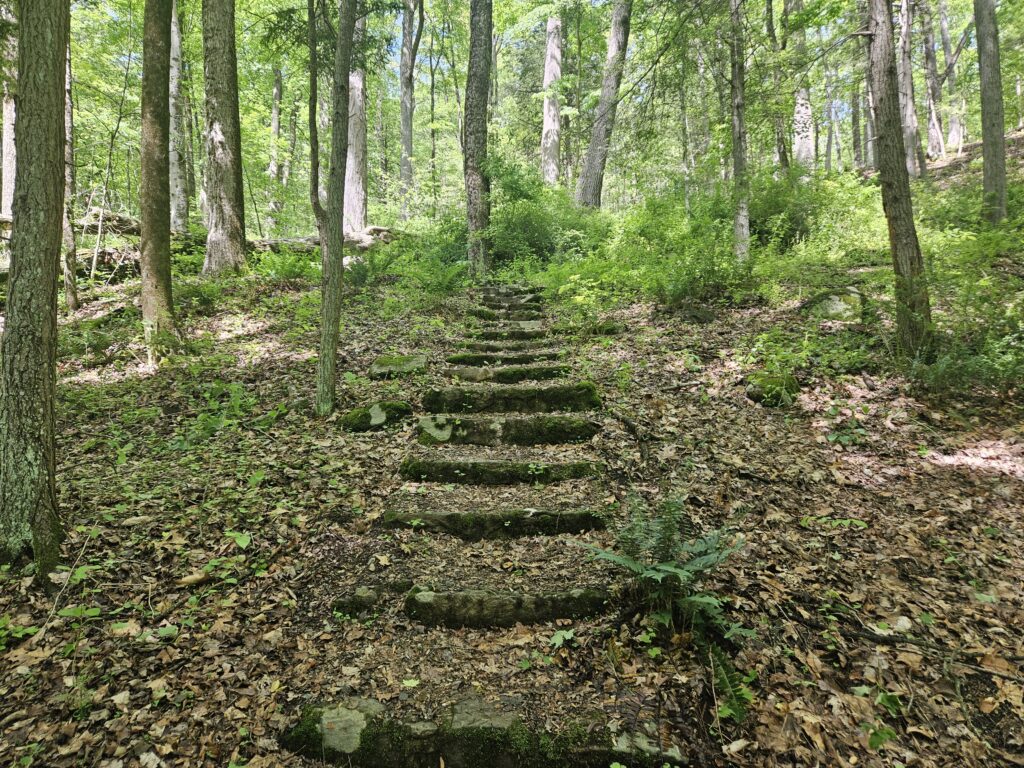
You can likely see the ruins of the Kay Cottage from the trail here. Take the side trail down a set of stone steps to reach the cottage.
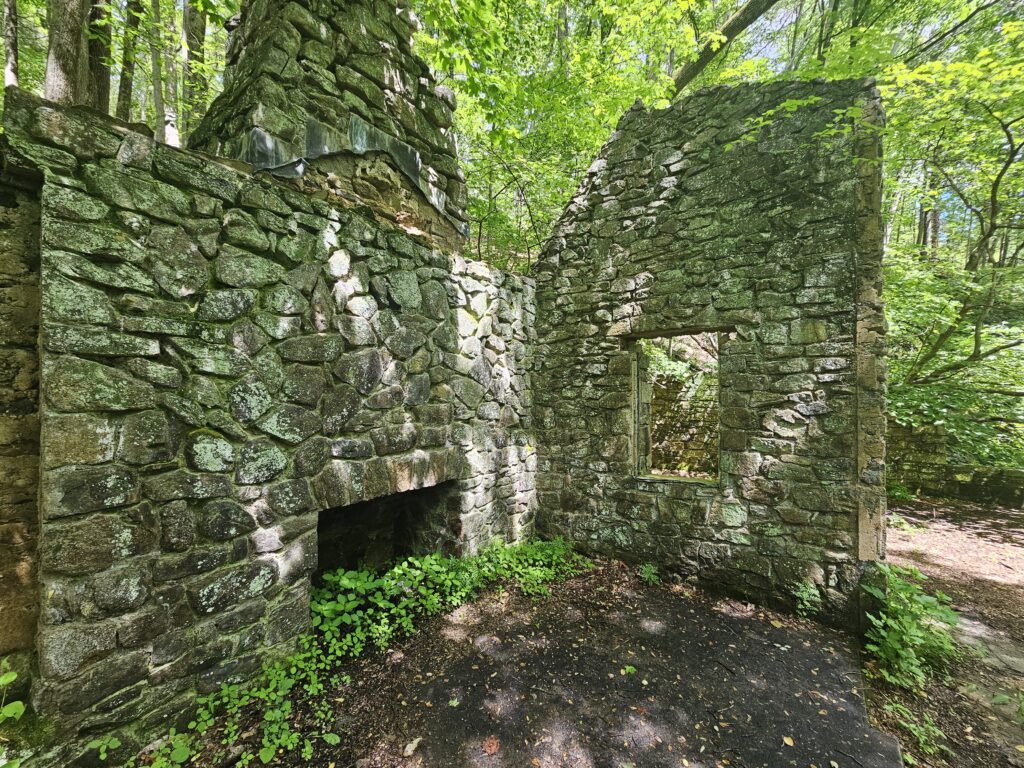
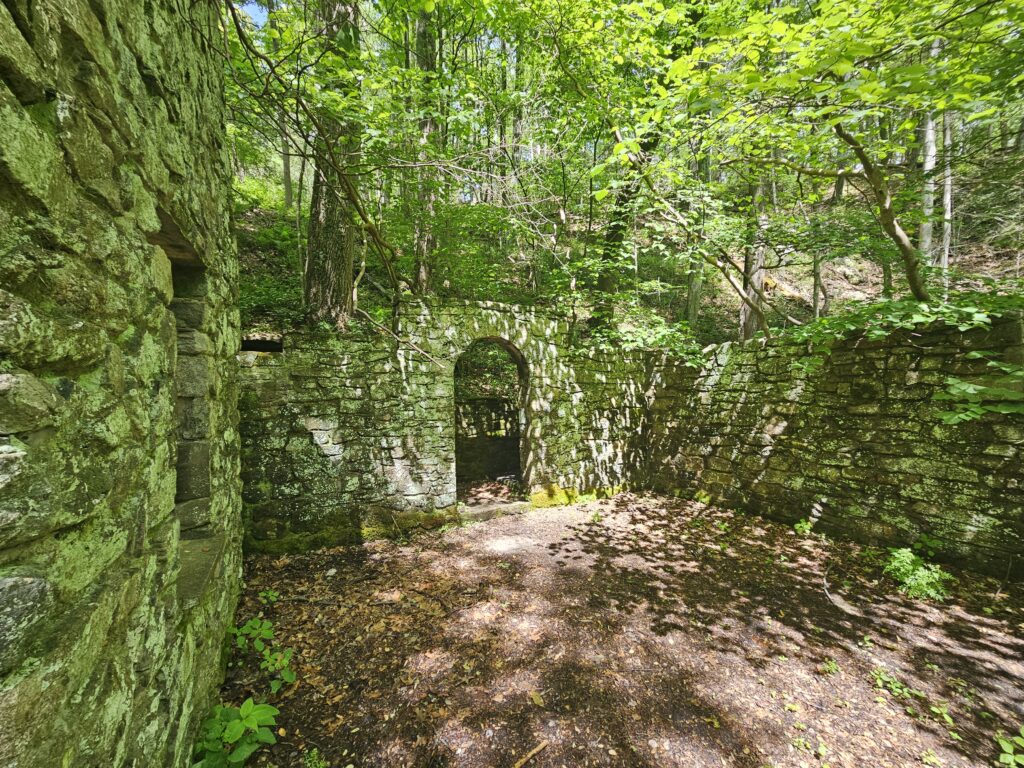
The cottage itself is fairly impressive and features two main rooms, the remains of a fireplace, and a surprising amount of intact walls.
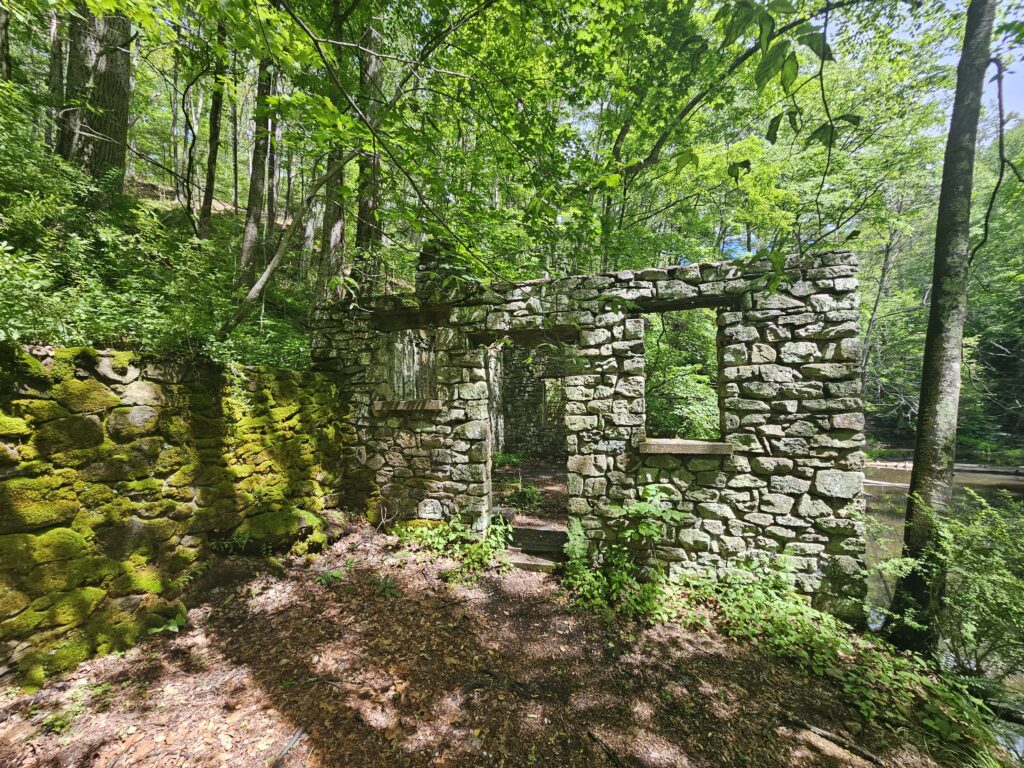
The most unique part of the cottage, however, is the swimming pool. Instead of a typical pool, the Black River was actually dammed here, creating a calm section of river for the owners to swim in. Today, swimming is no longer allowed here, though most people would probably not want to swim here anyway; years of neglect and the naturally dark color of the Black River make this an uninviting spot to swim.
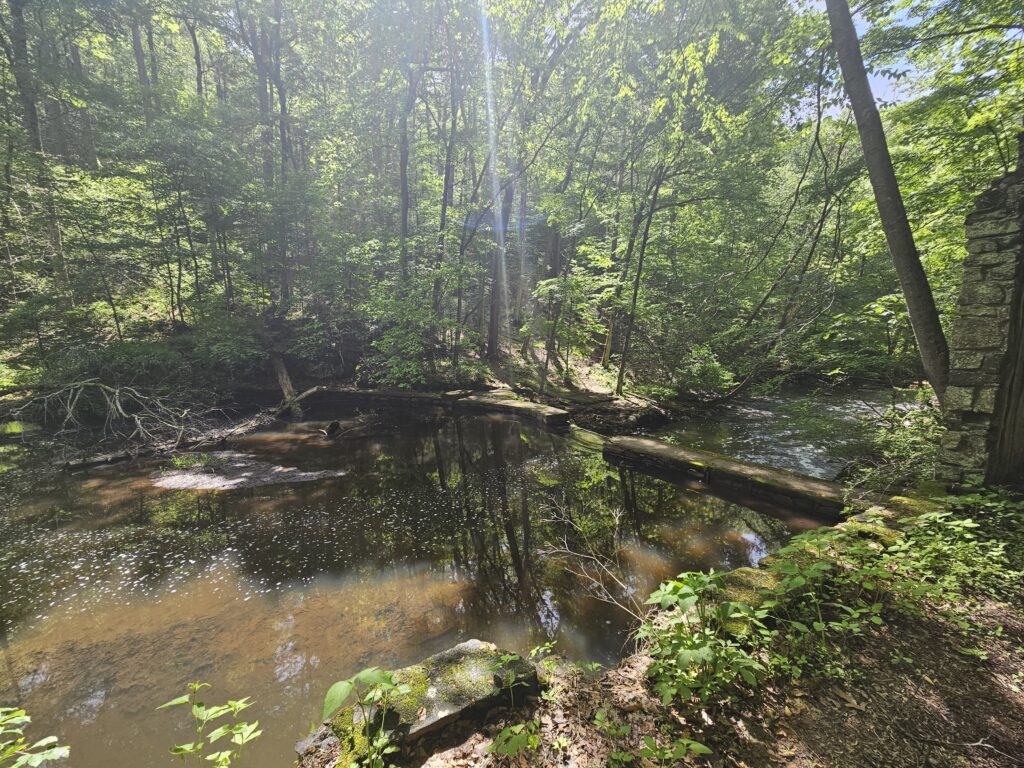
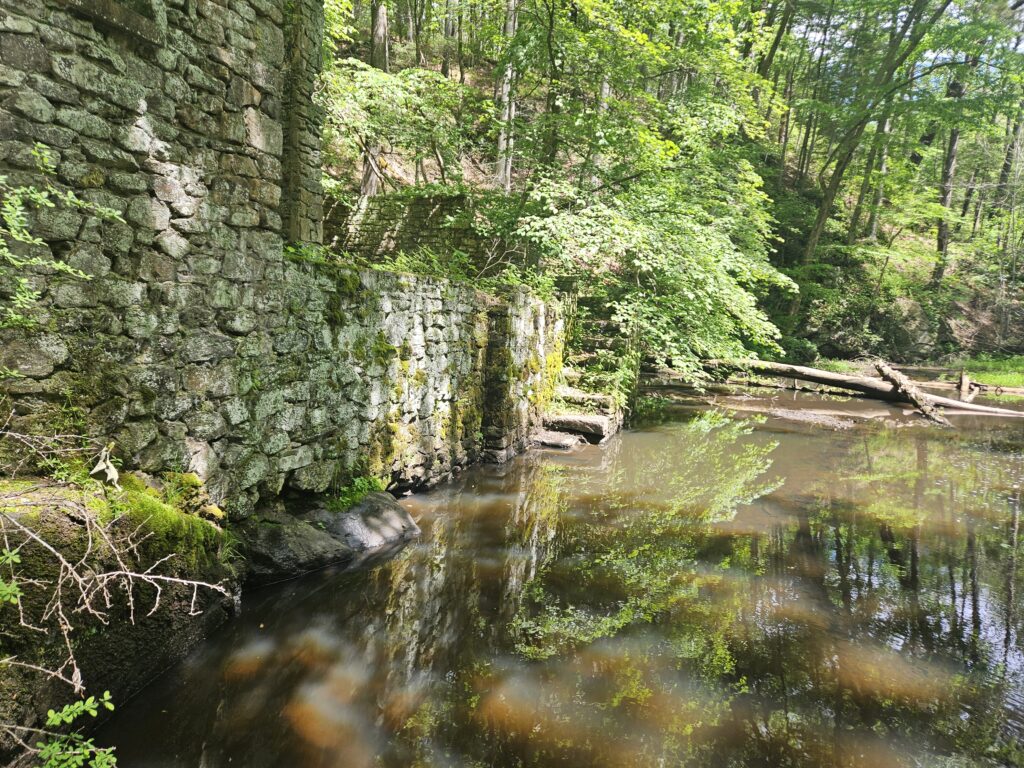
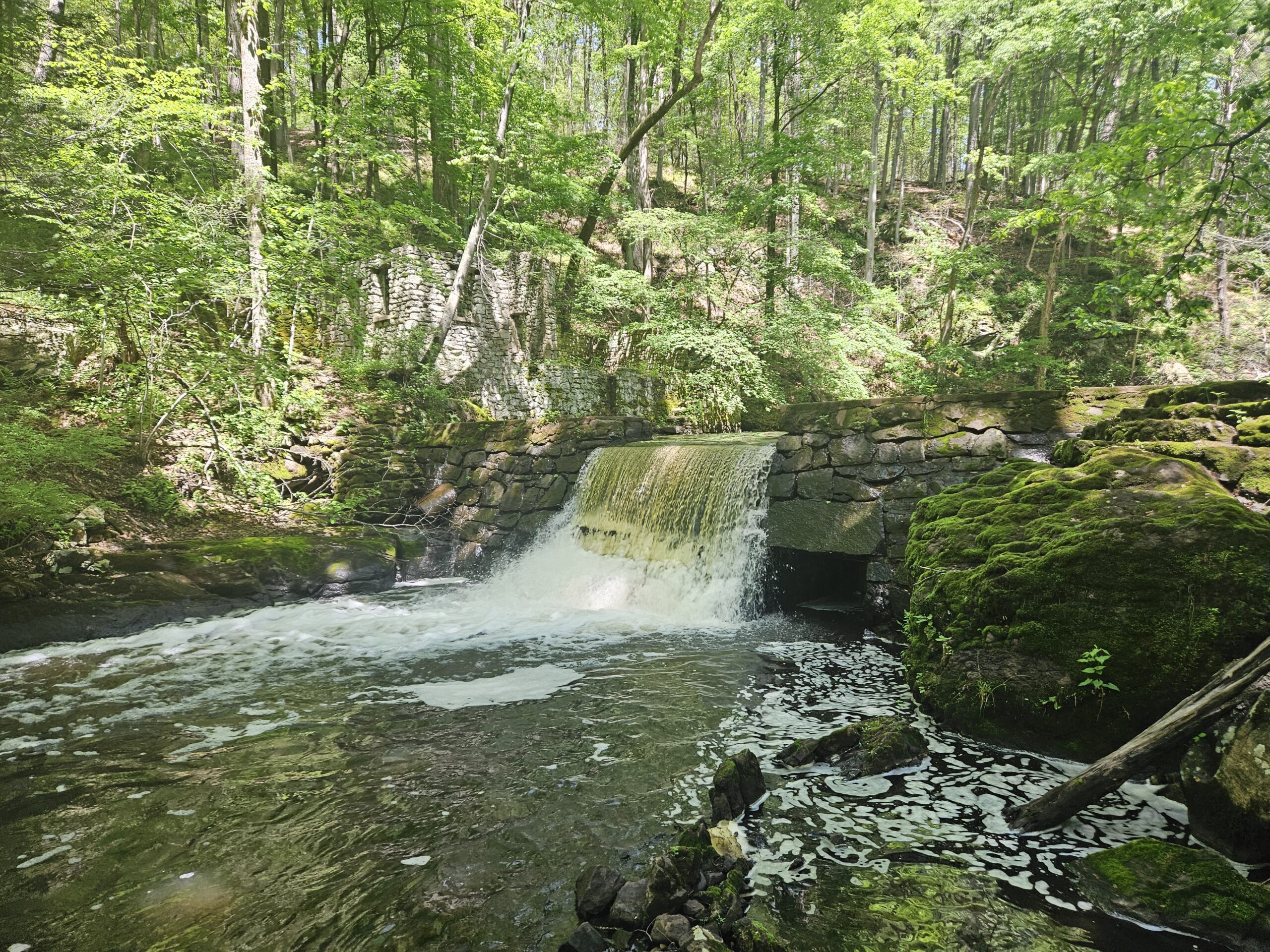
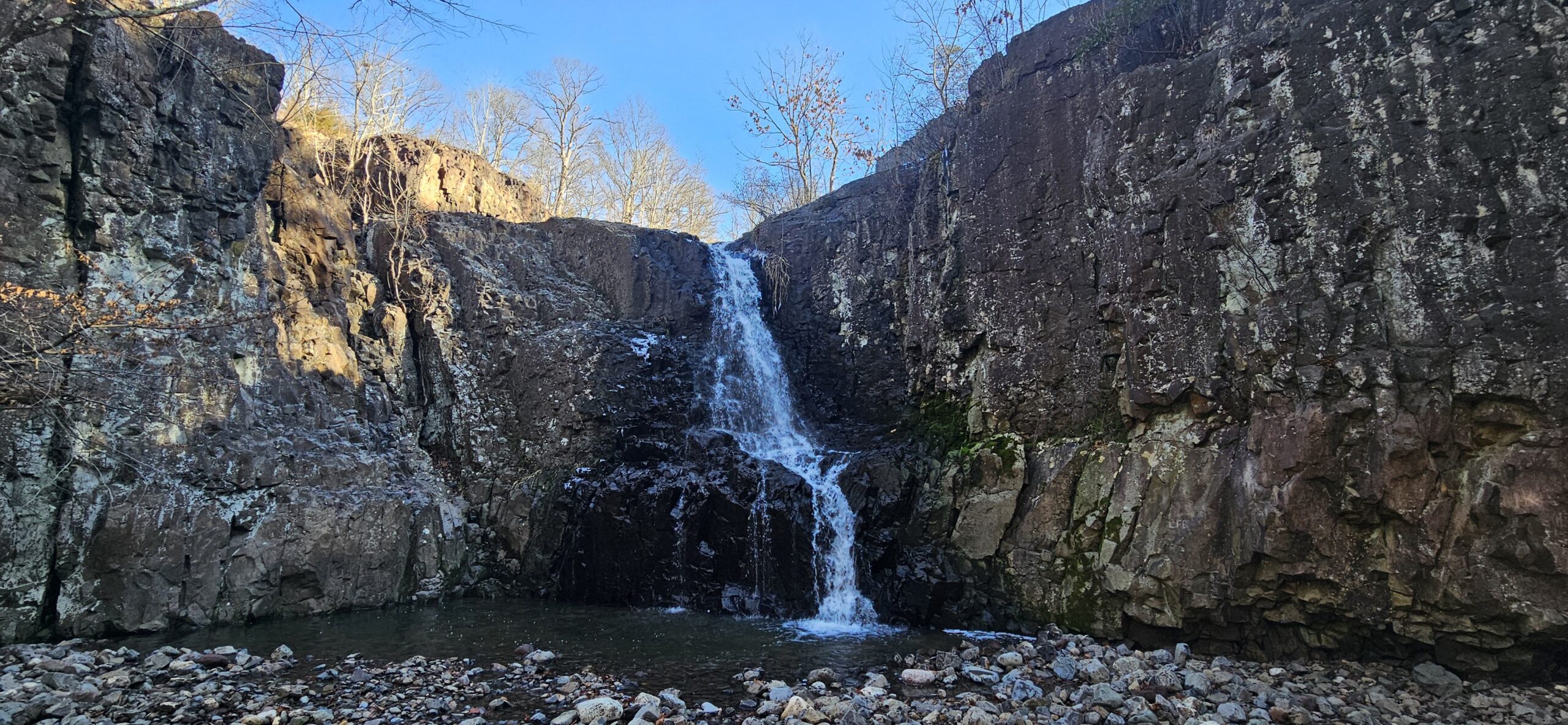
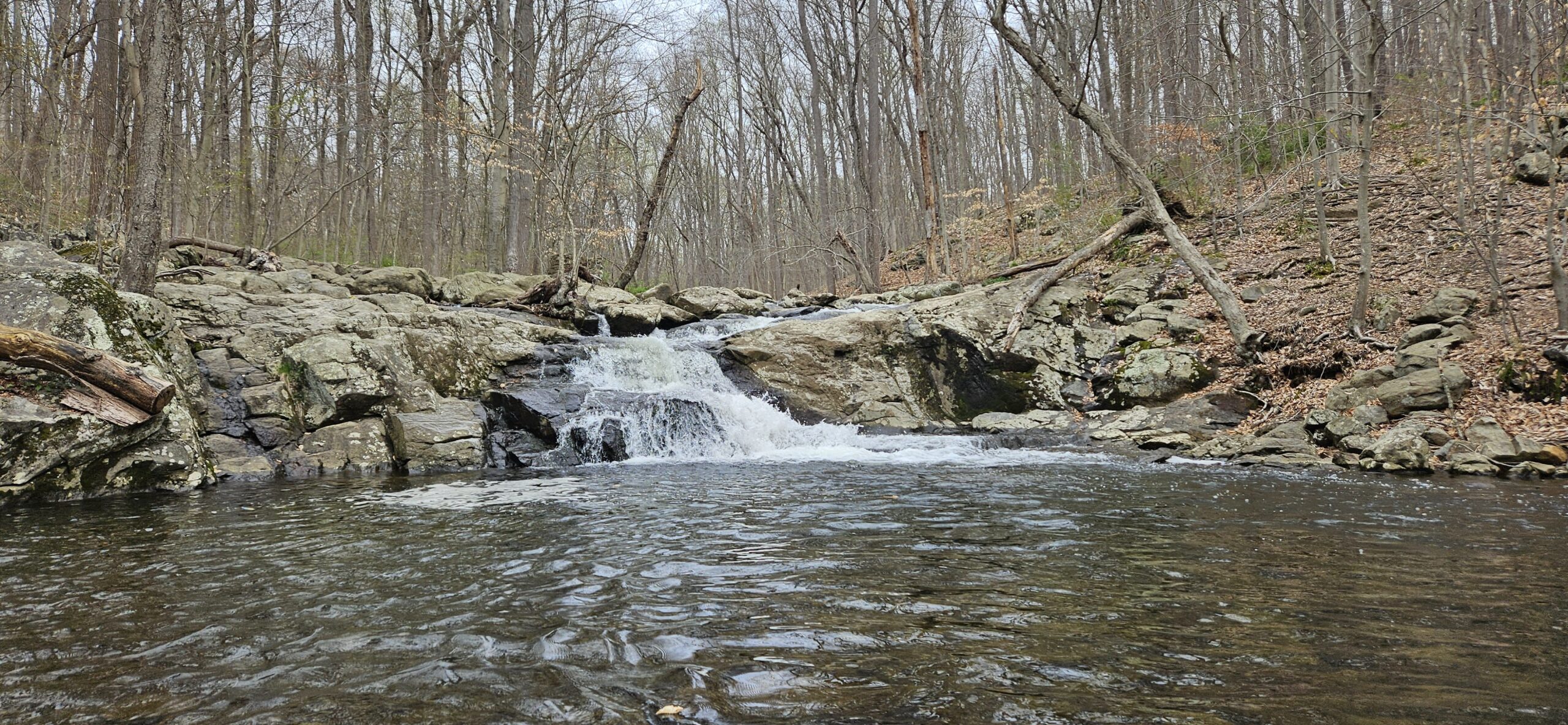
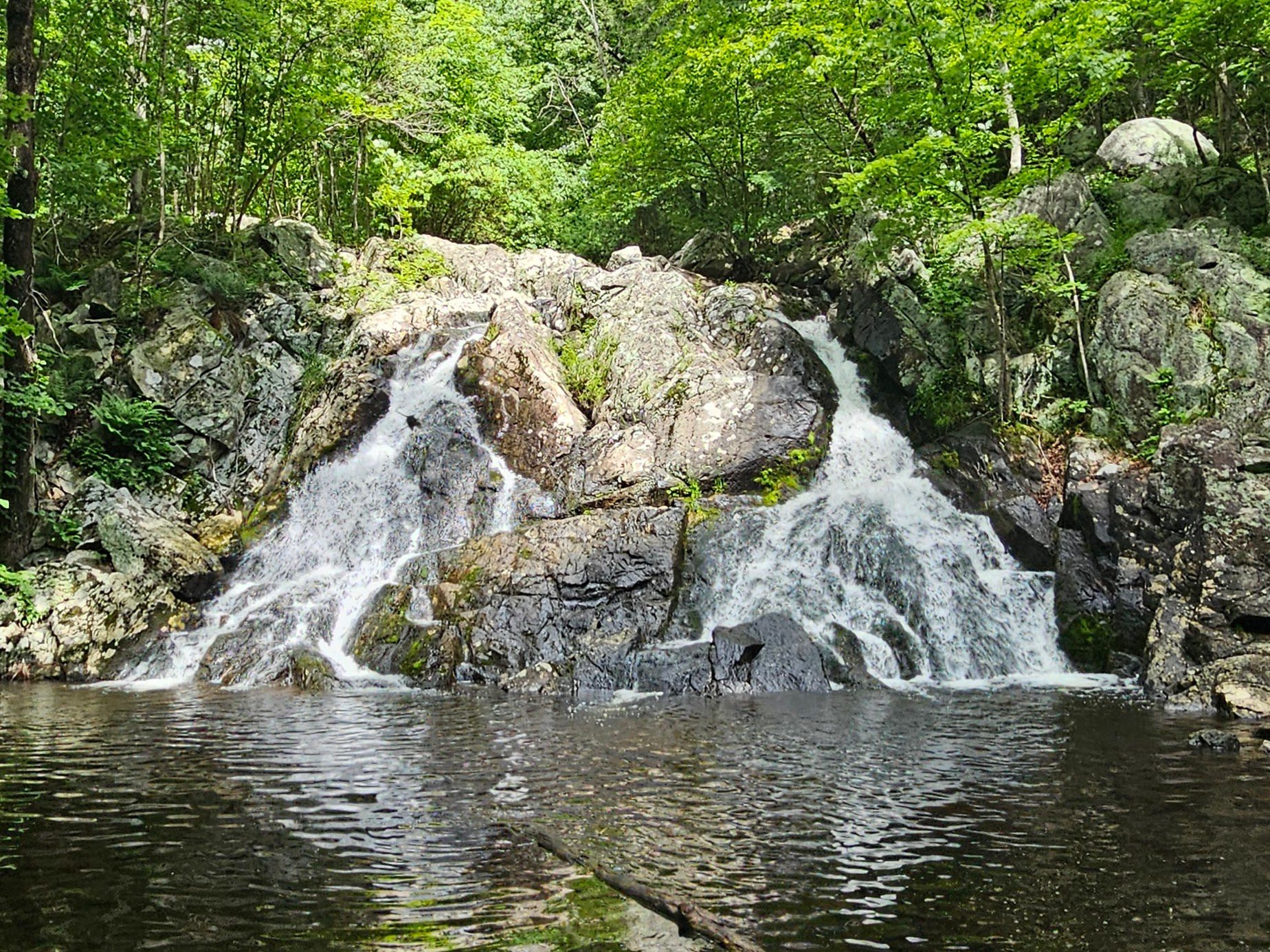
A byproduct of the dam is a small waterfall.
Although man-made, this waterfall is very scenic.
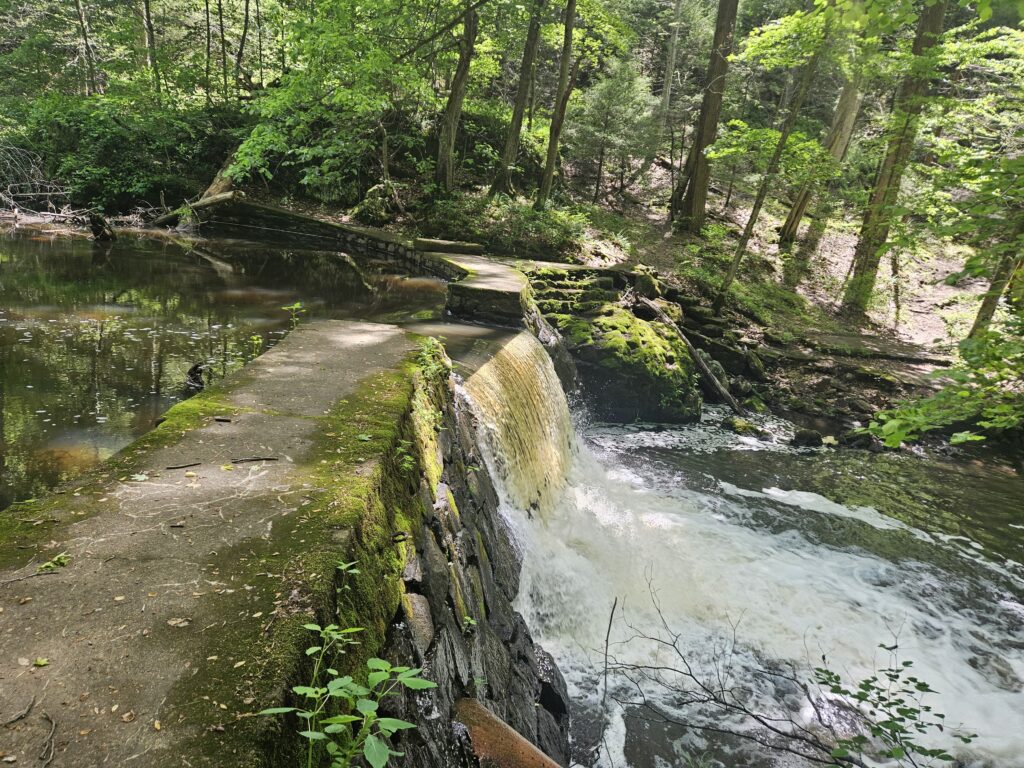
To get a more head-on view of the falls, there is a short trail down to the river next to the dam.
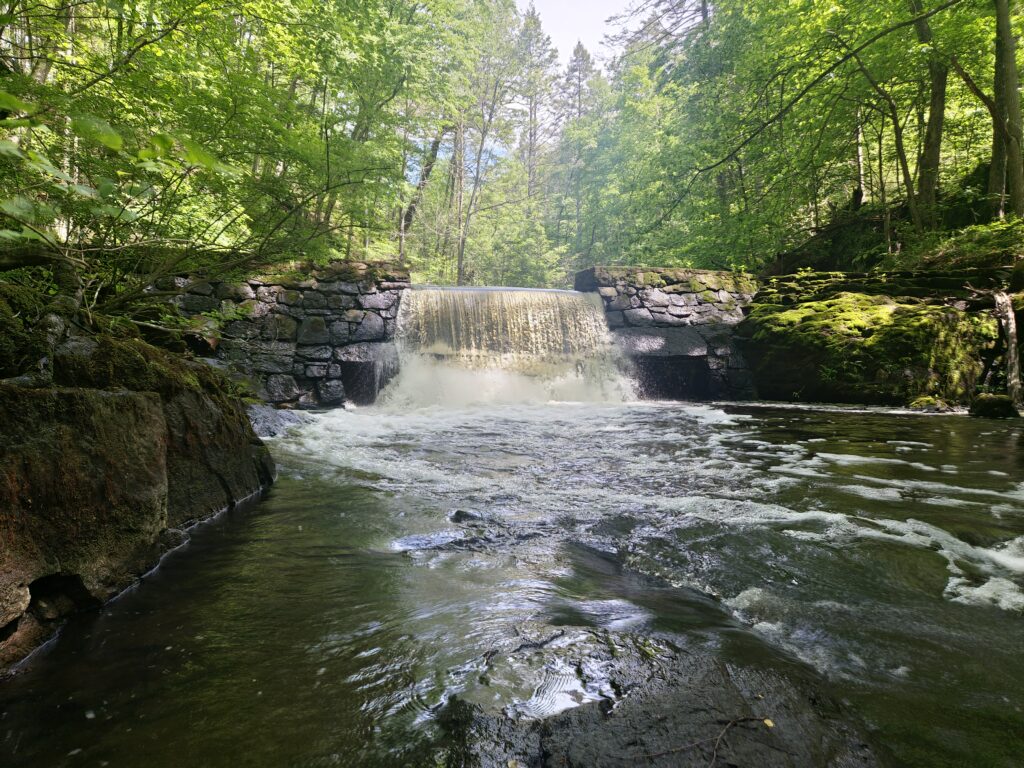
The waterfall can be viewed from both sides of the river. Most GPS apps report that you can cross the Black River here. This is false; there has never been a water crossing here. To get to the other side, you need to return to the previously crossed bridge. The Orange Trail past the previously mentioned felled tree simply dead ends a few hundred feet ahead, which is why I believe the park is likely abandoning it.
Black River Gorge
Immediately after crossing the Black River again, make a right turn onto the Green and Black Dot Trail. This begins a very scenic section of trail generally paralleling the Black River. Here, the trail also begins to take on a more rugged and natural appearance. While it is still easy, it is not simply a wide dirt road like the previous trails.
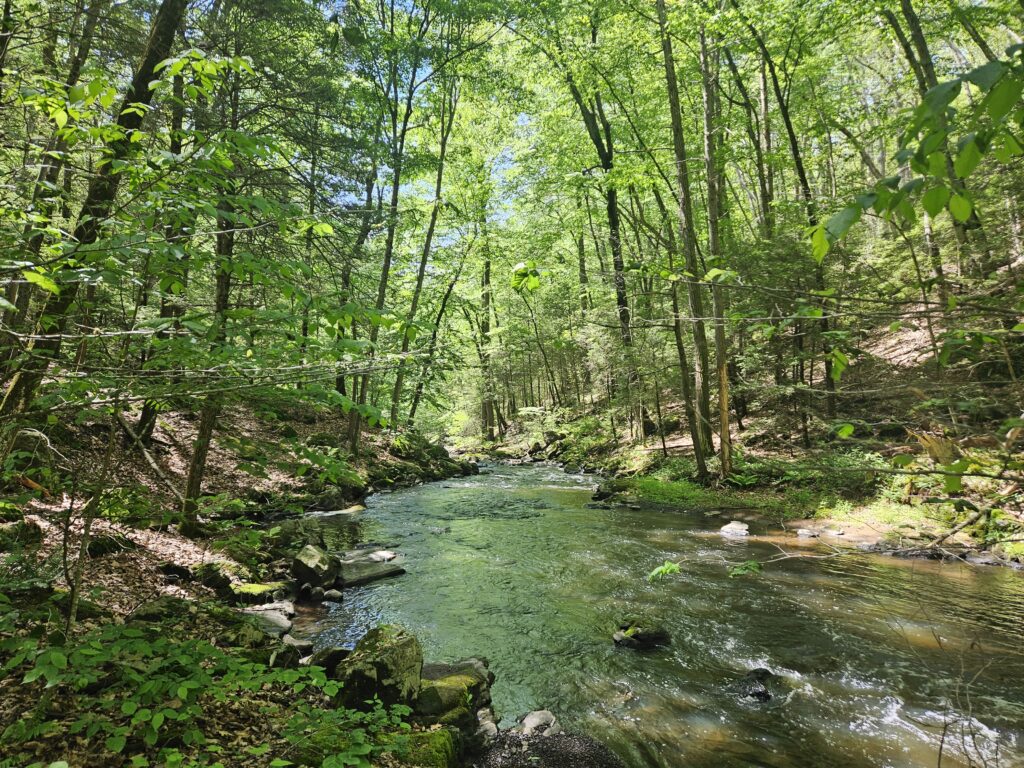
A short distance into the trail, the Green Trail and Green and Black Dot Trail merge, and the black dots disappear. At the angle at which the Green Trail enters, you may not even notice the merge occurred until you notice there are no more dots on the trail blazes.
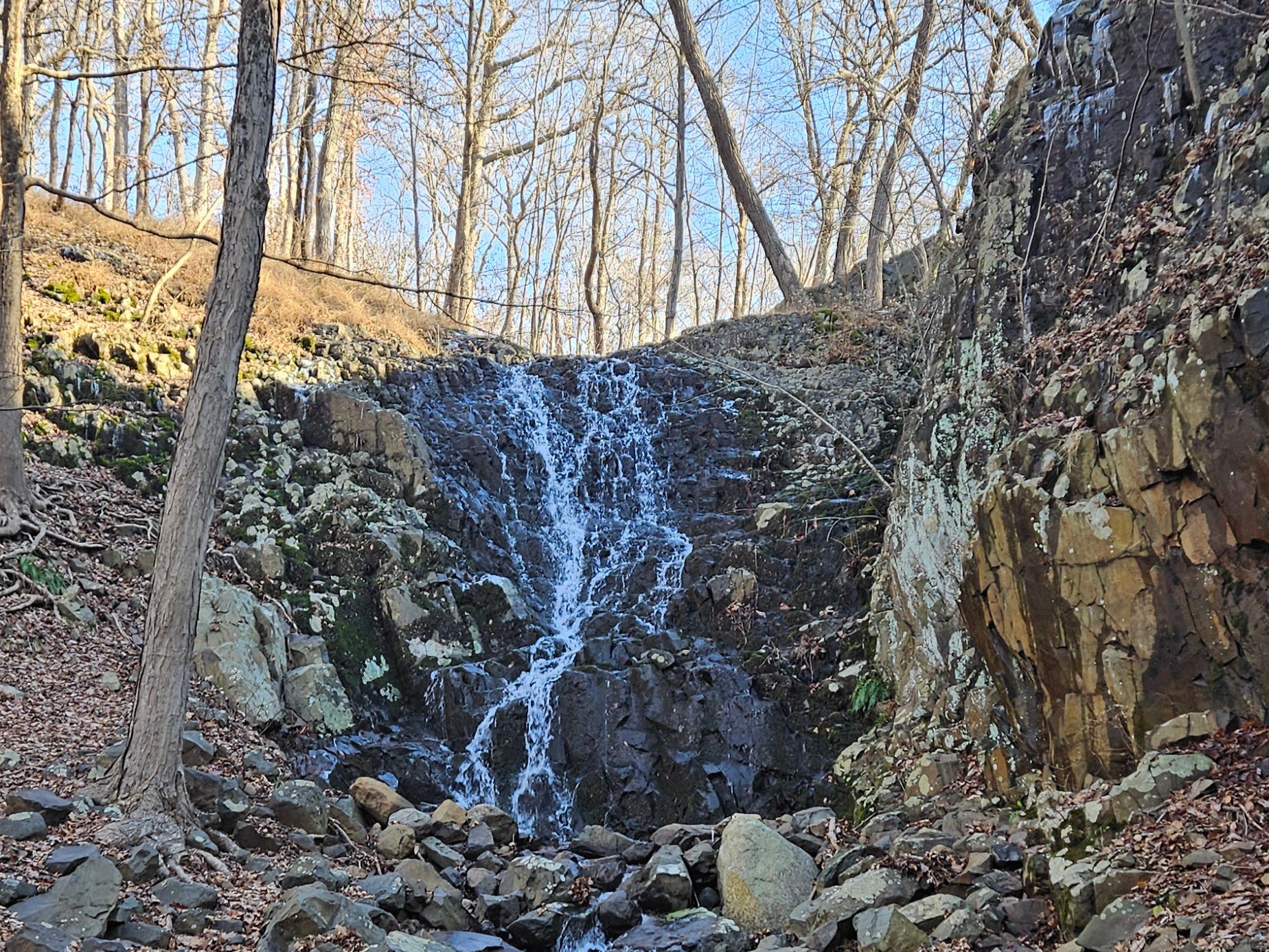
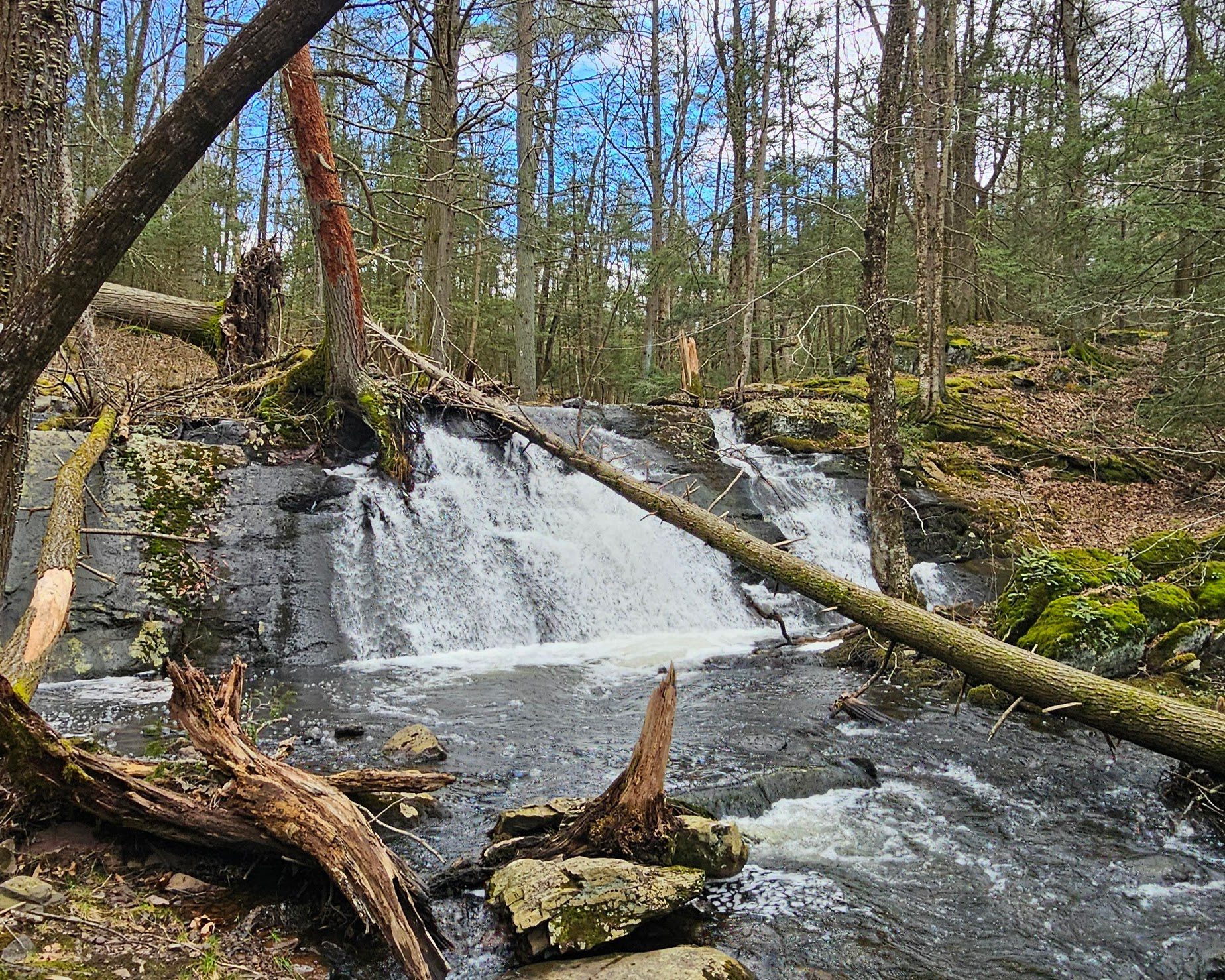
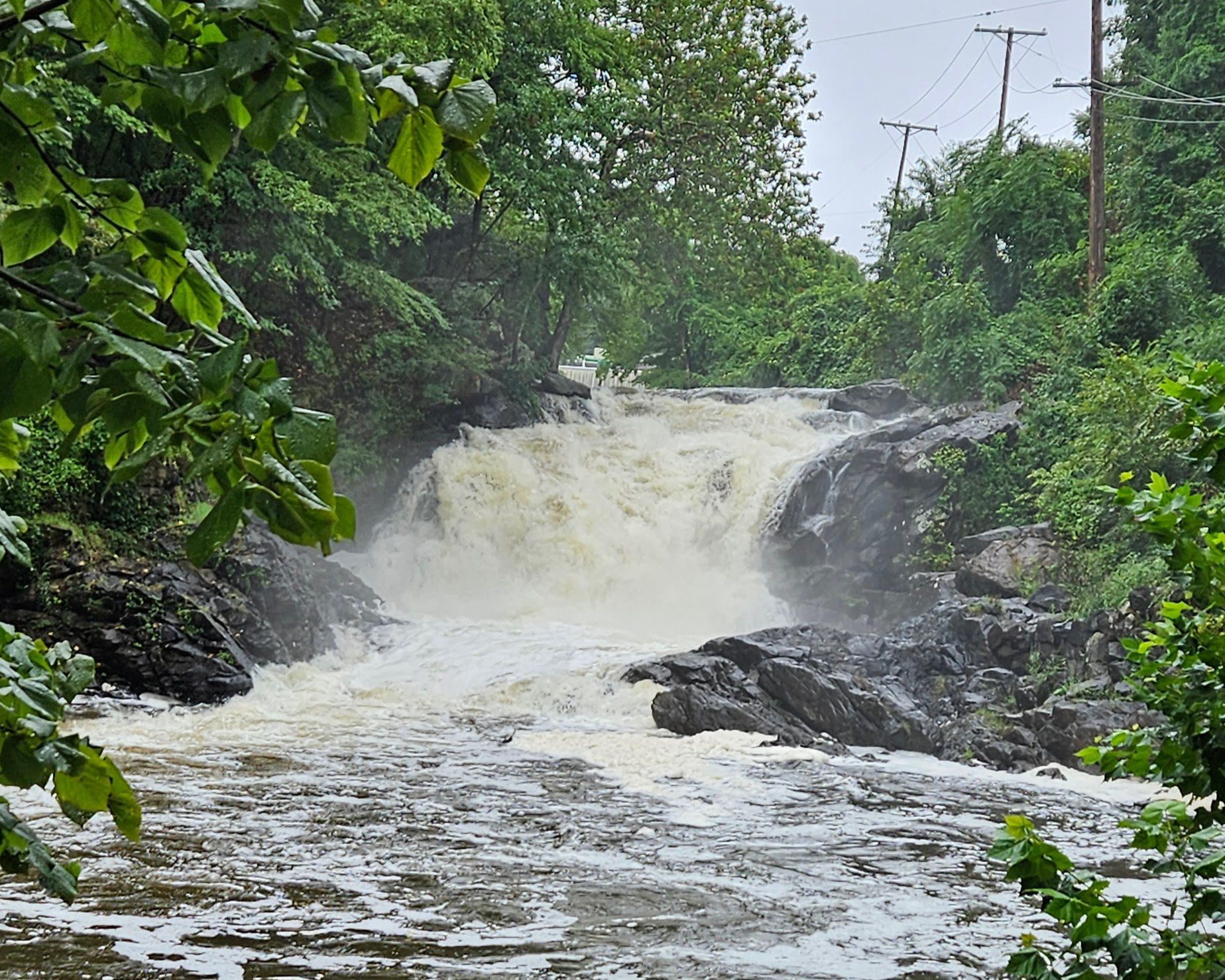
One of the most overlooked parts of this trail is the fairly large Black River Falls. While almost all the waterfall research in this park will guide you to the man-made waterfall next to Kay Cottage, there is almost no mention of the 16-foot Black River Falls.
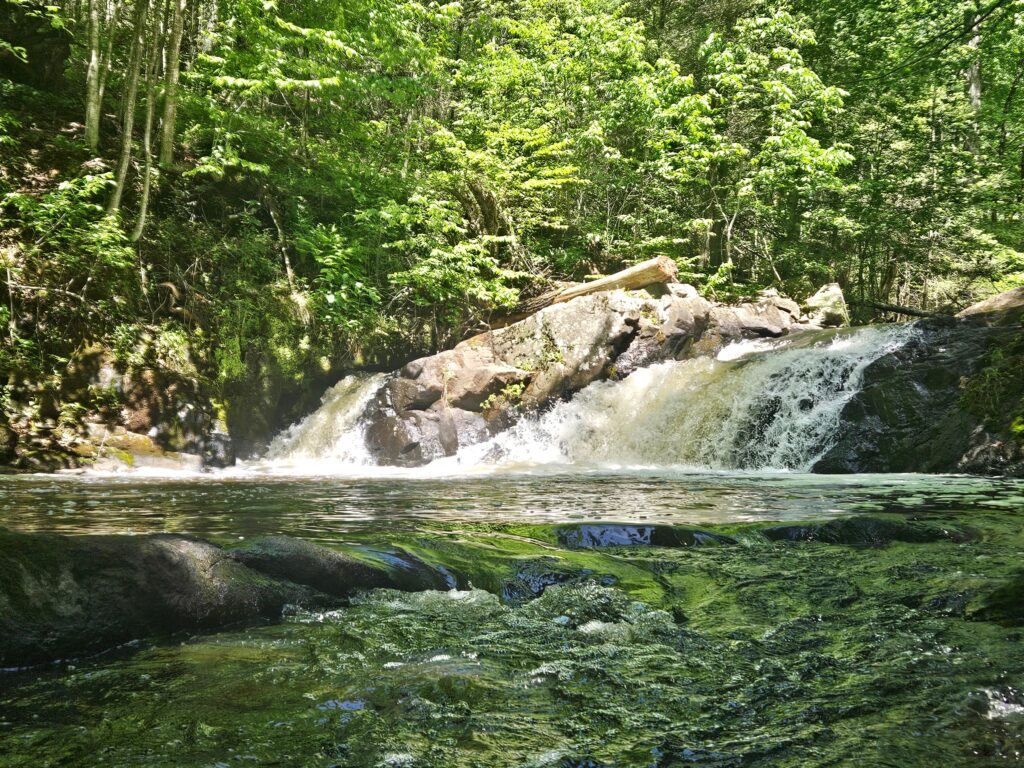
The trail near the waterfall does rise above the river, but you can still see the waterfall from the trail, though this is obscured. It is possible to travel to the riverbank for a clearer view if desired, which is recommended, though the terrain is on the steeper side to get down.
Kay Cottage Waterfall (again)
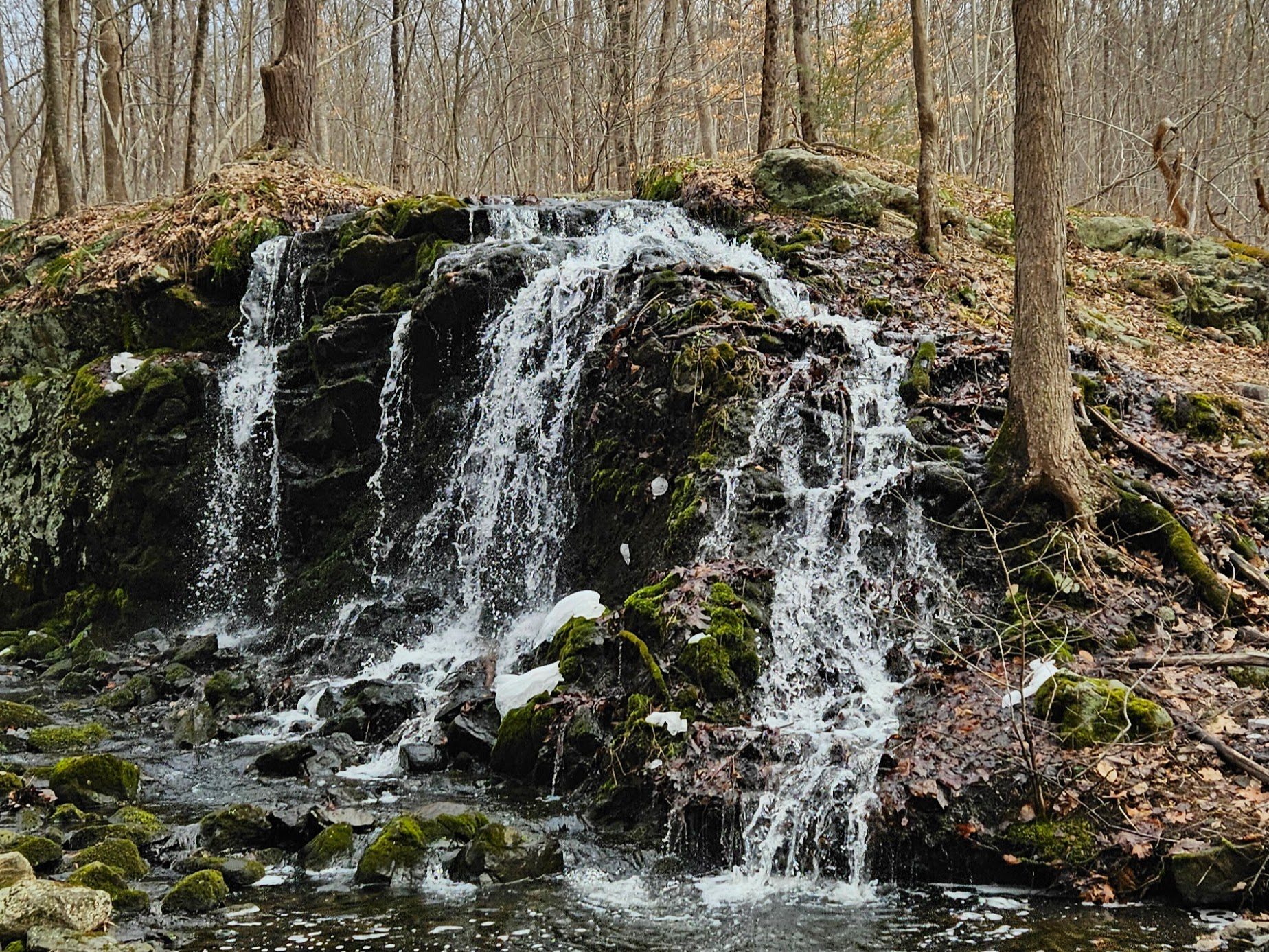
A short distance past Black River Falls, you will reach the Kay Cottage dam and waterfall again. While the previous ruins were great, the view of the waterfall is much better on this side of the river. This is thanks to multiple clearings allowing better vantage points. Additionally, the backdrop of the ruins highlights the waterfall’s history and formation.
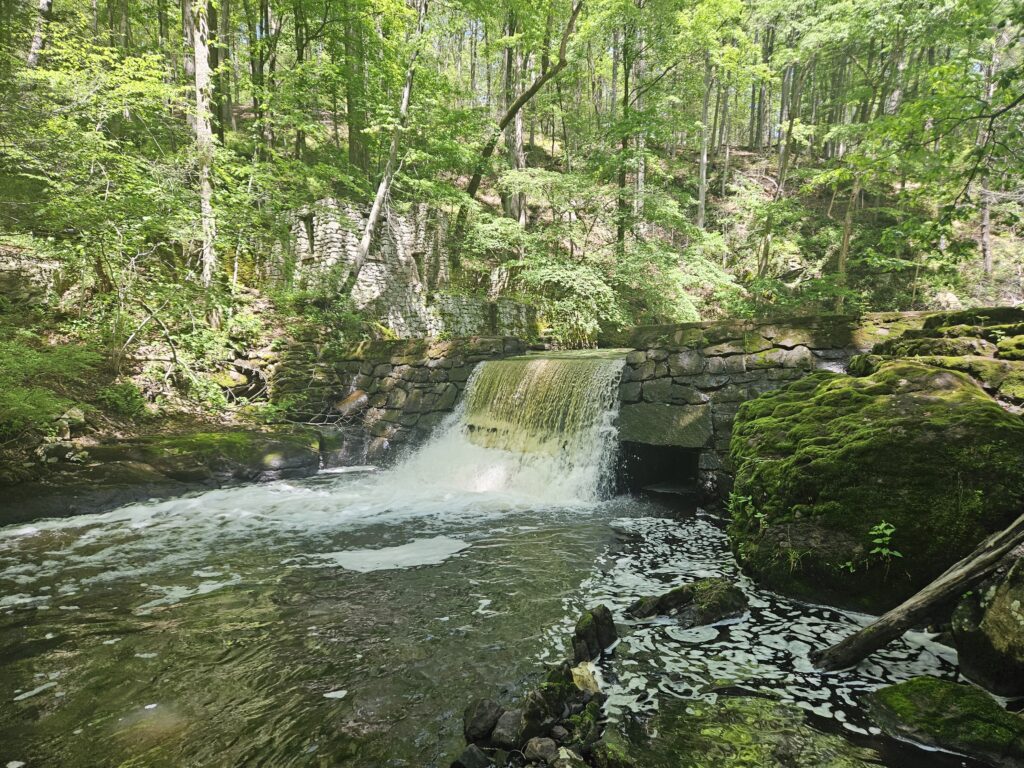
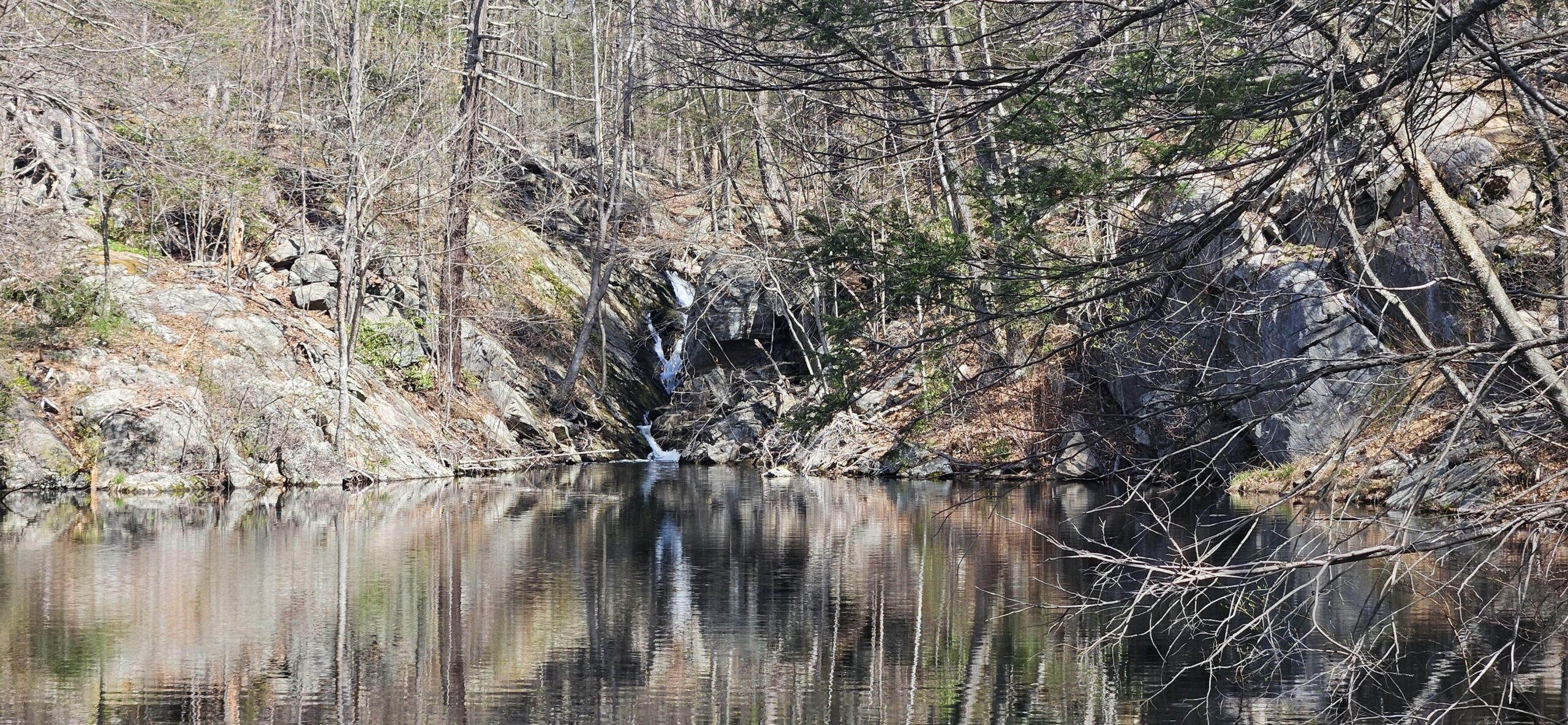
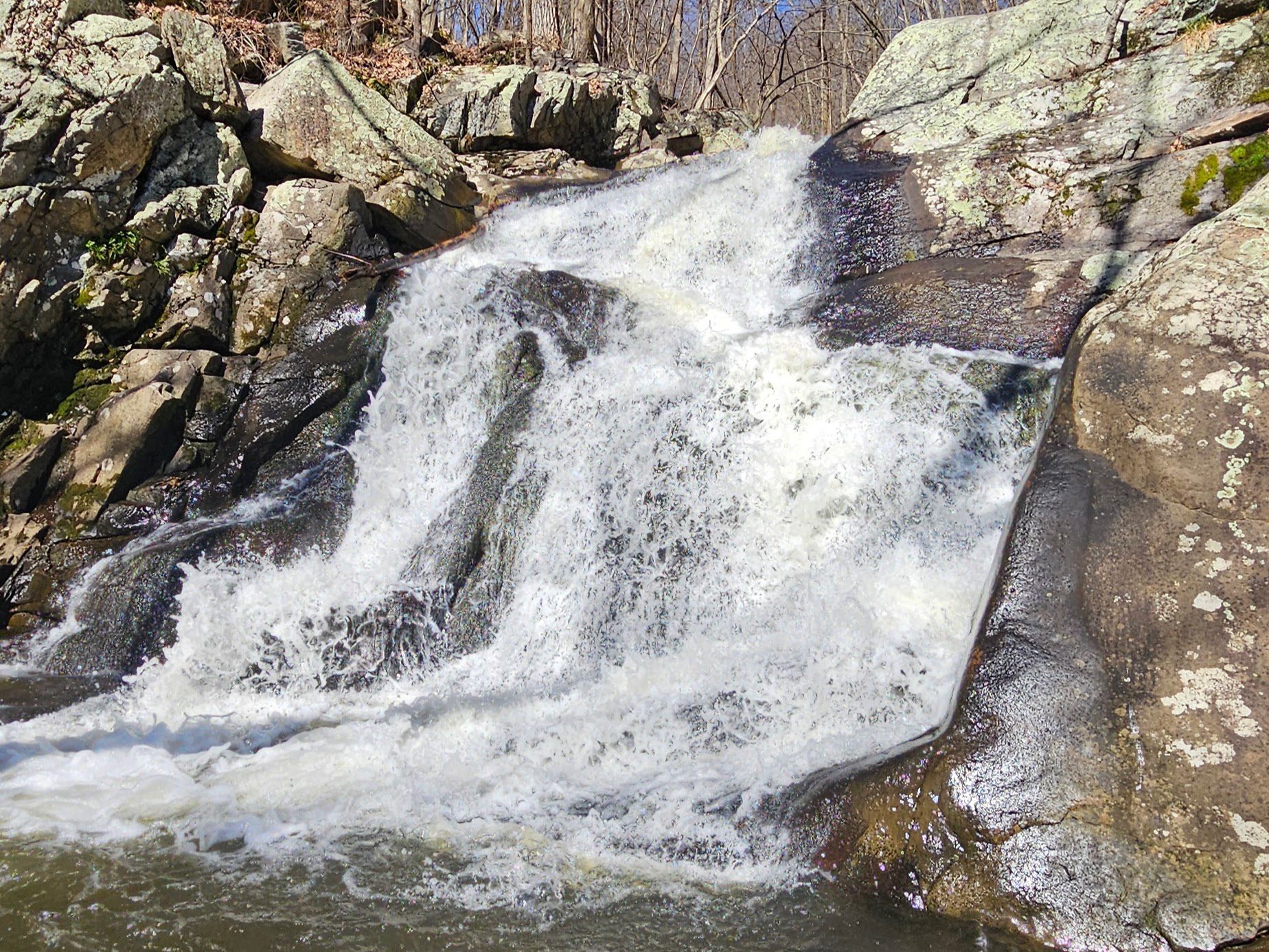
If you continue on the Green Trail another hundred or so feet, you will reach the third and final waterfall in the park.
This waterfall is easily the least impressive waterfall in the park, mainly because there is no easy way to see it; if it was possible to get a better vantage point, the waterfall would be much better. The waterfall is hard to see because the trail loops away from and above the river. There is a short, faint trail that leads to a ledge with an alright, but underwhelming view about 20 feet above the river. The raised view makes the waterfall look much smaller than it is, and unfortunately, there is no safe, easy way to get closer.
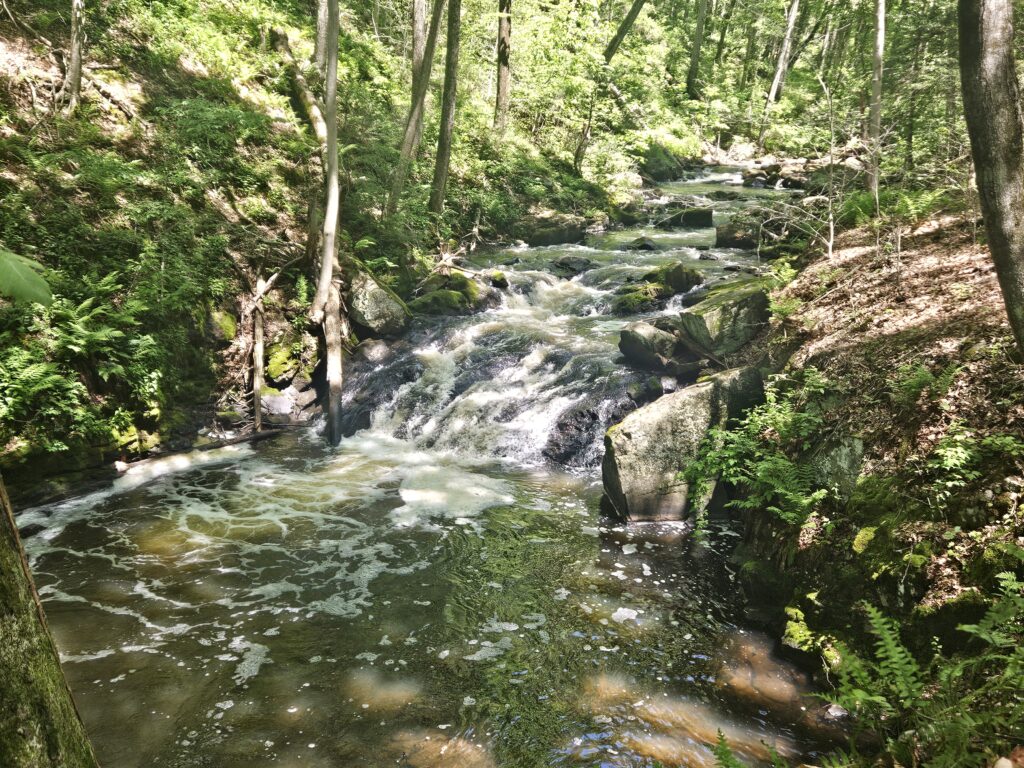
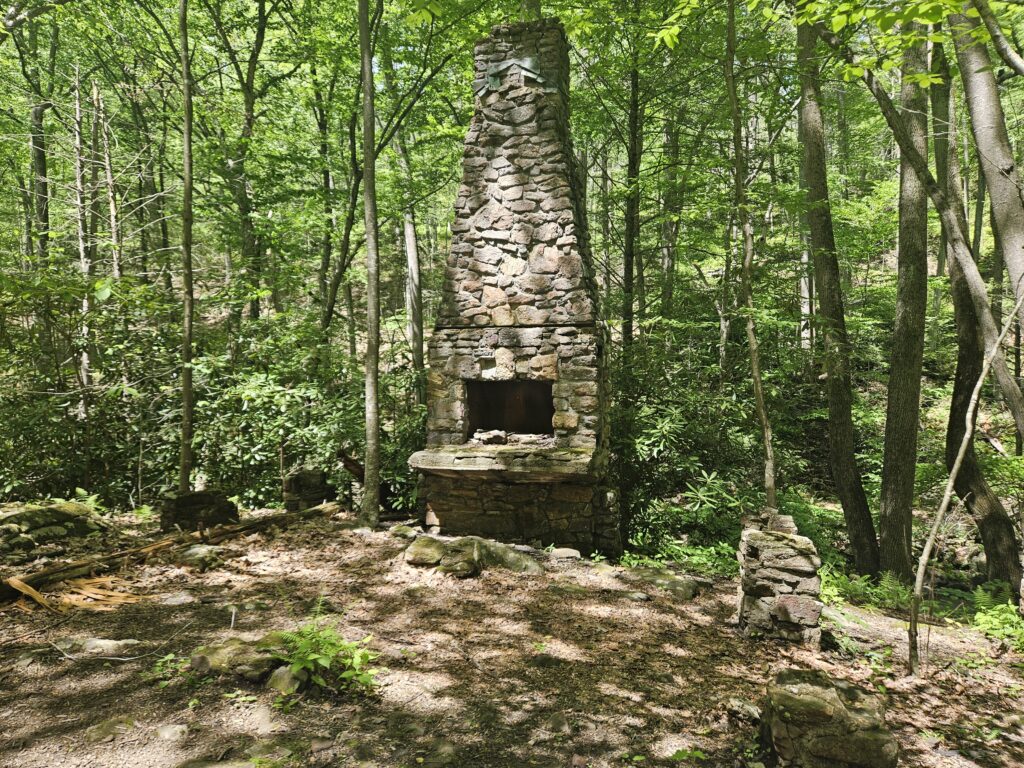
From the final waterfall, the Green Trail continues to generally hug the river for the next couple of hundred feet before ending at the Red Trail. Towards the end of the trail, you will pass the ruins of an old building. All that remains today are a few small pieces of foundation and a chimney.
The Return
The Green Trail ends at the T-intersection with the Red Trail. Turn left onto the Red Trail. (Note: If you want a longer hike, you can turn right onto the Red Trail as well, but there is no easy return without making a long and complicated loop or backtracking.) Follow the Red Trail for 0.4 miles as it gradually climbs out of the gorge. While this is uphill, it is fairly gentle.
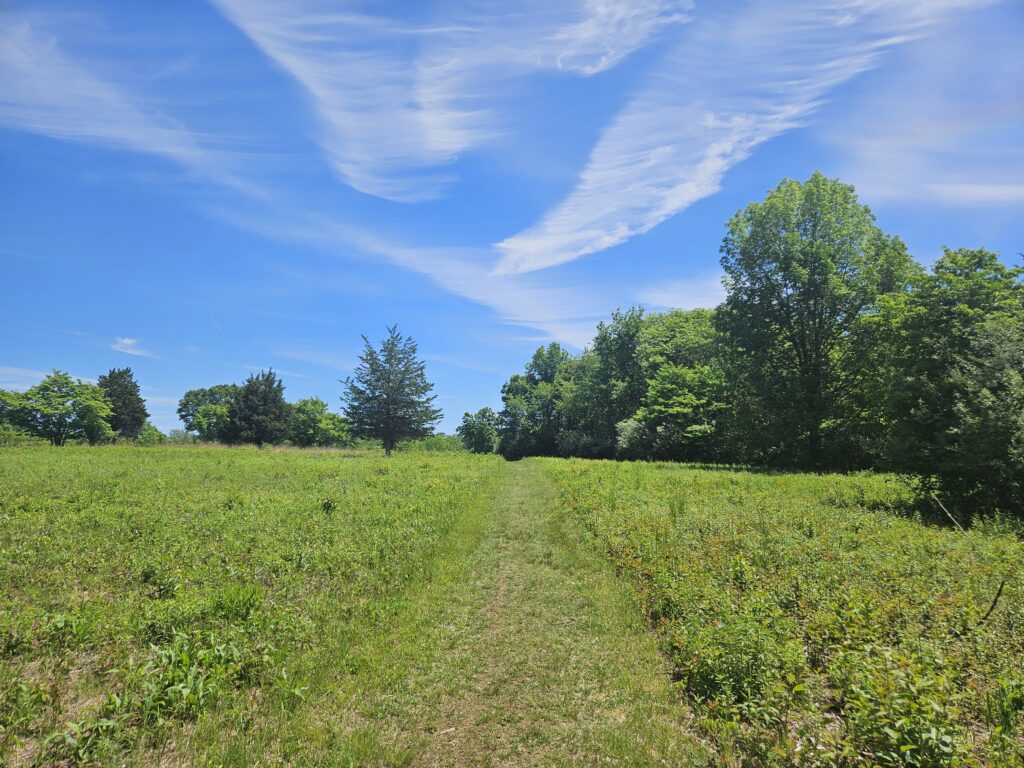
The Red Trail ends at the previously hiked Orange Trail. Turn right to head back toward the parking area. Once at the top, instead of turning left to return the way you came on the Yellow Trail, continue straight, remaining on the Orange Trail. This will take you through a scenic meadow, filled with birdhouses and wildflowers.
You will pass a trail on the left (White). Ignore this trail and continue straight. The trail then enters a small, wooded area with another trail on the left. Turn left here onto the Blue Patriots Path Trail. Follow this a few hundred feet back to the parking area.
GPS Route
Attached is the route as described above for reference. Additionally users can download the route to use on their preferred GPS. How to use the GPS routes on your phone.
Review
This is an excellent and underutilized park and hike. Despite being right next to Hacklebarney State Park, virtually no one visits the Kay Center, even though Hacklebarney draws swarms of people. The Black River is easily the highlight, with multiple scenic waterfalls, but the ruins are worth a visit as well. My only real complaint about this park is the complicated trail network. While the trails are clearly marked, their abundance is needlessly confusing. Other than that small complaint, the Kay Center is definitely worth a visit.

Leave a Reply