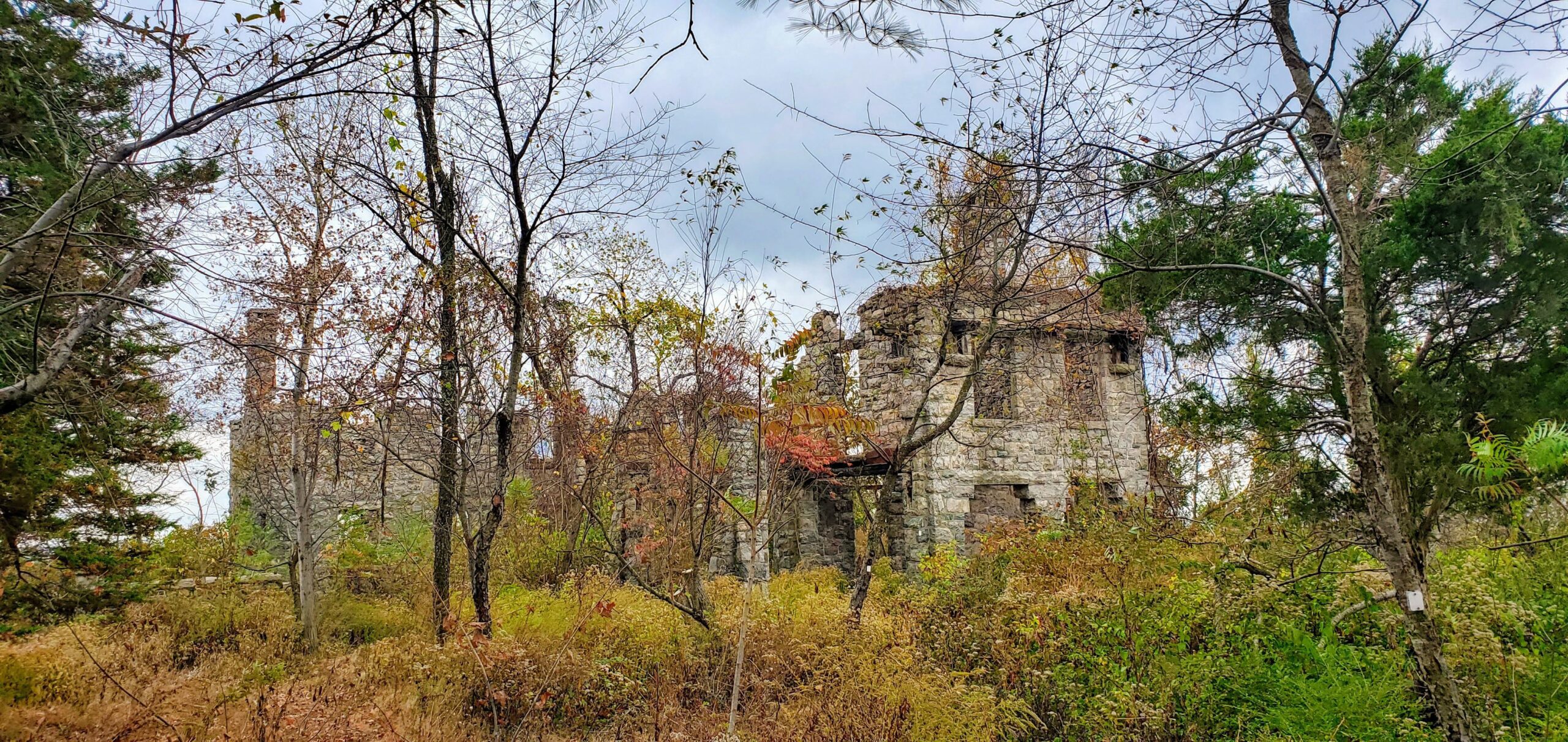
Located atop Ramapo Mountain State Forest lies one of New Jersey’s most unique hiking destinations—Van Slyke Castle. What was once a large private estate in the early 1900s was left to ruins after the property was abandoned and later burnt by arsonists in the 1950s. Today, much of the stone structure remains, including many walls and supports, though nature has begun to reclaim the land. The property can be visited by hiking the moderate Castle Loop Trail, which also features the scenic Ramapo Lake and a few impressive overlooks, including some of New York City from the castle itself. Continue reading to learn how to get to this awesome (and completely legal to visit) destination in the New Jersey Highlands.
Ramapo Mountain State Forest
Location: Oakland, Bergen County; Wanaque, Passaic County
Restrooms: Portable toilet in the parking area
Hike Information
Distance: 4 miles
Ascent: ~730 feet
Difficulty: Moderate
Background
Ramapo Mountain State Forest is named after and located in the Ramapo Mountains. The mountain range is a subrange of the larger New Jersey Highlands. The park and mountain range are named for the Ramapo Fault, which separates the Ramapo Mountains from the geologically distinct Piedmont Region. The Ramapo Fault is a major fault zone and is responsible for many small, mostly unnoticeable earthquakes. The fault was likely responsible for the 4.8 magnitude earthquake felt over most of the state in April 2024.
The park borders and connects to numerous parks, including Ramapo Valley County Reservation and Ringwood State Park, offering hikers a wide variety of trail options.
The Hike
The Van Slyke Castle Loop has two entrances: the lower parking lot and the upper parking lot, both of which are off Skyline Drive. The hike from the upper parking lot is slightly shorter, but I recommend beginning from the lower parking area. This is because the upper parking lot tends to fill up faster, as it is also the start of more hikes. Also, the short Ramapo Lake Spur trail is a nice trail, and it is only reached from the lower parking lot.
The hike is of moderate difficulty due to some rocky sections and hills. The hike follows the Blue and Black Ramapo Lake Spur Trail and the White Castle Loop Trails in their entirety.
The Beginning
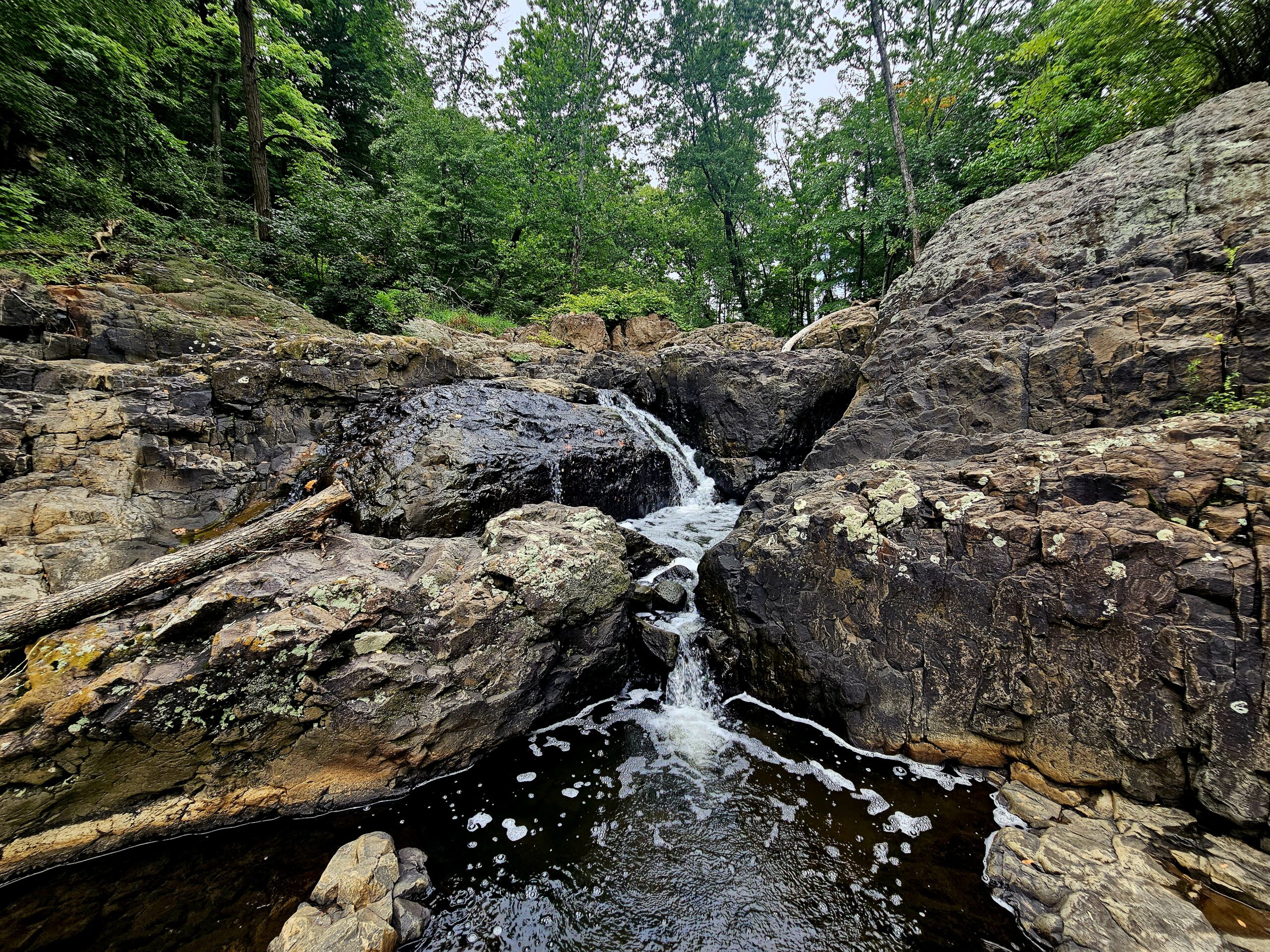
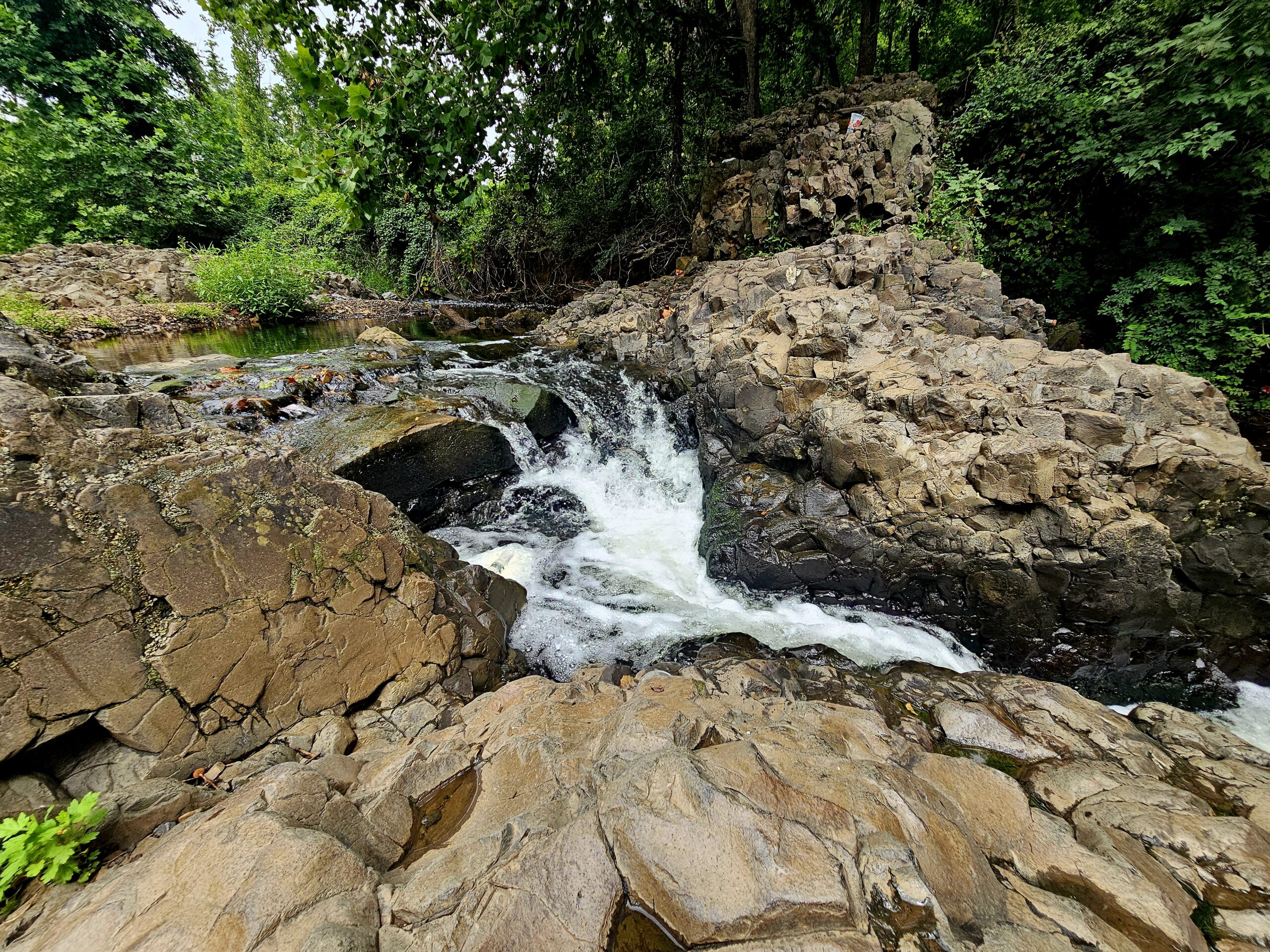
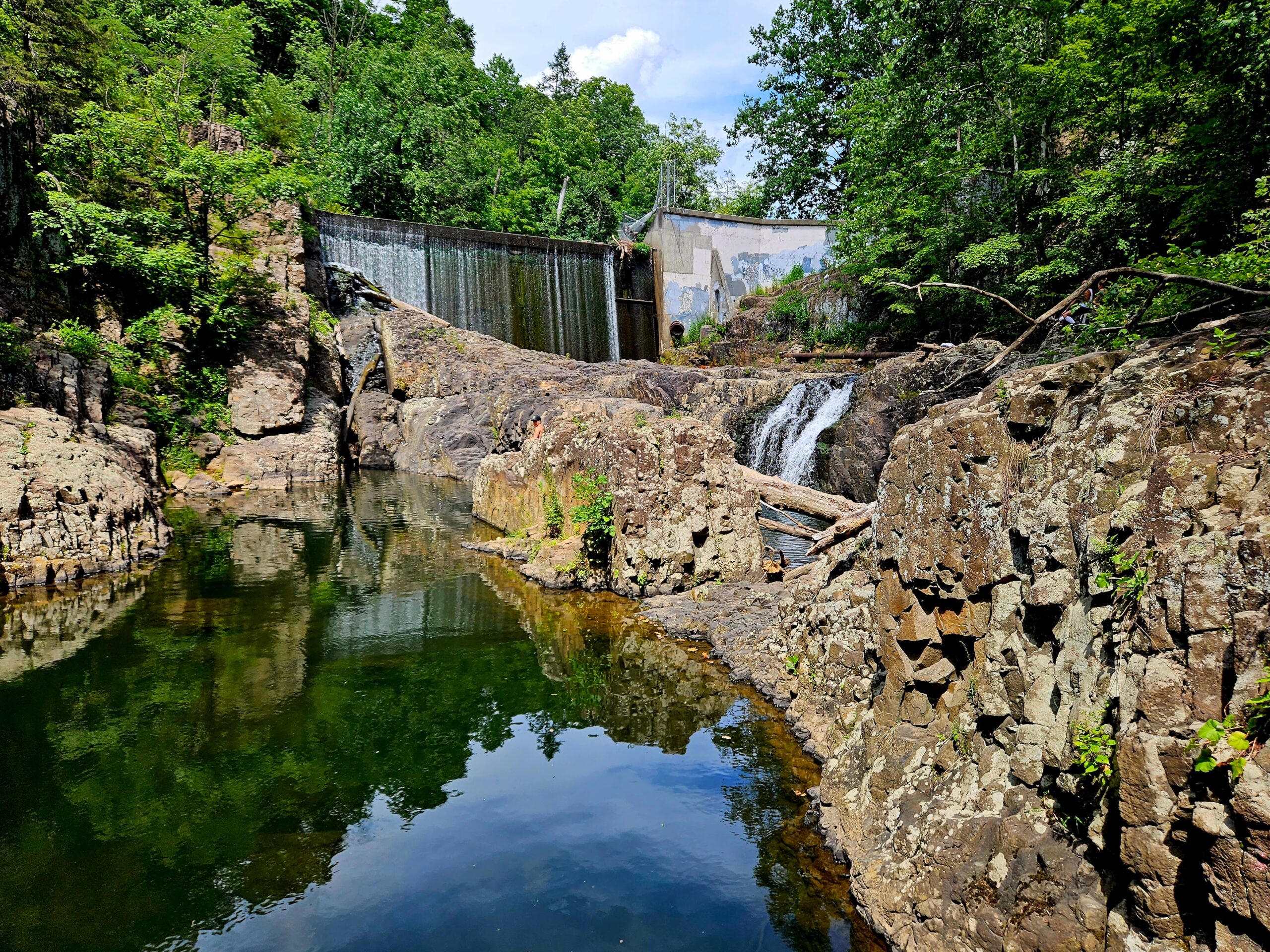
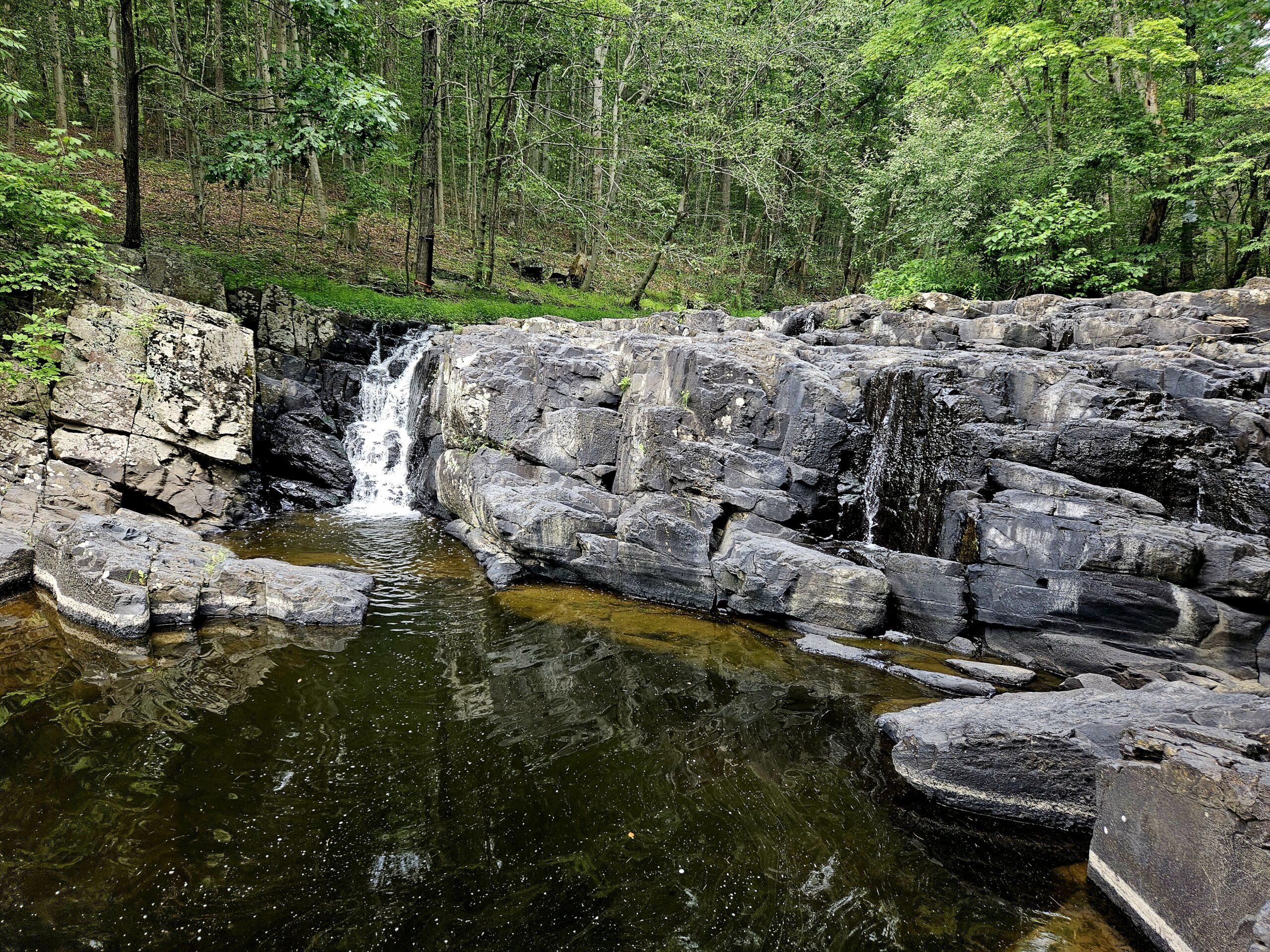
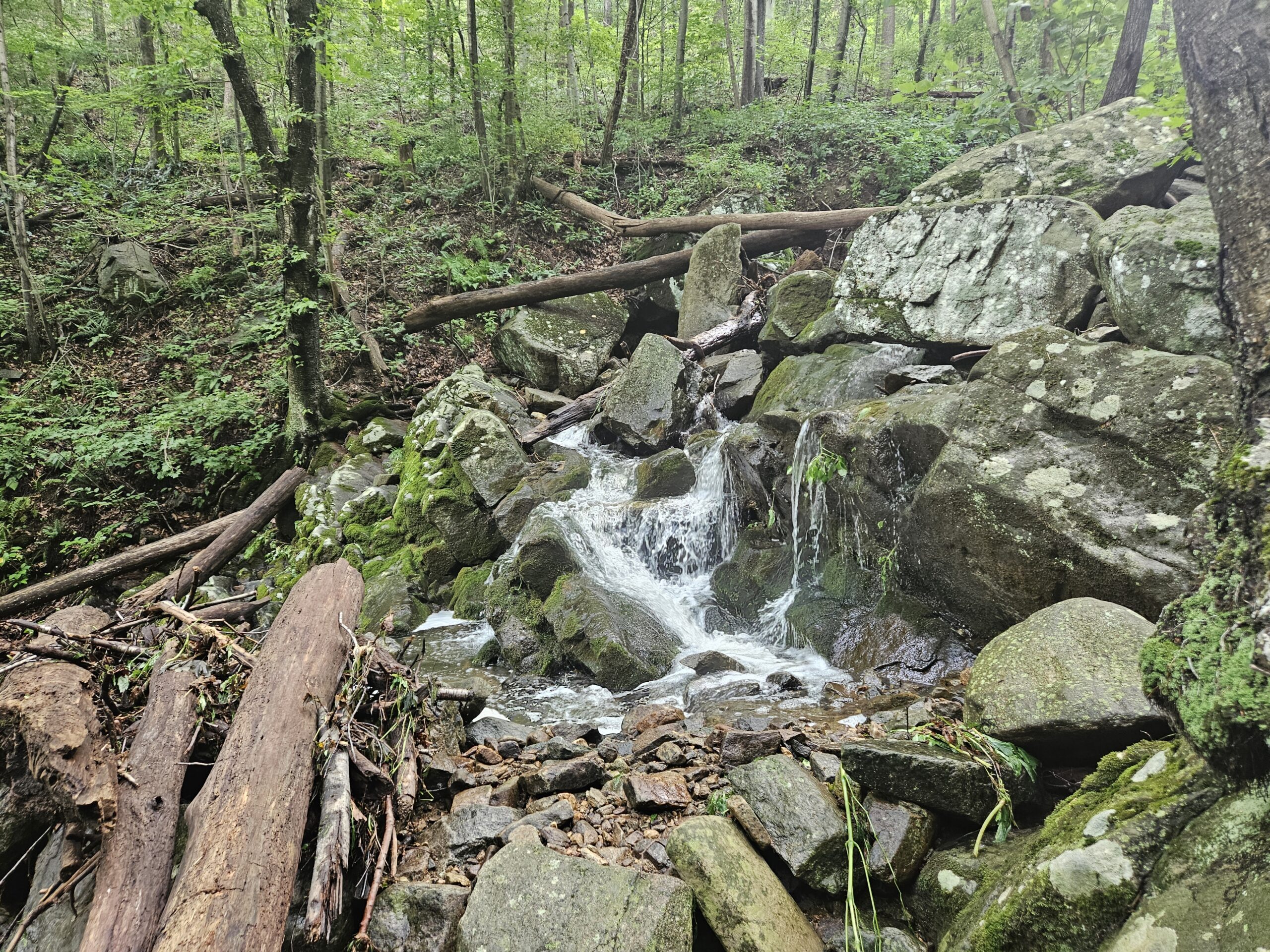
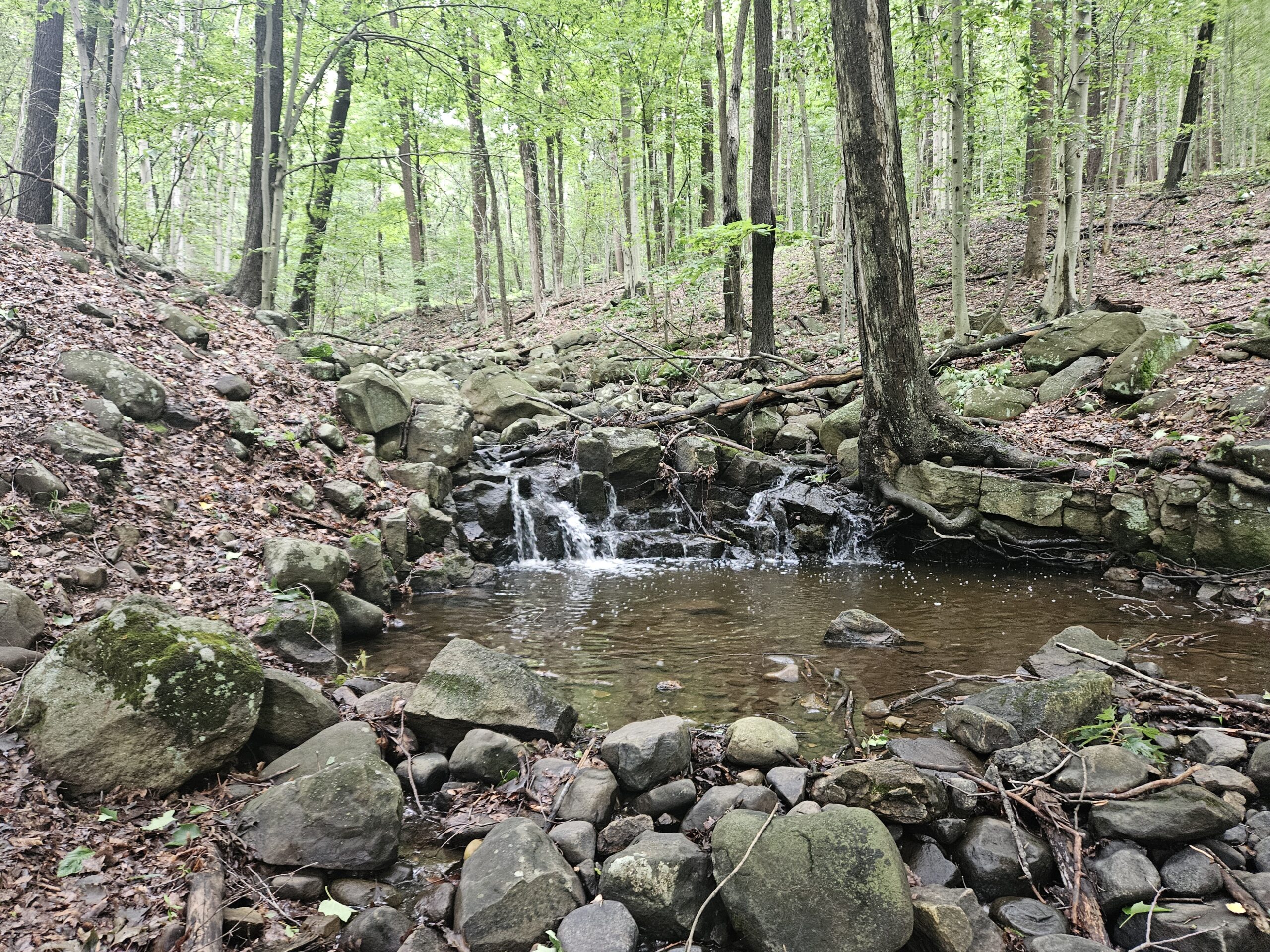
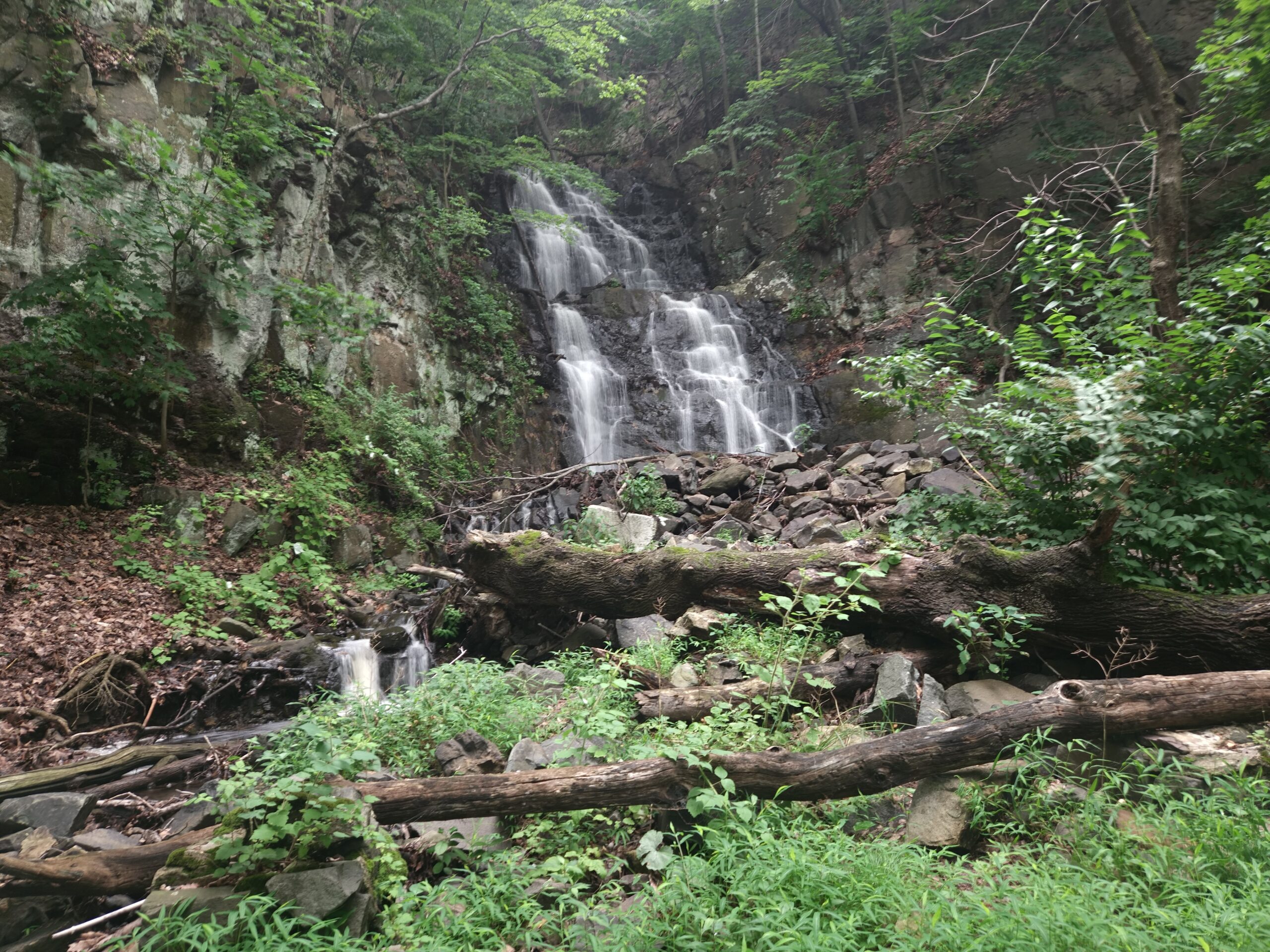
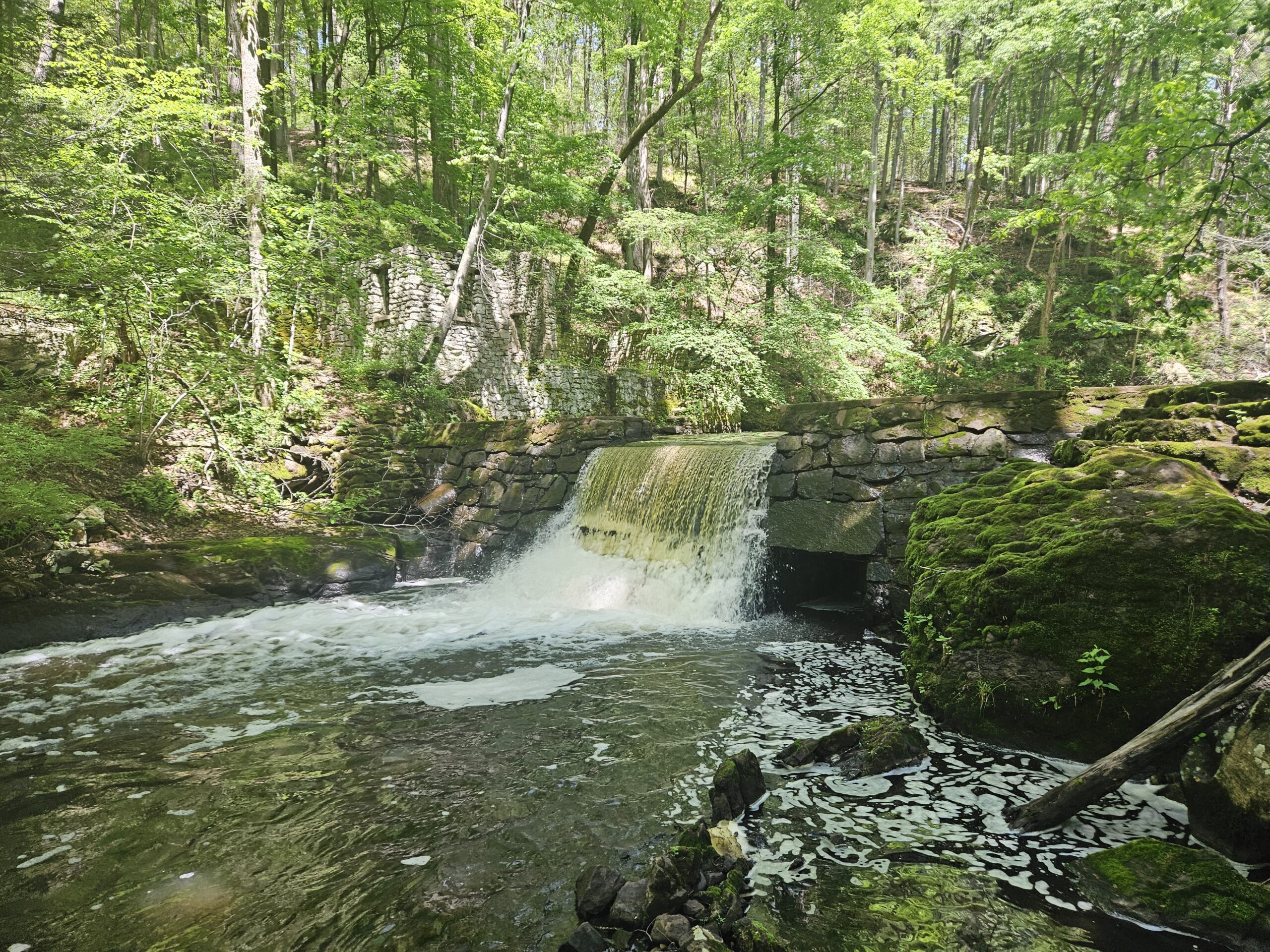
Begin on the Blue and Black Ramapo Lake Spur Trail from the lower parking area. The trail works its way up and hugs Ramapo Lake Brook for most of its length. The brook is generally very low-flow or even dry due to the Ramapo Lake Dam holding back water. If you go after significant rainfall, the brook is very impressive and features many small waterfalls and cascades.
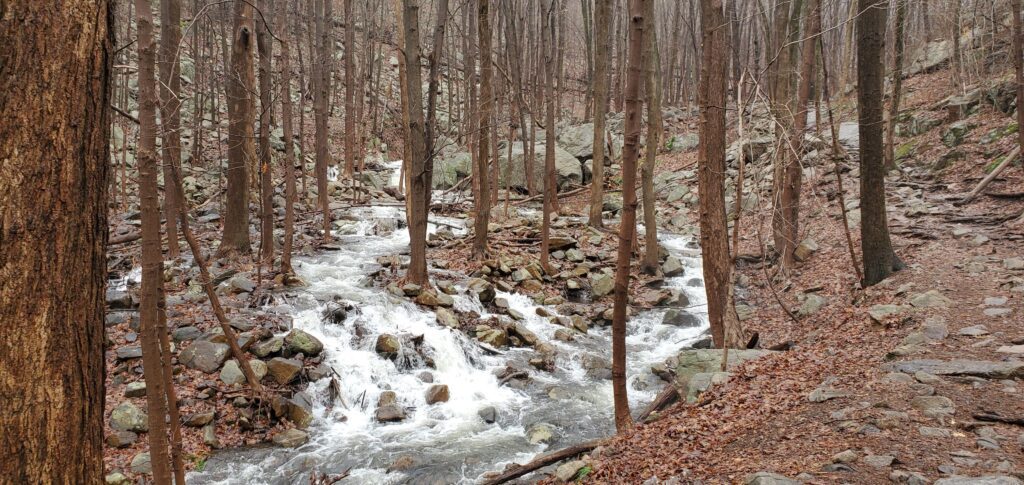
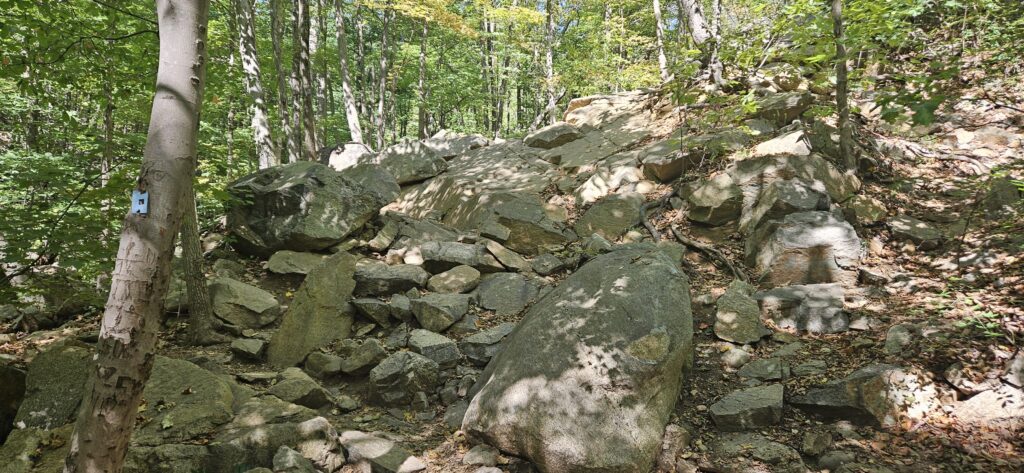
The Blue and Black Trail gradually works its way uphill for just over a half mile. The trail is pretty rocky in places, and there is a short rock scramble at the start. The trail is never steep, but it does have a constant incline.
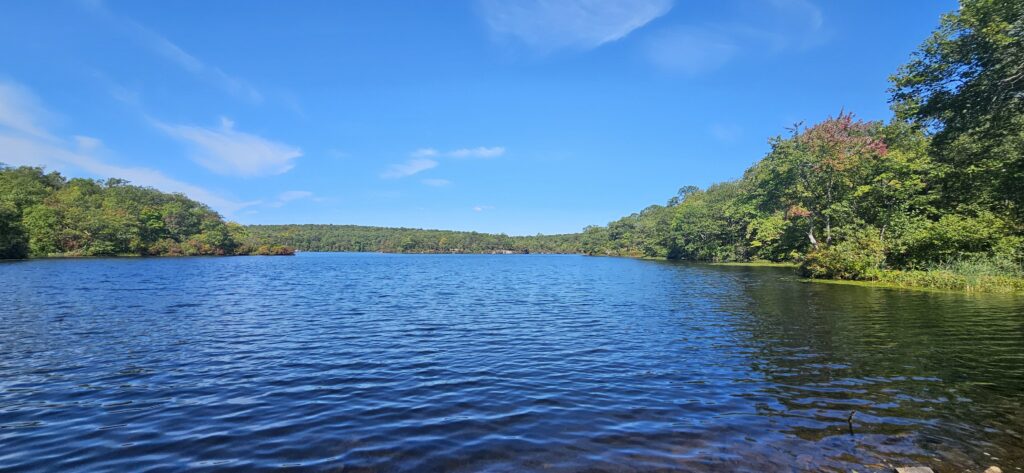
The trail ends at the scenic Ramapo Lake.
Ramapo Lake
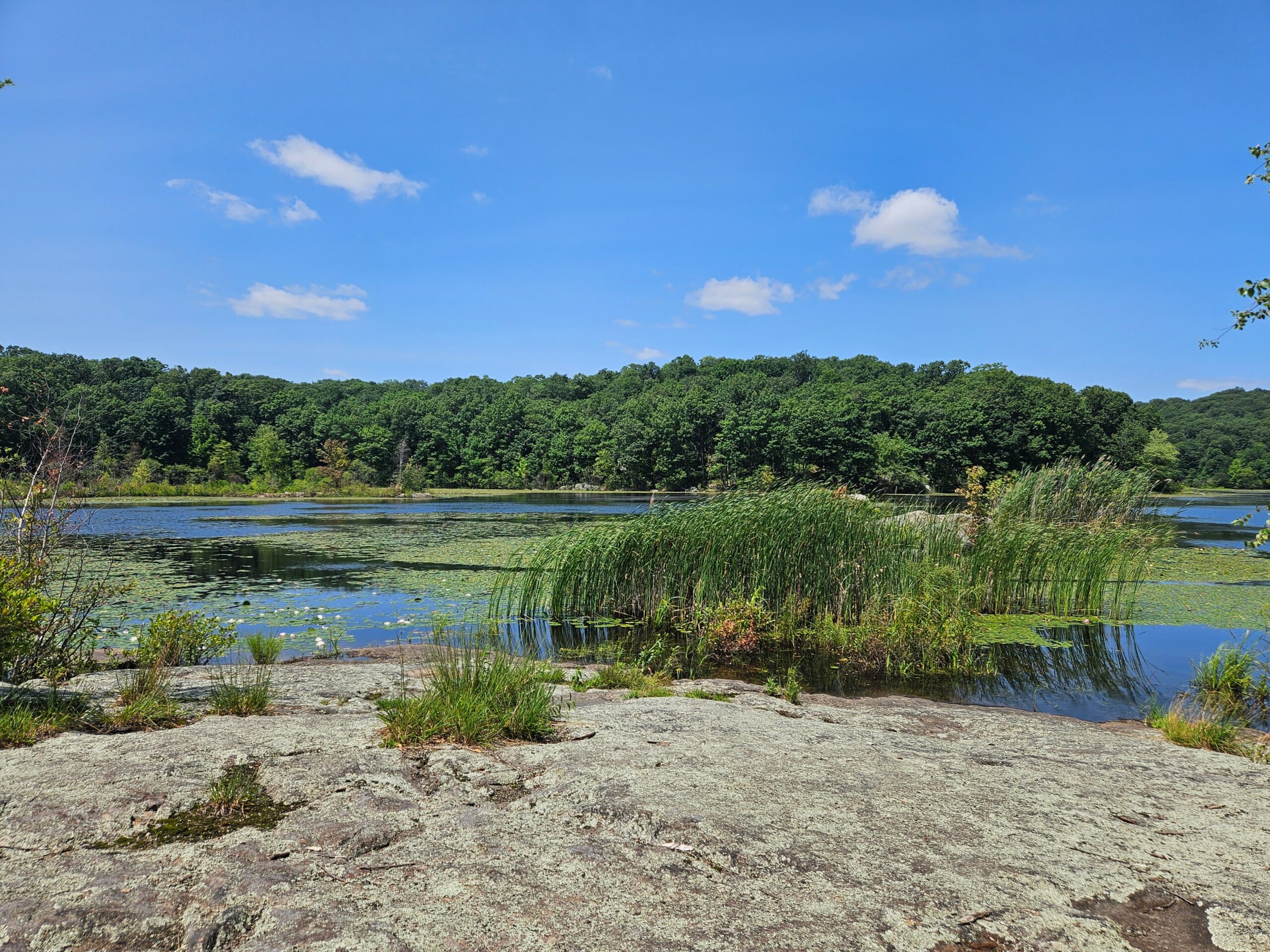
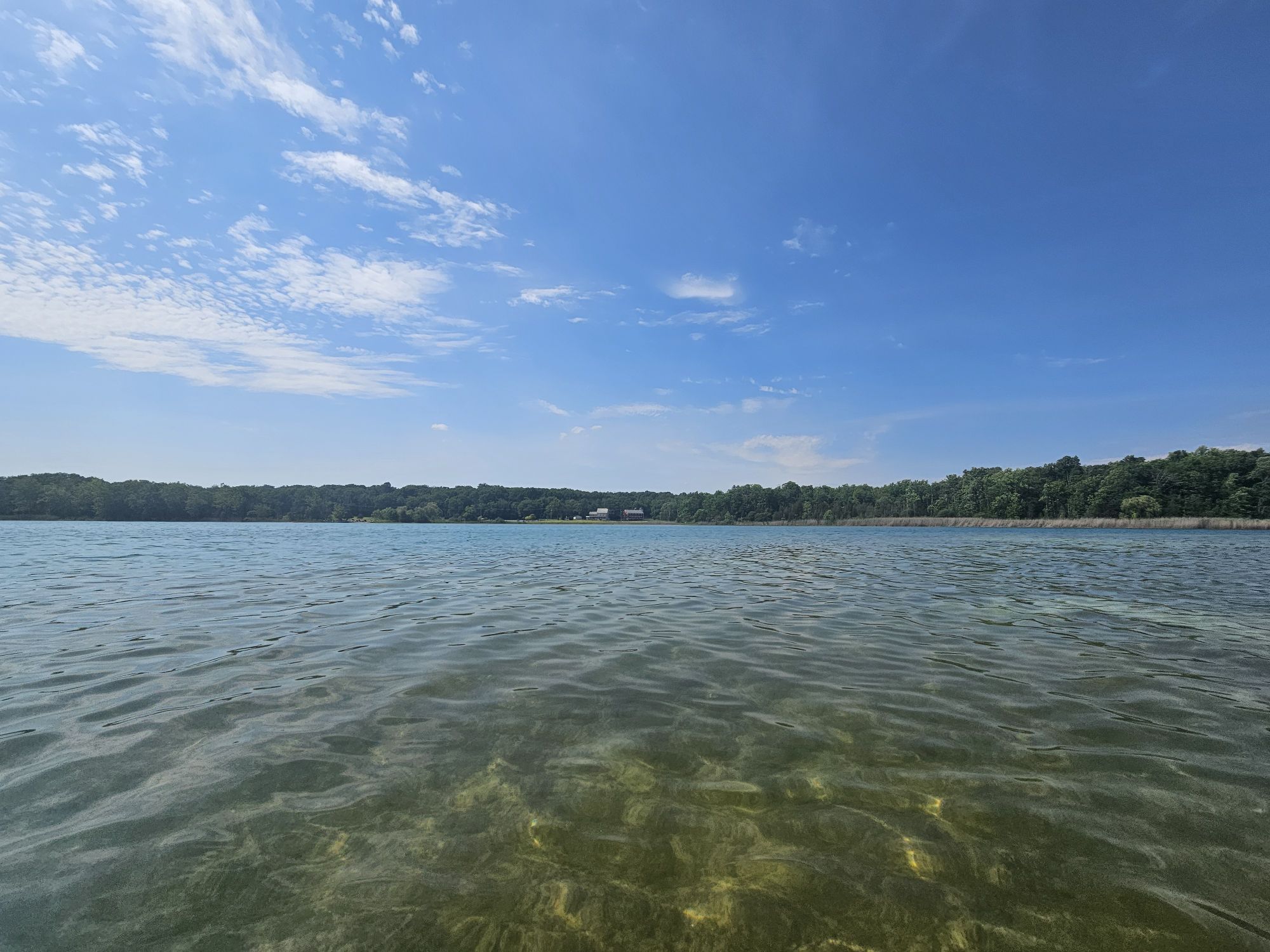
Ramapo Lake is a large 120-acre lake in the heart of Ramapo Mountain State Forest. Ramapo Lake is one of 47 designated natural areas in New Jersey. In New Jersey, a natural area is designated as:
An area of land or water…which has retained its natural character, although not necessarily completely undisturbed, or having rare or vanishing species of plant and animal life, or having similar features of interest, which are worthy of preservation for present and future residents of the State.
Ramapo Lake was dammed in the late 1800s and expanded from 25 acres to the present 120 acres. The northeastern shoreline features an active road for two residences, with one of these residences almost directly next to the water, only separated by the road. For these reasons, I don’t necessarily agree with the “natural area” designation. It is scenic, but far from natural.
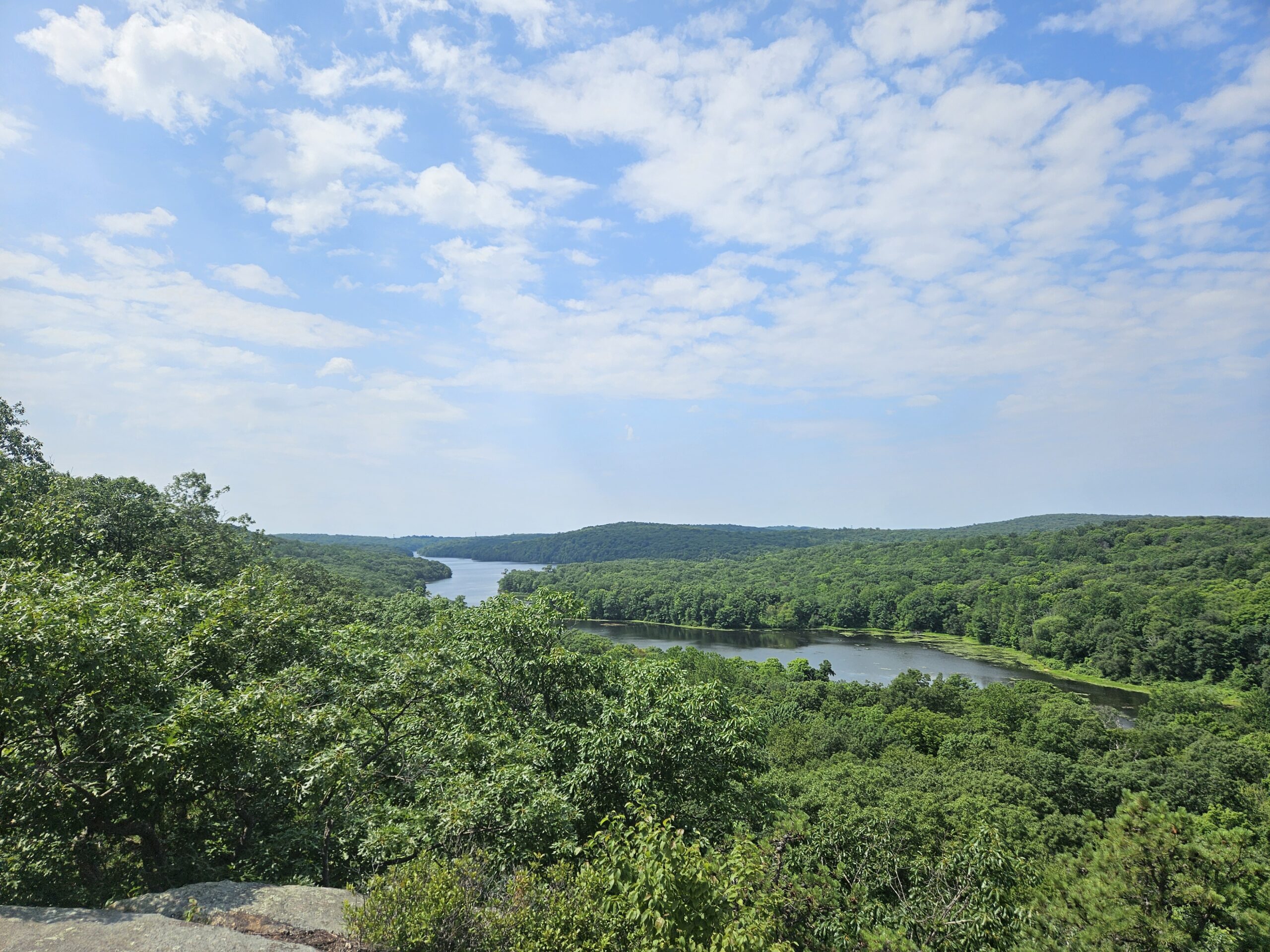
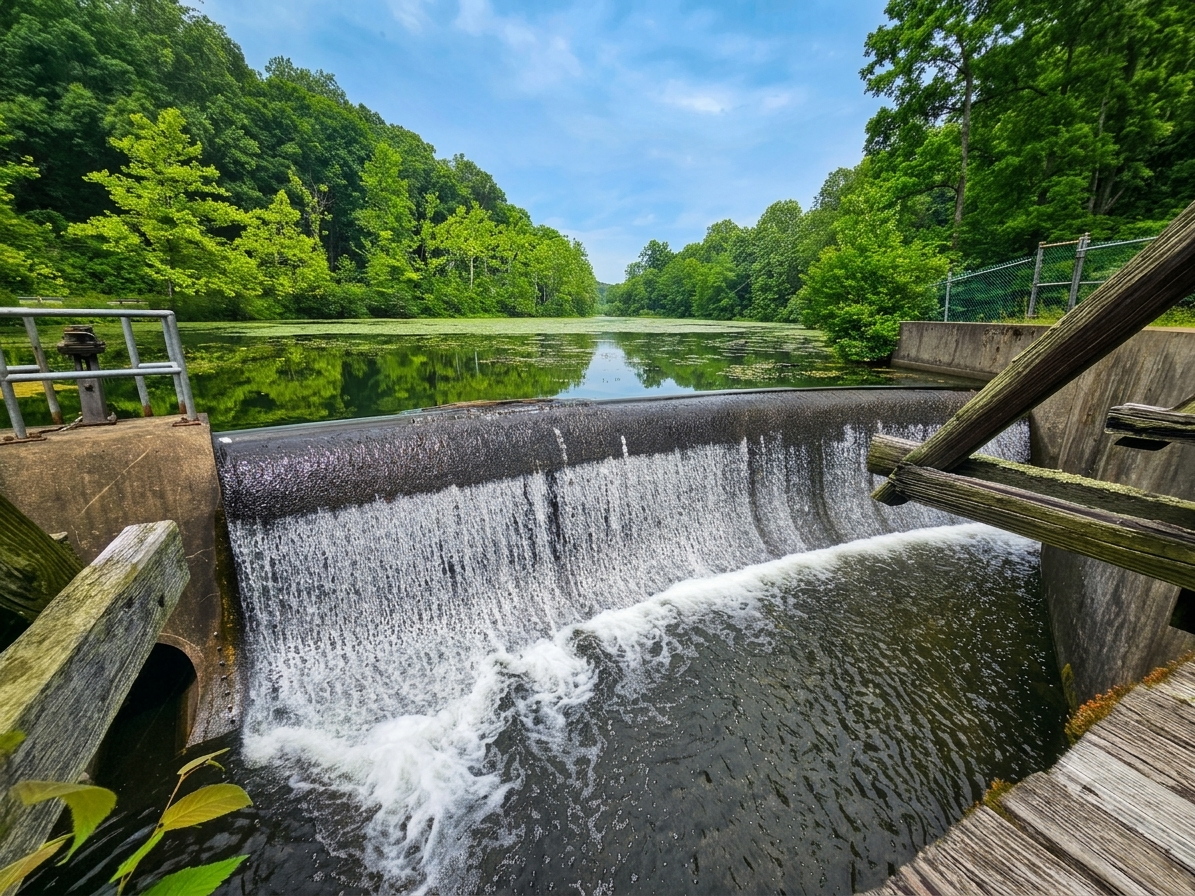
From the end of the Blue and Black Trail, you can take a short detour to the dam and get a scenic view of the lake. There are a few other views along the shoreline, but this one is arguably the best.
After taking in the view from the dam, return to where the Blue and Black Trail ended. Here you will find the road around the lake. The road forks where the Blue and Black Trail ends. Continue left on the road around the lake, beginning the White Castle Loop Trail. The other direction is how to private landowners enter and exit to and from Skyline Drive.
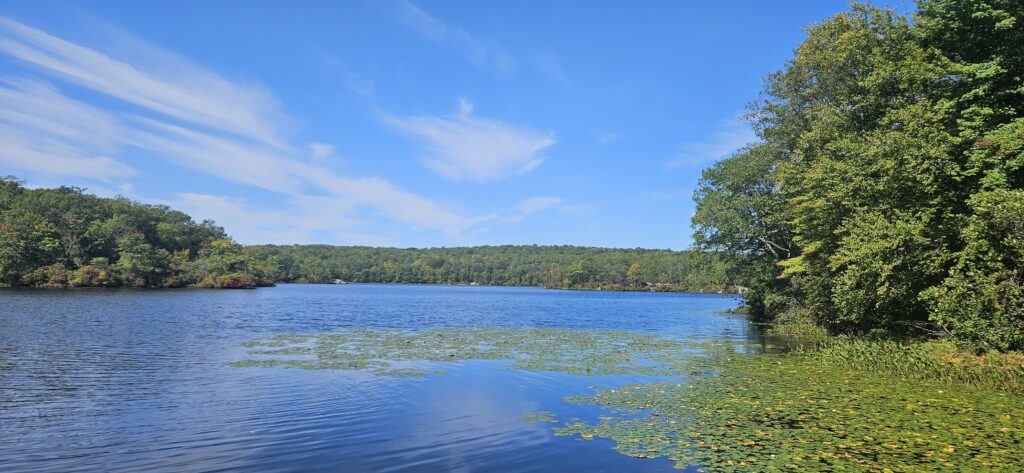
The road is flat and easy. You will soon pass by the previously mentioned house on the lake. For how deep into the forest you are, it is a very nice property.
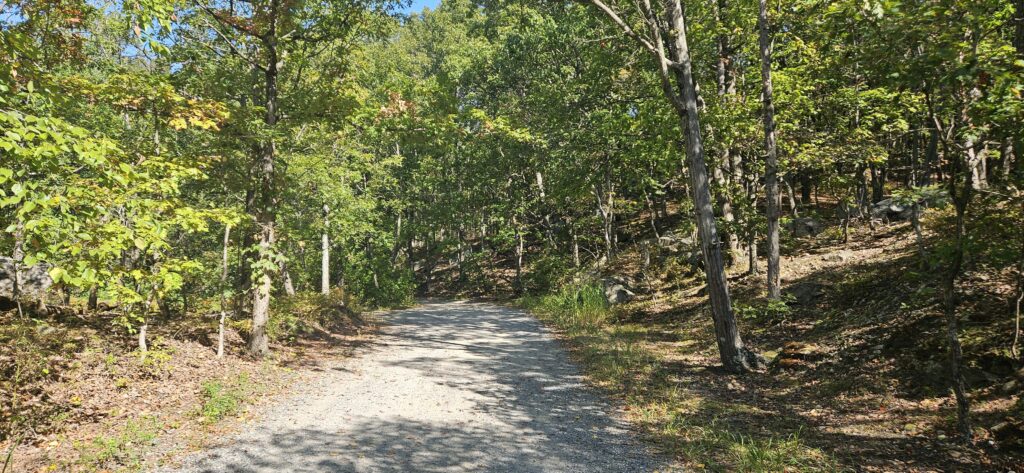
Soon, you will reach another obvious intersection where the road splits. Take the road to the right, remaining on the White Trail and going through the supports of an old gate. Here there is also a sign directing you towards the castle.
Van Slyke Castle
Continue on the road for a short distance following the White Trail. The road will soon make a long turn to the right, and the White Trail finally exits the road to the left at the end of this long turn. There is another sign at this point directing you onto the trail so you do not miss it. If you were to continue on the road, you would reach yet another very nice house in the middle of the forest.
Once you leave the road, the trail immediately becomes much more rugged. You will soon begin a rocky ascent up to the top of the ridge. After about a quarter mile, you will reach a stone retaining wall at the base of the castle. A short wooden staircase is present to reach the top of the wall.
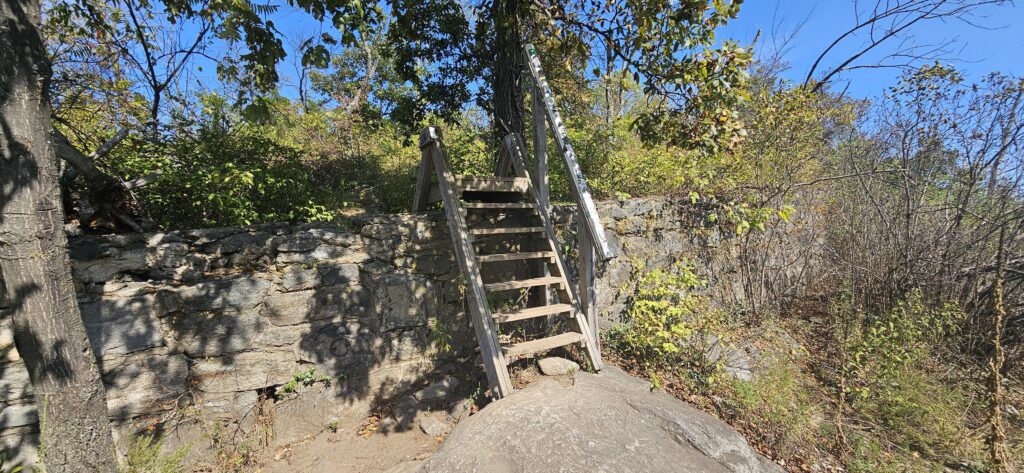
If you look behind you from the steps you will have a nice overlook of Ramapo Lake from above.
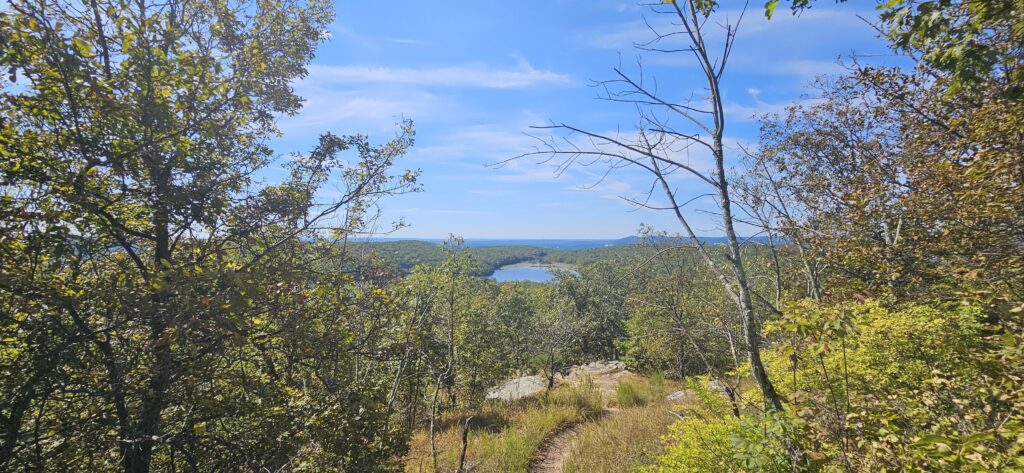
Once you reach the top of the steps, walk forward a few feet to where you will be greeted with Van Slyke Castle.
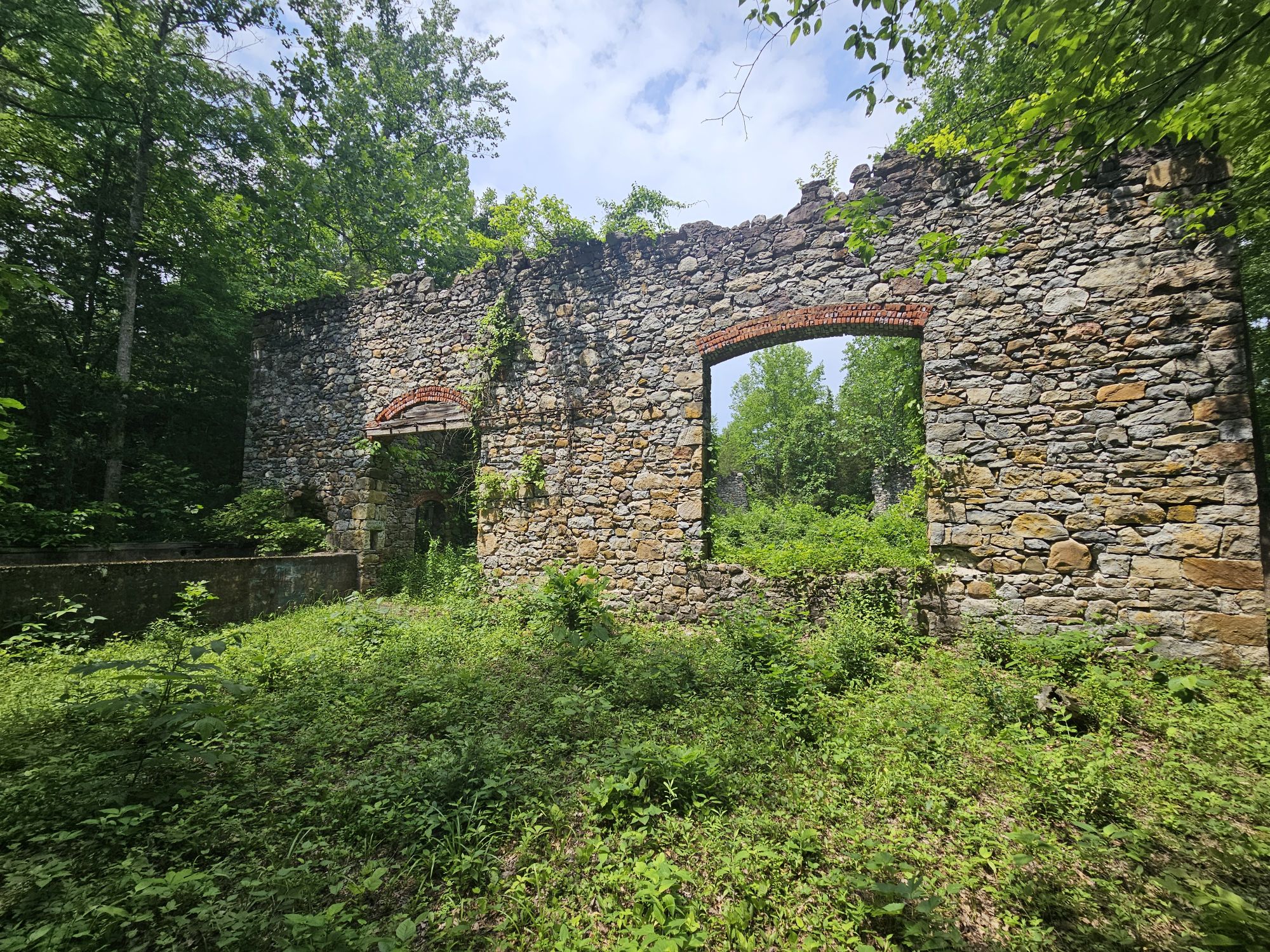
Van Slyke Castle is surprisingly large, and there are multiple “rooms” to explore through the remaining stone strucutre. The White Trail skirts around the side of the castle before passing under some steel supports, but there are many unmarked trails into and through the castle. On the other side of the castle, there is a short, unmarked trail to where you will find the former gate and entrance to the building. You can also find an additional building of some sort right next to the “entrance” to the castle.
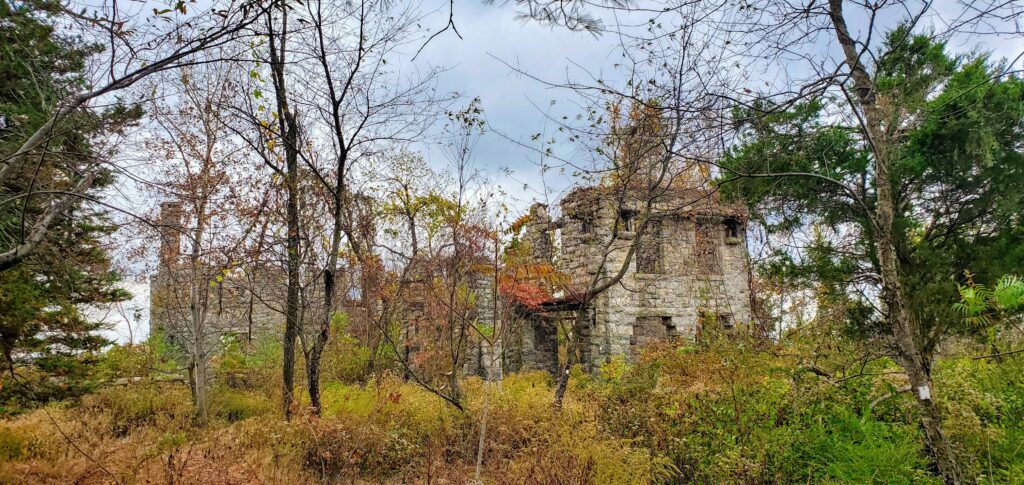
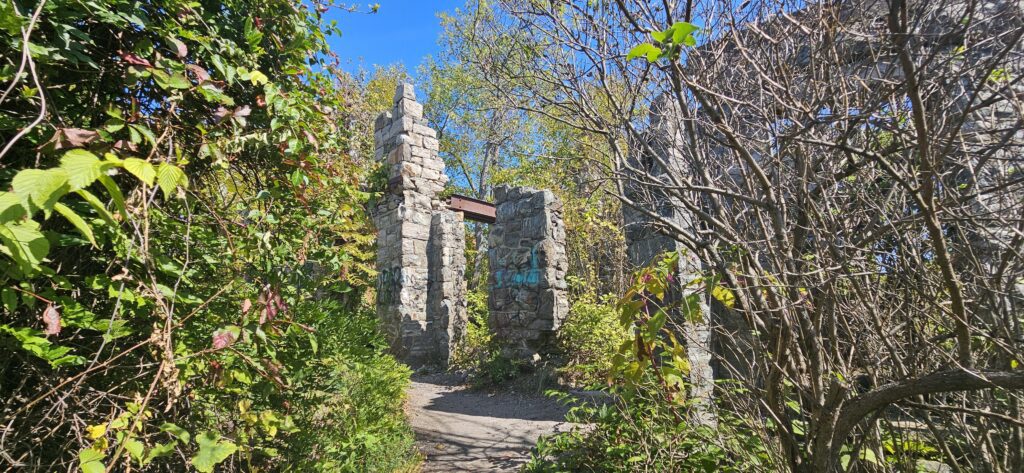
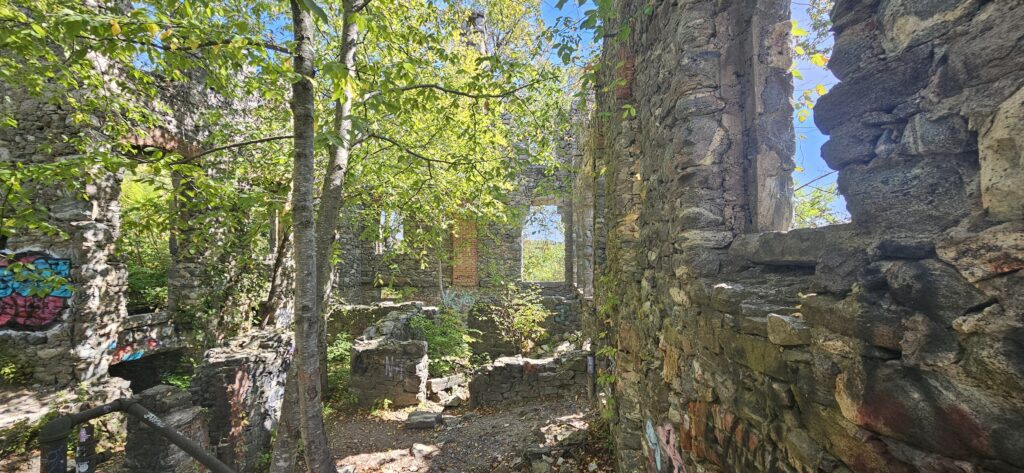
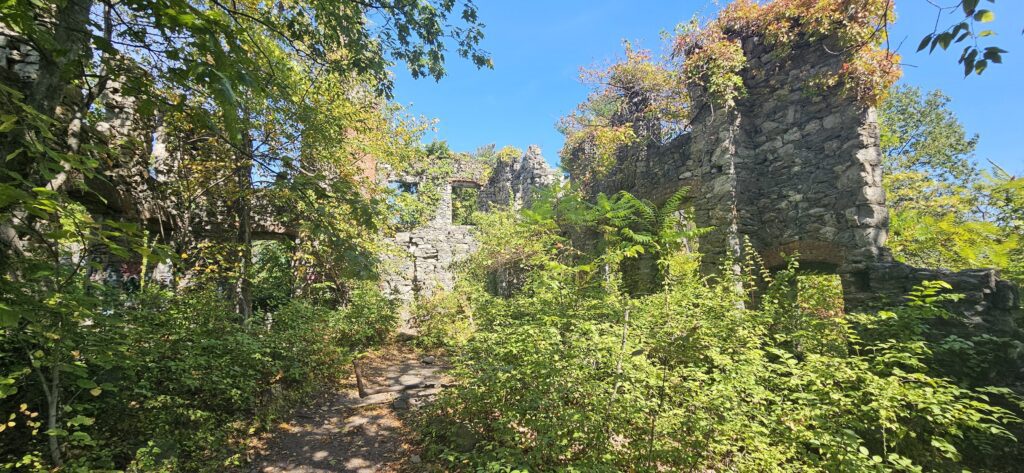
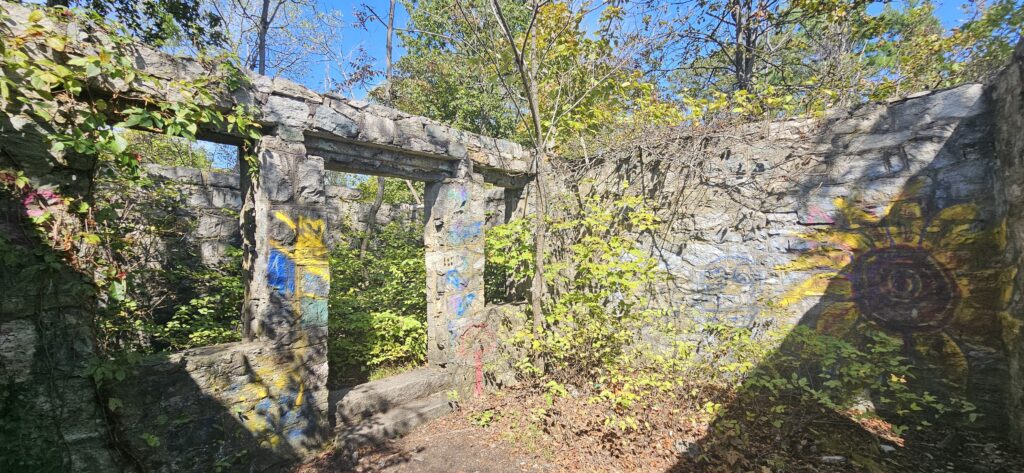
Despite being commonly known as Van Slyke Castle, the castle and its surrounding estate were historically referred to as Foxcroft. In 1909, Ruth A. Coles married William Porter as he was constructing Foxcroft. In 1913, Coles married Warren C. Van Slyke after Porter’s death, hence the name Van Slyke Castle. After Coles died in 1940, the house was sold and left empty. In 1959, arsonists burnt down the castle.
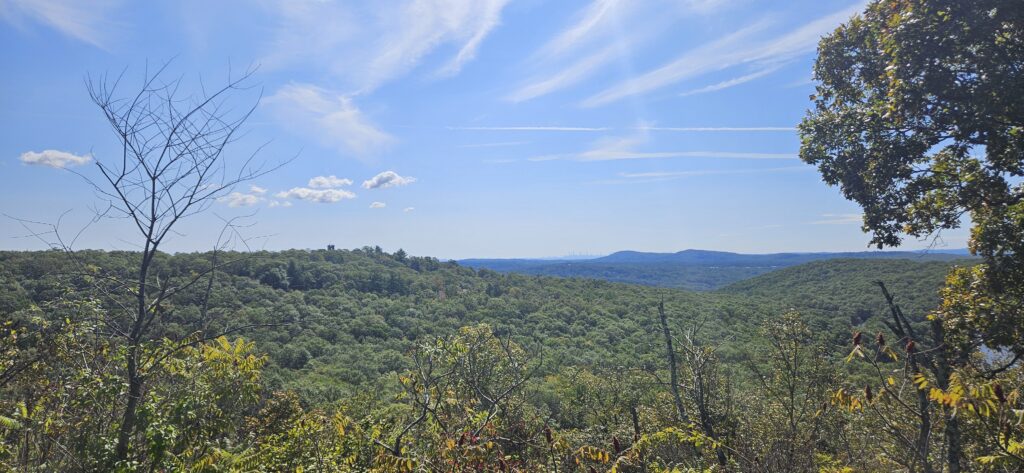
Make sure you look through the windows of the castle to see the spectacular views of New York City and High Mountain in the distance. You may also notice another tower to the left of the New York skyline. No official trail leads to that tower, but read on for more information on it.
The Pool
Once you are done exploring Van Slyke Castle, return to the White Trail. You may notice an obvious gravel road near the entrance to the castle. Remain on the White Trail as the road leads to a private house.
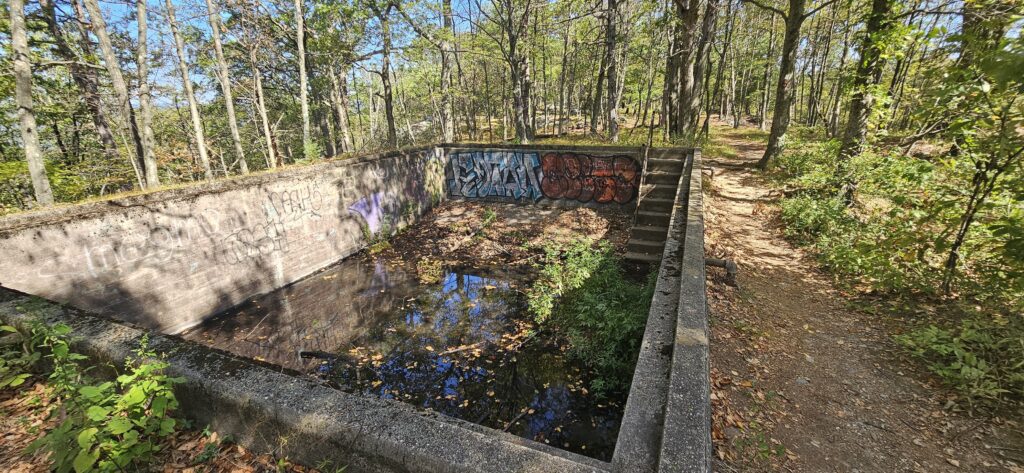
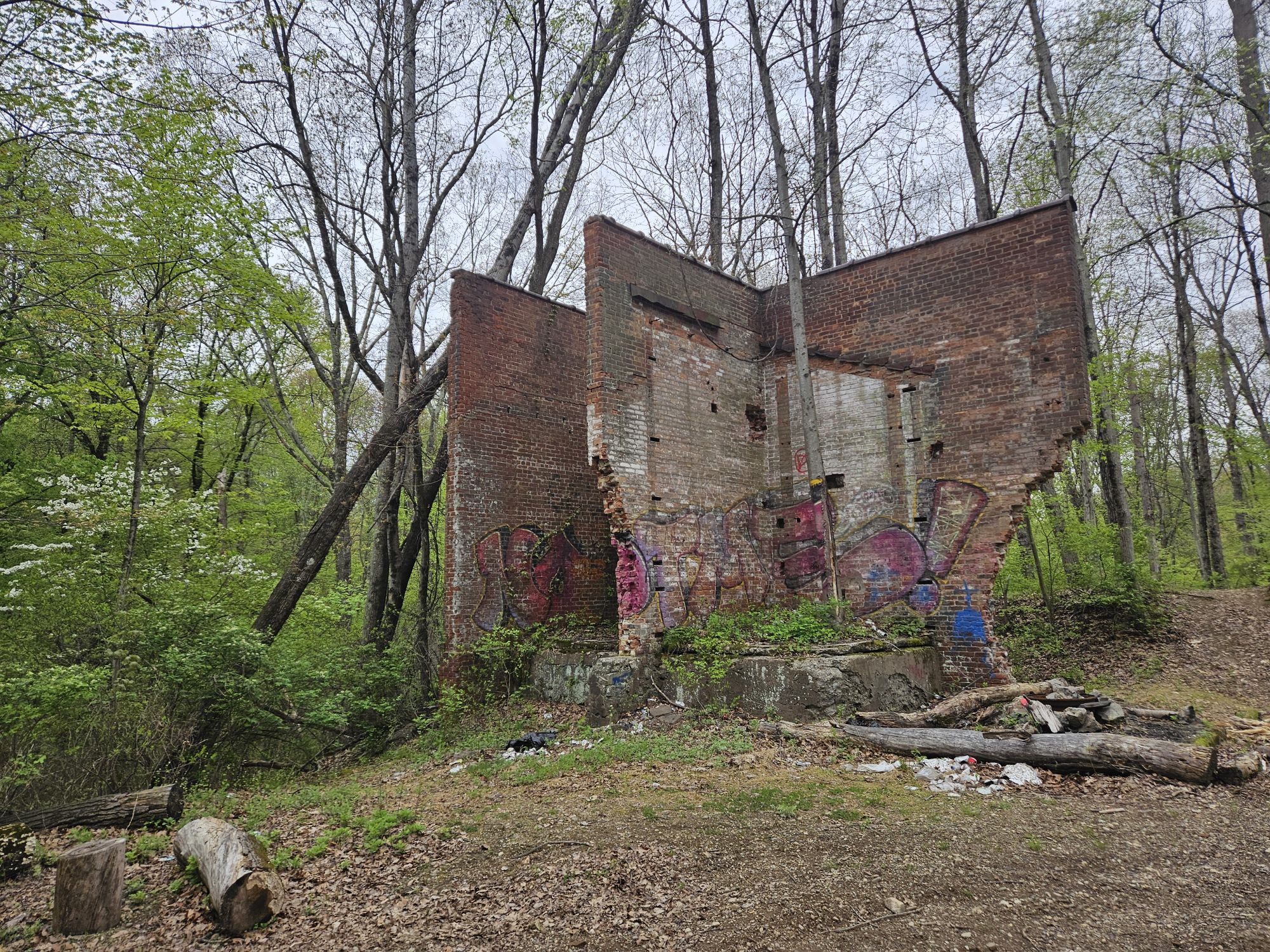
In a few hundred feet you will reach the ruins of the swimming pool.
The Water Tower
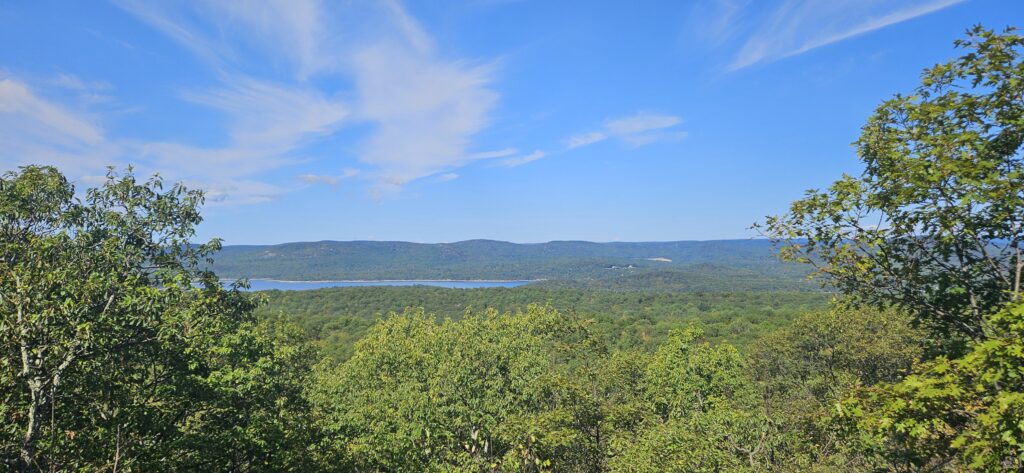
From the pool area, continue on the White Trail to reach the final remnant of Van Slyke Castle: a stone water tower. Along the way, you will pass by a handful of excellent views of the Wanaque Reservoir and the mountains of Norvin Green State Forest.
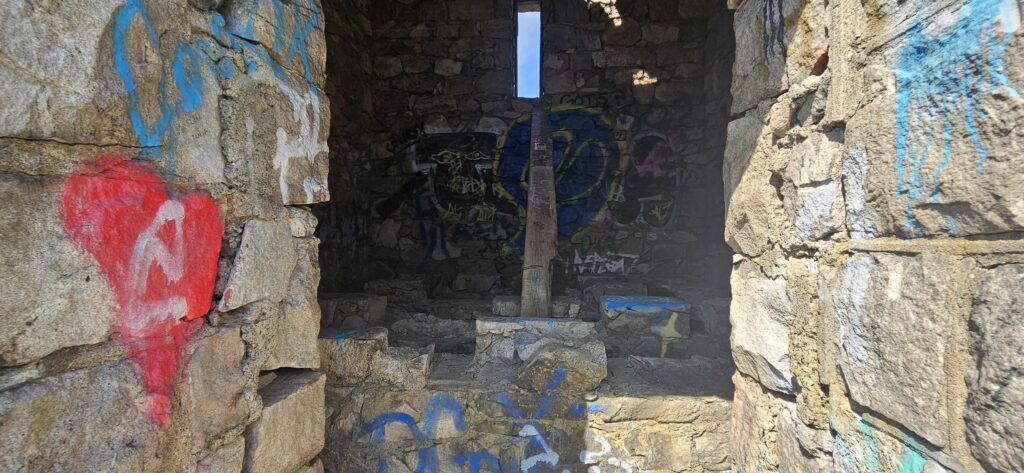
You will soon reach the large stone water tower. On first glance, you might be confused by the windows, which defeat the purpose of water retention. The stone tower was actually to support a cistern which served to hold the water and for decoration. You will likely notice some piping still visible to carry water to the castle.
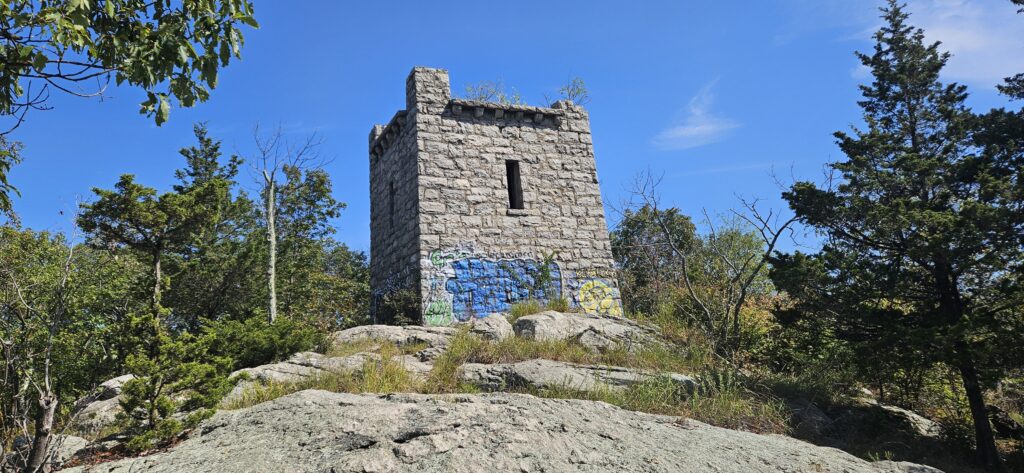
While the cistern is gone, it is still possible to see the stone supports for it. The entrance to the tower is on the back side of the structure from the trail itself. Walk around the tower to view the inside of the water tower.
The Rest of the Hike
After the water tower, the White Trail begins to travel down a small hill before briefly traveling along a gas pipeline. After leaving the pipeline, the trail climbs up a small hill. The top of the hill is a bald rock, but unfortunately, there is no view.
The trail then crosses Deer Ledge Road, a private road used by homeowners inside the forest. The trail then gently works its way to the upper parking lot on Skyline Drive.
From the upper parking area, take the White Trail for another mile until you reach the Blue and Black Trail again. During this mile, the trail gradually works its way downhill. Near the end, there is one set of switchbacks, but they are short and not rocky. The trail here is not particularly interesting, especially after Van Slyke Castle, but it is still nice.
From the Blue and Black Trail, return to the lower parking lot, ending the 4-mile trek.
The Other Tower
While looking at the New York City skyline from Van Slyke Castle, you may notice another stone tower in the distance, known as Ryecliff Tower. Unfortunately, the tower is on private property, but it is still possible to get close to it. From the upper parking lot, simply continue on the gravel road behind the gate instead of continuing on the White Trail. In about a half mile, the road joins a road used for access to the properties in the interior of the park. Continue straight, where you will quickly see the tower.
There is not much information about this tower available online, but a home listing in 2003 describes the tower:
This early 20th century residence, known as Ryecliff, was designed by Clifford MacEvoy, a contractor of large public works in the Ramapo Mountain area, as his home. At the time, it was on 2,600 acres, but his estate conveyed most of that land to New Jersey in 1976, and it is now known as Ramapo State Park. One of Ryecliff’s most unusual features: its 65-foot high observation tower, which was originally a water tower Mr. MacEvoy had built at the Wanaque Reservoir (he had it moved to this property and covered in stone). The structure is being leased as a radio tower.
Today, the property of the tower is owned by Restore Native Plants, an organization dedicated to removing invasive plant species and replanting native plants. While the property itself is private and surrounded by “No Trespassing” signs, you are still able to get a great view of the tower from the road.
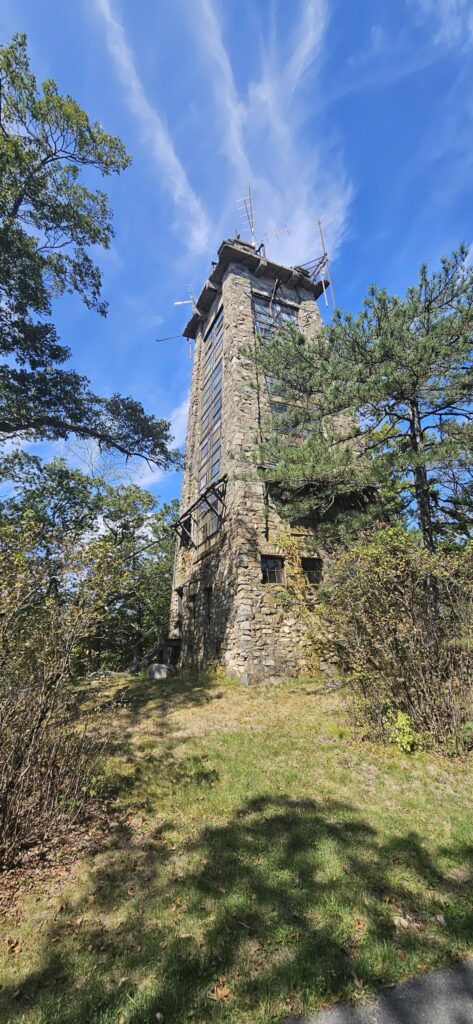
After visiting the tower, you can continue straight on the road to reach Ramapo Lake.
GPS Route
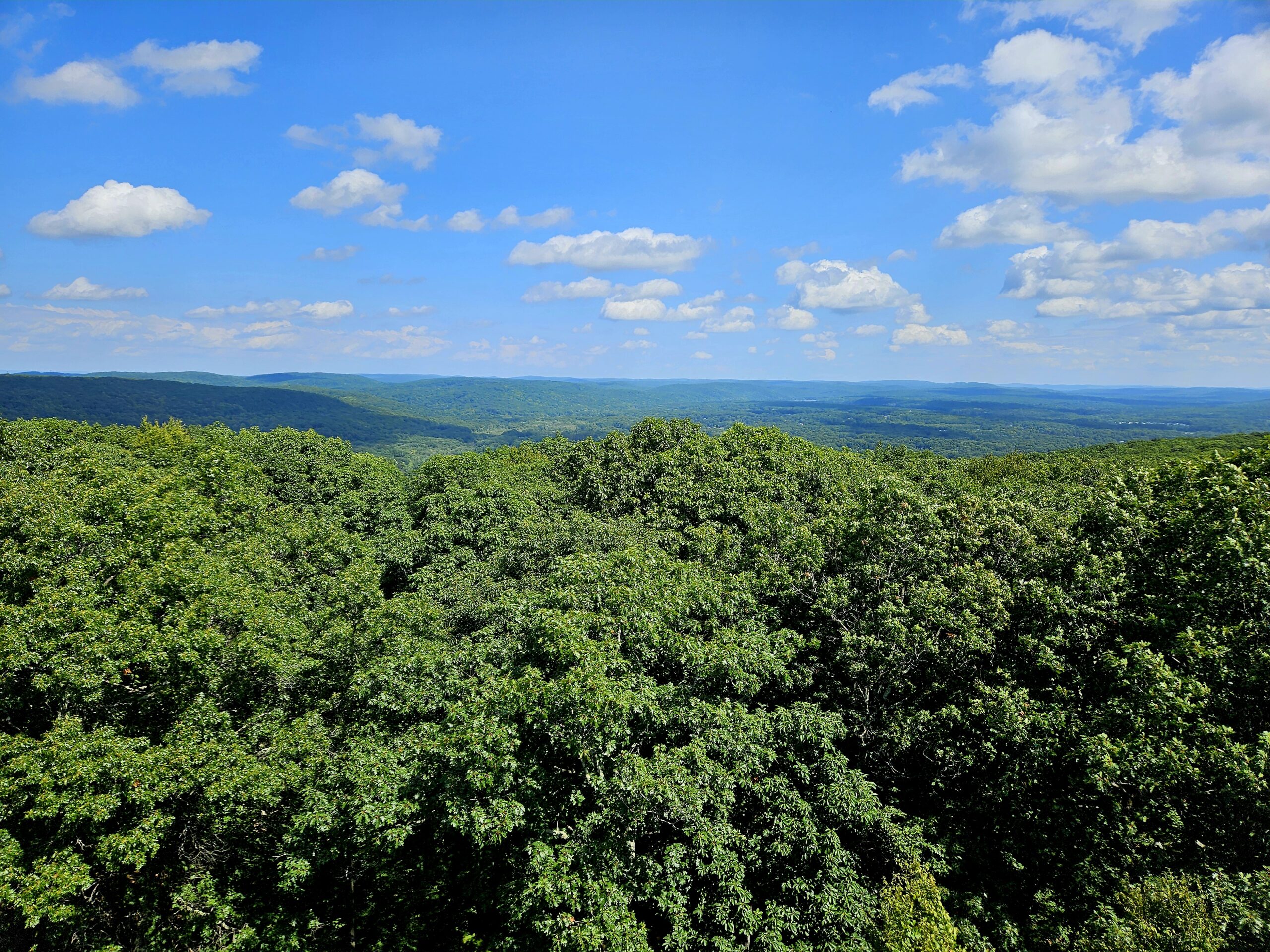
Attached is the route as described above for reference. Additionally users can download the route to use on their preferred GPS. How to use the GPS routes on your phone.

Leave a Reply