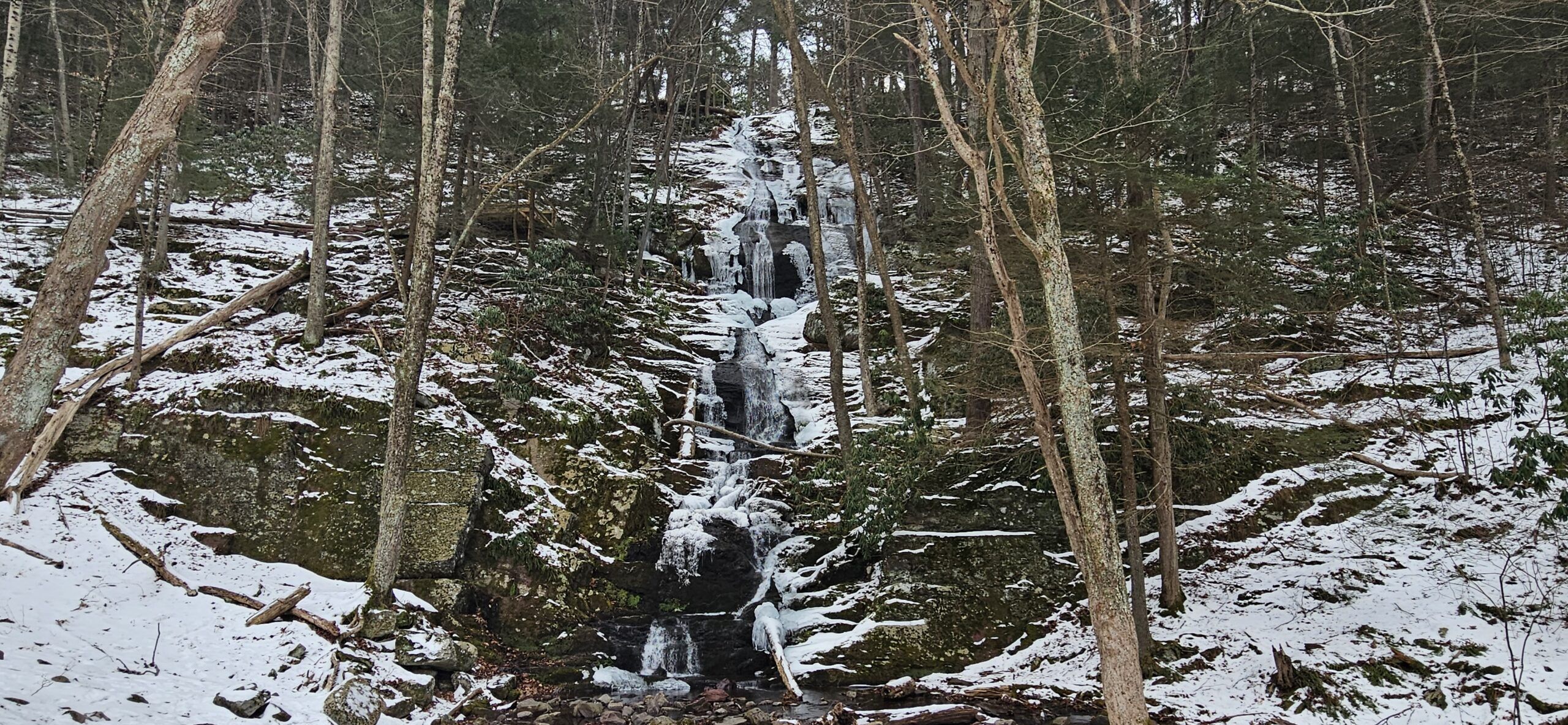
Located at the end of winding back roads, Buttermilk Falls sits in one of the most remote and off-the-grid corners of New Jersey. Standing at an impressive 130 feet tall, it is one of the tallest waterfalls in New Jersey, and arguably the most impressive. During the warmer months, visitors can drive all the way to the base of the falls (though this is also an adventure). During the colder months, access is more limited, and visitors must hike nearly 1.5 miles each way to reach the waterfall.
This added hike is well worth it, as in winter, Buttermilk Falls transforms into an impressive frozen cascade, and while already secluded, the site becomes much more peaceful. Although winter hiking can be a turn-off for some, this particular trail is surprisingly easy and manageable for most visitors with proper preparation. Continue reading to learn about this stunning waterfall during the winter months. As a bonus, the trail passes by three additional waterfalls, two of which are visible from the road, a historic bridge, and an abandoned farmhouse.
Delaware Water Gap National Recreation Area
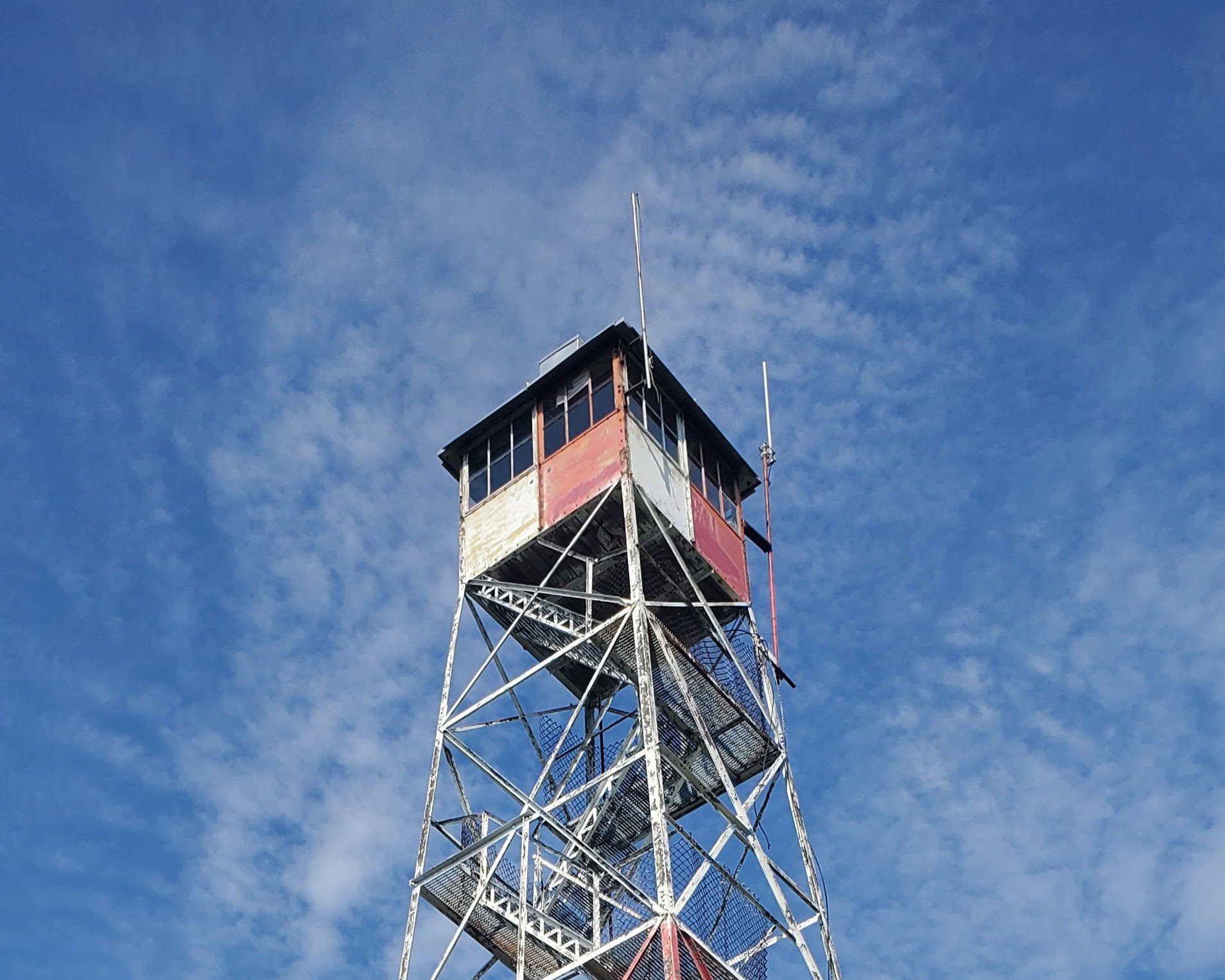
Other Attractions: Mount Tammany, Van Campens Glen, Silver Spray Falls, Catfish Fire Tower
Hike Information
Distance: 2.9 miles*
Ascent: ~300 feet (less if you decide not to hike to the top of Buttermilk Falls)
Difficulty: Easy
*From the Haneys Mill Bridge as described below. Alternate parking is available 0.4 miles away.
Background
The Delaware Water Gap National Recreation Area is a large National Park located along the Delaware River in both New Jersey and Pennsylvania. In New Jersey, the park stretches from the Interstate 80 area where it crosses the Delaware River, north nearly to the New York border. The park is best known for the Delaware Water Gap itself, a large geologic formation where the Delaware River cuts through the Kittatinny Mountains, forming Mount Minsi in Pennsylvania and Mount Tammany in New Jersey. The park is most popular for hiking and water activities on the Delaware River, especially near the Water Gap itself. Scattered throughout the park are a handful of impressive waterfalls such as Buttermilk Falls.
The National Recreation Area was created after the proposed damming of the Delaware River at Tocks Island, a small island upstream of the Delaware Water Gap itself. The dam would have flooded the valley, prompting the federal government to force residents out through eminent domain. About 15,000 residents were relocated in both New Jersey and Pennsylvania. As you travel through the park, you will see many abandoned buildings that were left behind when the government bought the land. The hike described below passes by one such building.
The waterfalls listed below are located in Walpack, one of the many communities affected by the proposed Tocks Island Dam. As of the 2020 census, Walpack has a population of just seven, down from an estimated high of 417 in 1977. While many of the buildings from this community have been demolished, a small historical district remains in Walpack Center. More information about the remaining buildings can be found on the park website. Walpack Center used to be easily accessible from Silver Spray Falls, but a 2023 vehicle crash damaged the small bridge connecting the two locations.
The Hike
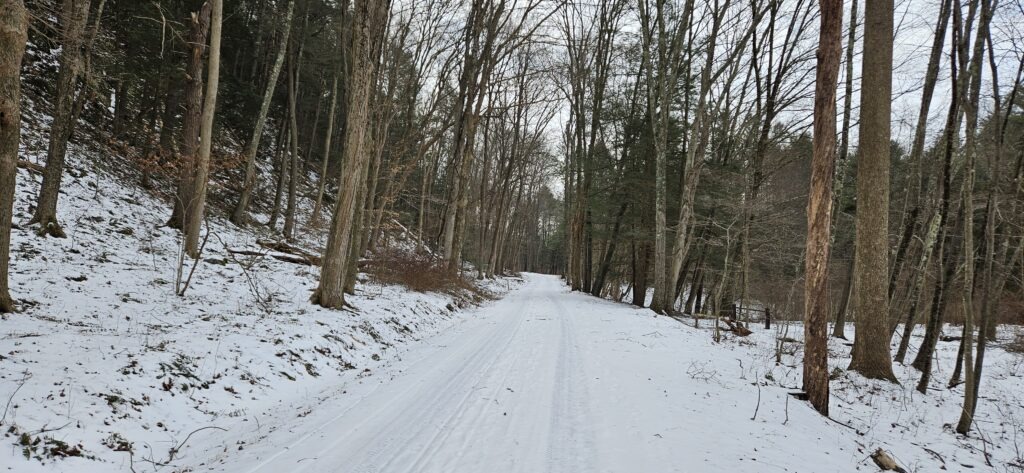
The hike to Buttermilk Falls during the winter is generally easy. The hike is entirely on the seasonally closed Mountain Road, with the option to briefly hike off-trail to see two unnamed waterfalls on the way to the main Buttermilk Falls, and an optional set of steps at the main waterfall. The road itself is wide and mostly level. When I visited, I brought microspikes for my boots, but did not use them except as a precaution on the final optional steps to the top of Buttermilk Falls. After a freeze-thaw cycle, there may be more ice on the trail.
Parking
Arguably, the hardest part of this hike is finding the parking area. During the warmer months, you can drive to the base of the waterfall, though this can still be challenging due to poorly maintained roads. In winter, you must park about a mile and a half from the waterfall and hike along the seasonally closed Mountain Road.
I recommend parking on Haneys Mill Road, which is off National Park Service Route 615. This is a single-lane road that dead-ends at an indefinitely closed bridge. There are two pull-offs available, one at the bridge and one just before it. If you are not comfortable driving down this road, there is also a large parking area on Route 615 where Haneys Mill Road begins, though this is about 0.4 miles from the bridge.
To reach the bridge, you must approach from the north, as there is a long-term road closure on Route 615 to the south. Despite this closure being in place for years, Google Maps and possibly other GPS apps may still attempt to route you this way. If you do arrive from the south, it is still possible to reach the area by following the posted detour.
Be aware that these roads receive limited winter maintenance. When I visited, it had been over a week since the last snowfall, yet Route 615 still had many snowy patches, and Haney Mills Road was completely snow-covered.
In the past, it was also possible to visit Buttermilk Falls in winter by parking at Walpack Cemetery and hiking in from the north. This option is no longer practical for most visitors, as both primary routes to the cemetery are currently closed. One is closed seasonally in winter, and the other, via Walpack Center, is closed due to another long-term bridge closure following a hit-and-run that damaged the bridge. An alternate route to the cemetery is via Brook Road, a long, unmaintained dirt road, but I do not recommend it.
Once you are parked, the hike to the waterfall itself is fairly simple.
Reaching the First Waterfalls and Farmhouse Ruins
From wherever you parked on Haneys Mill Road, follow the road down until you reach a bridge closed to vehicle traffic over Flat Brook.
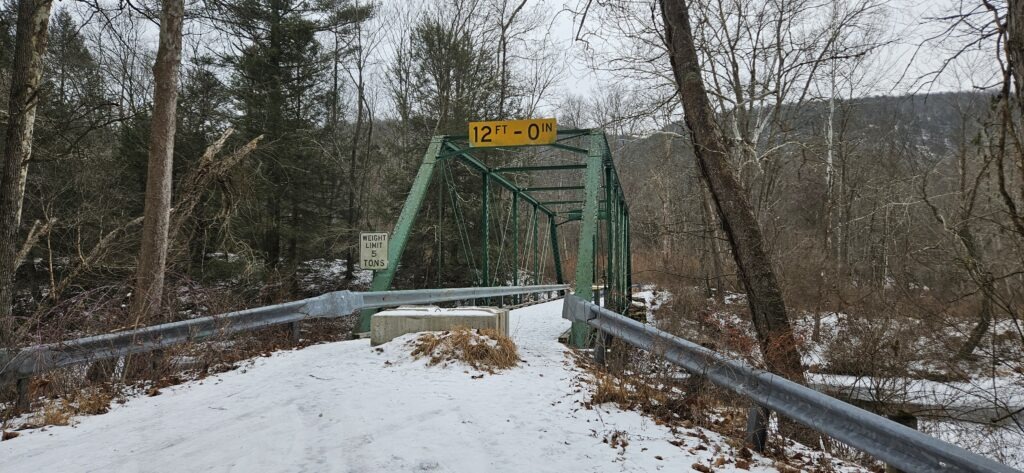
Cross the bridge and follow the obvious road for about three-quarters of a mile until you reach a large, abandoned farmhouse. The trail here is very flat and easy as it is normally a dirt vehicular road in the summer.
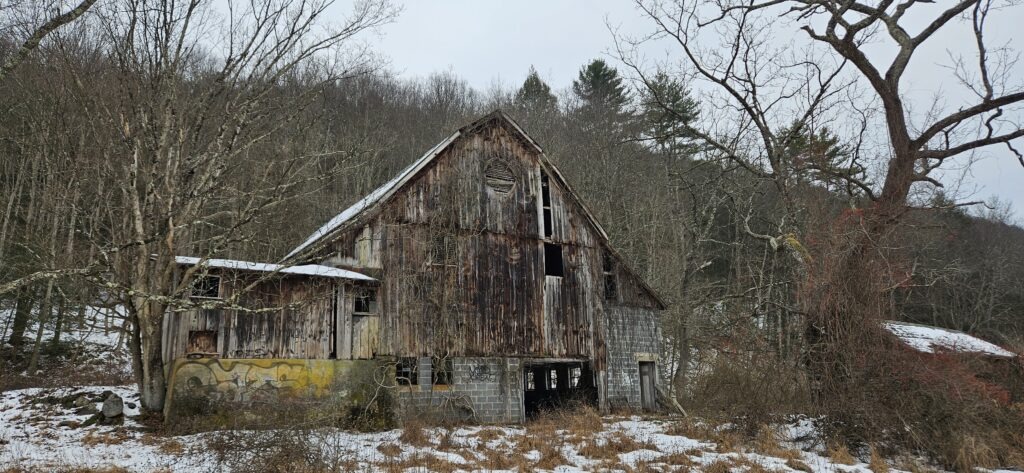
The farmhouse is in very poor shape, and I do not recommend walking on the first floor due to the large holes in the floor. A set of concrete steps leads to the basement, or you can walk around the back, where there is a large opening.
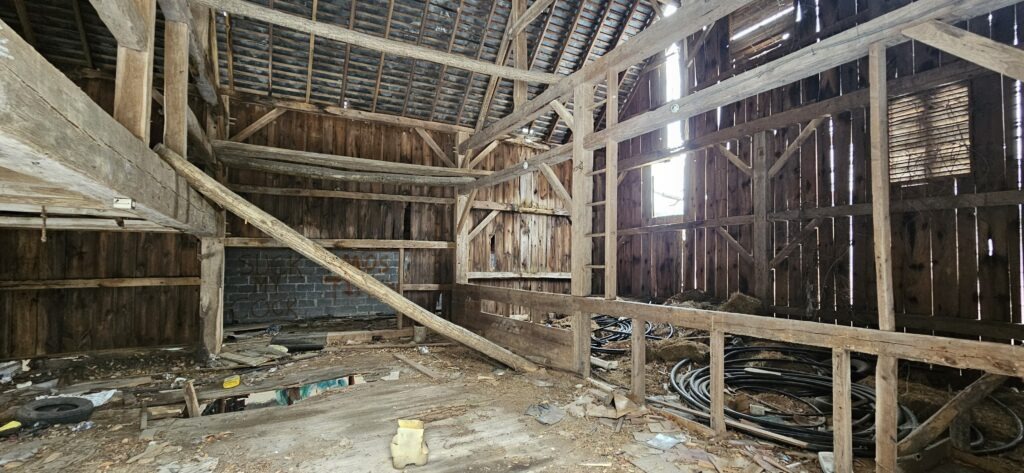
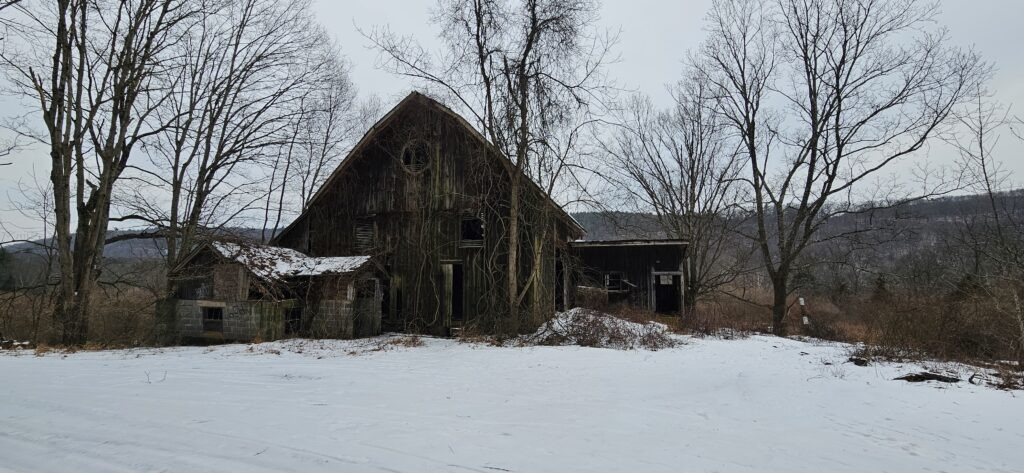
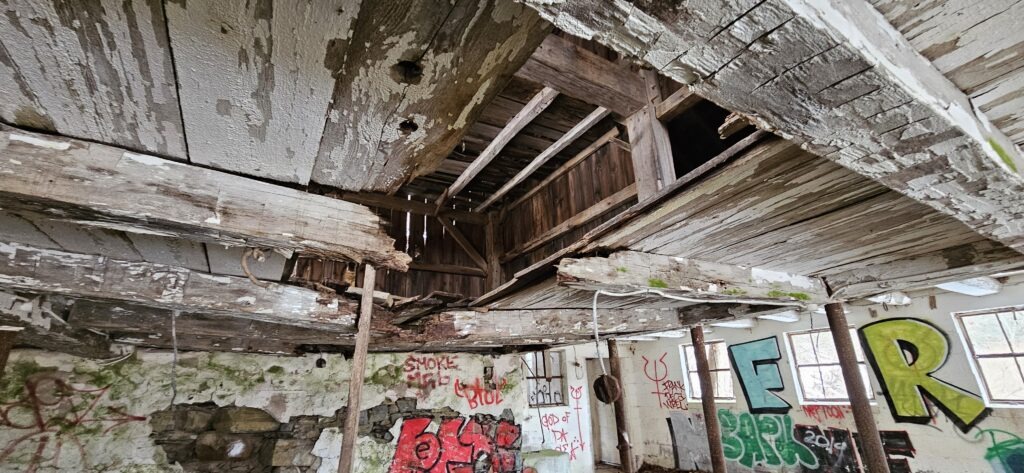
Immediately past the farmhouse, you will reach the first waterfalls, a set of unnamed but decent though overall unremarkable cascades.
Middle Unnamed Waterfall on Mountain Road
Height: 9.7 feet
Waterfall Coordinates: 41.131772 -74.897661
The first and most obvious waterfall is a small cascade located just above a small bridge on Mountain Road. This waterfall features a short, near-vertical drop into a small pool, then a series of small cascades. The waterfall is visible from the road, but for the best view, you will want to go off-trail slightly due to some overgrowth. On either side of the waterfall (most notably on the left), you will see the remains of a stone wall. Just past the wall are also the foundations of an old building.
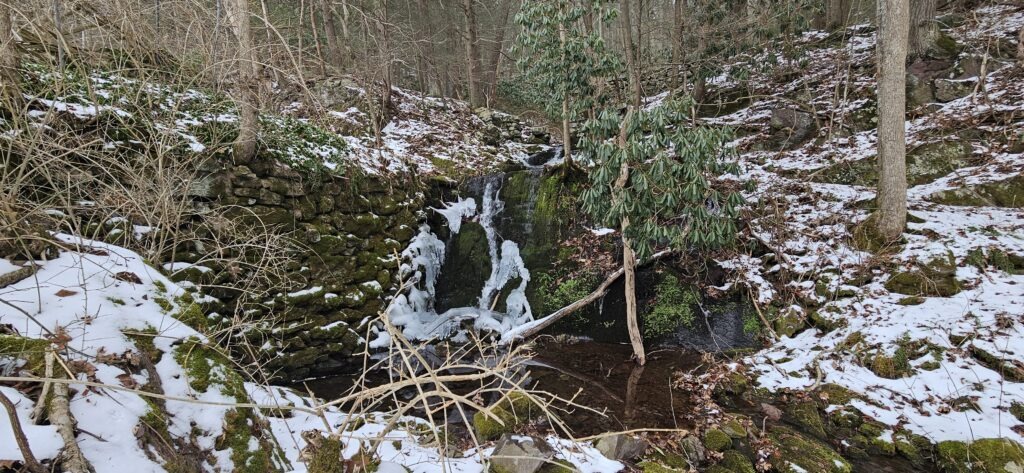
Upper Unnamed Waterfall on Mountain Road
Height: 12 feet
Waterfall Coordinates: 41.131501, -74.897349
The upper falls are located a short distance above the middle waterfall. This waterfall is not visible from the road and requires a short bushwhack to reach. I recommend hiking from the right side of the unnamed tributary, as the terrain is easier here.
The upper waterfall is another near-vertical cascade that banks to the left about halfway down. Unfortunately, due to the way the water slopes down and the natural topography, it is difficult to fully appreciate the waterfall.
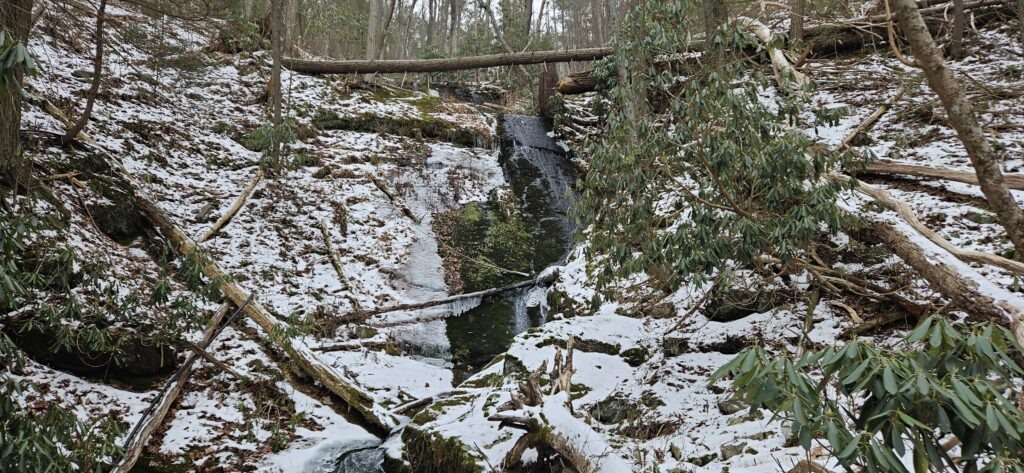
Lower Unnamed Waterfall on Mountain Road
Height: 15 feet
Waterfall Coordinates: 41.131805 -74.898102
Located just below Mountain Road is the lower of the three waterfalls. This waterfall can be seen from above, but it is difficult to see. Unfortunately, it is surprisingly difficult to reach the bottom of the falls, due to an abundance of pricker bushes. Those who make it to the bottom are greeted with the largest of the three unnamed waterfalls and the most unique, as it cascades down a wide set of rocks.
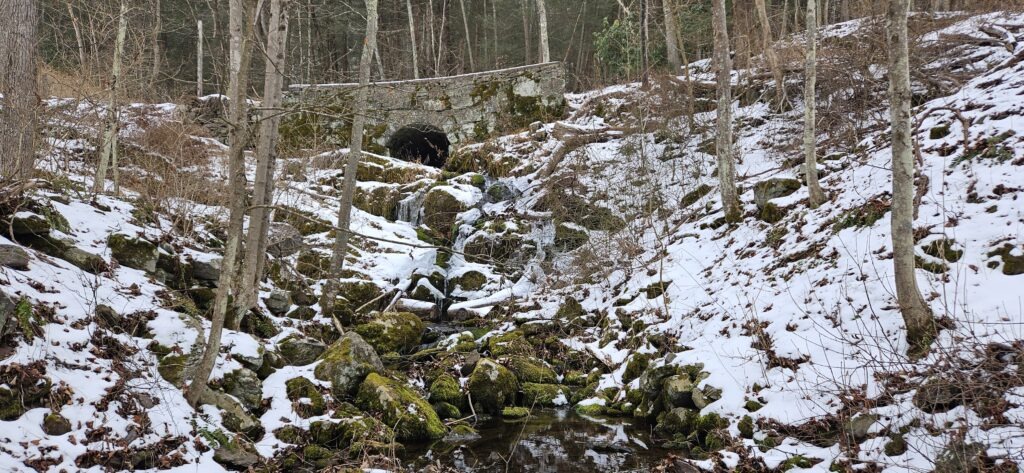
Reaching Buttermilk Falls
From the three aforementioned waterfalls and the farmhouse, continue on Mountain Road for another 0.6 miles. As before, the road here is flat and easy, featuring only occasional gentle hills. After those 0.6 miles, you will reach the main attraction on the right.
Buttermilk Falls
Height: 130 feet
Waterfall Coordinates: 41.13700, -74.88908
At 130 feet, Buttermilk Falls is one of the tallest in New Jersey and is often referred to as such. While the 250-foot Greenbrook Falls is taller, Buttermilk Falls is the tallest waterfall you can see fully at once in New Jersey. For this reason, I argue that Buttermilk Falls is more impressive.
Although there are stairs to the top of the waterfall, the best view is actually from the base. At the base, you can fully appreciate the full 130-foot drop, whereas from the stairs you only have a limited view. The waterfall is near vertical, featuring multiple short drops down the steep mountainside.
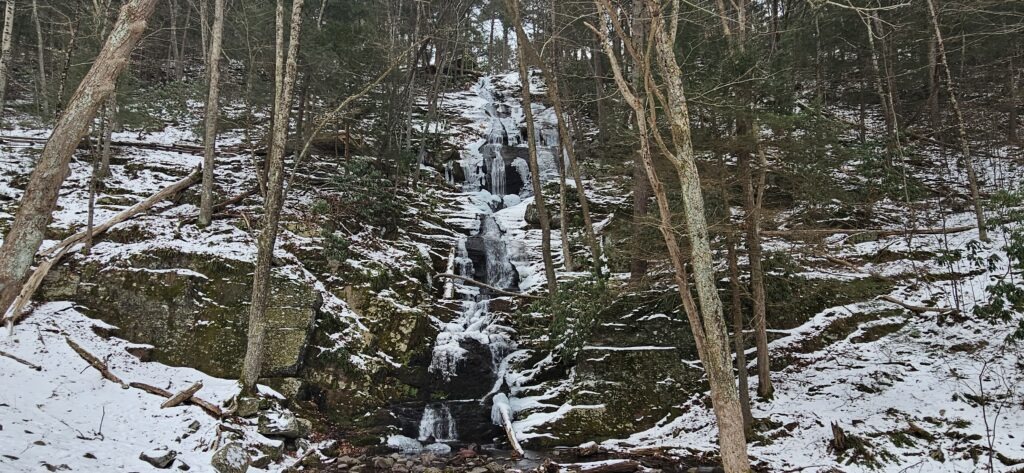
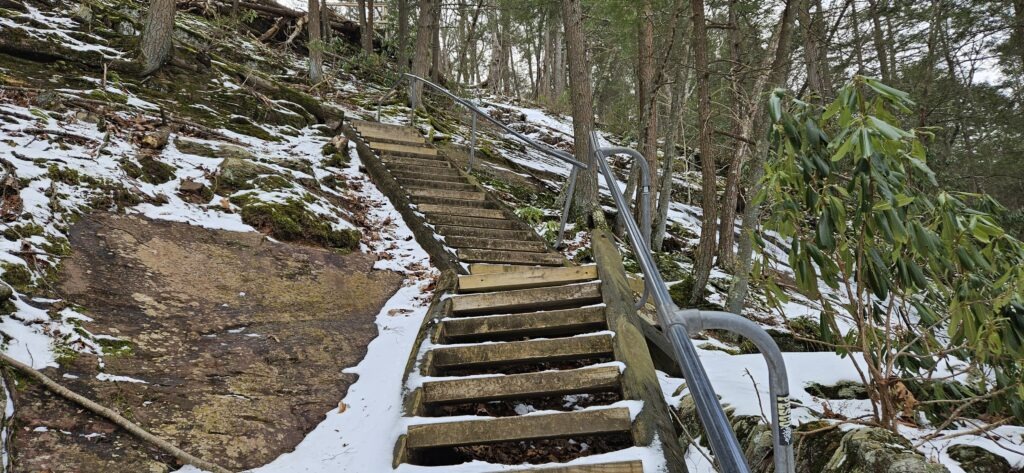
For those who wish to see it from different angles, the top can be reached via a steep set of stairs to the left of the waterfall.
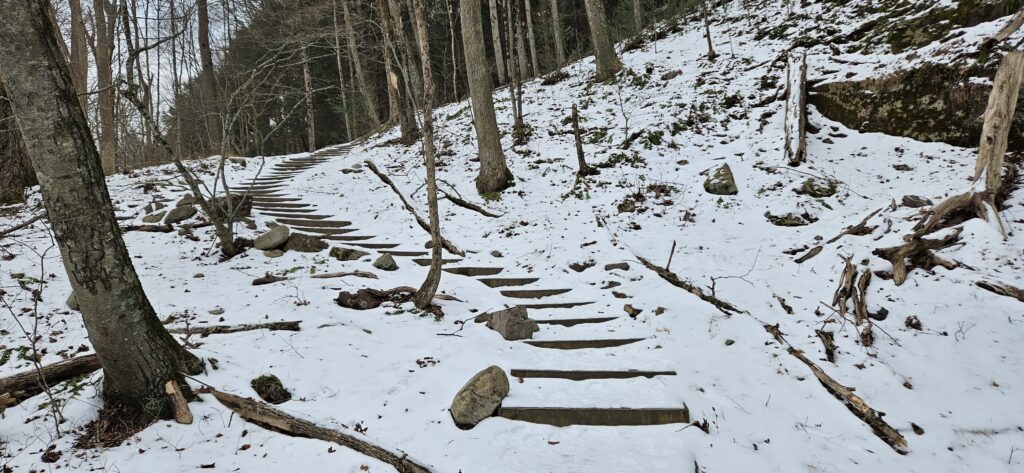
About halfway up, you will reach the first of two observation decks.
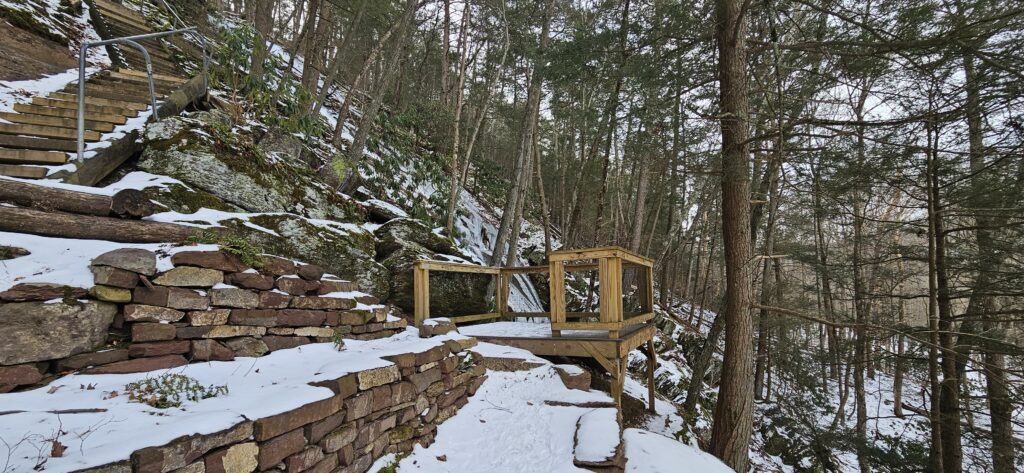
The view from the deck is decent, but as mentioned above, the view from the bottom is far superior.
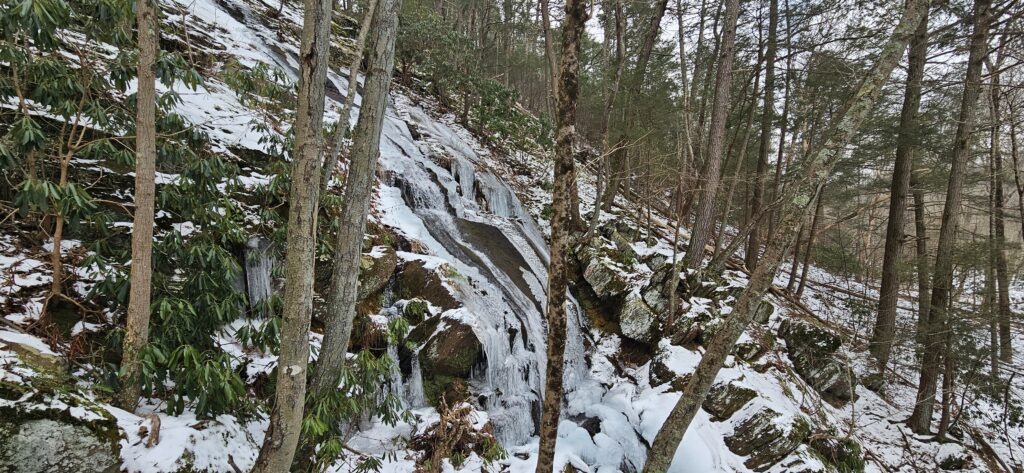
After the first observation deck, the stairs leading to the top get significantly steeper, transitioning into more of a ladder.
At the top you will reach the final observation deck.
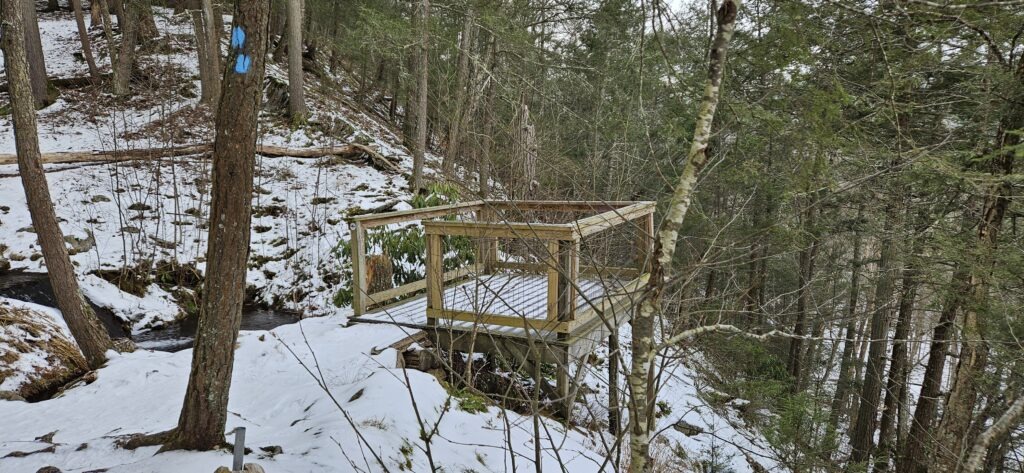
The view from this deck is honestly underwhelming, and makes the waterfall appear far less impressive than from below.
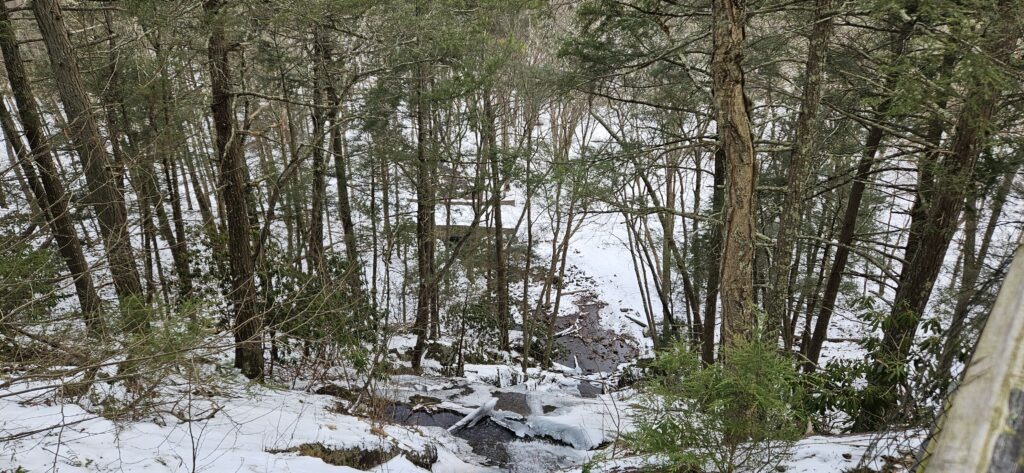
From the top of the waterfall, the trail continues up the mountain eventually reaching the Appalachian Trail.
To return to your car, you unfortunately must return the same way you came.
GPS Route
Attached is the route as described above for reference. Additionally users can download the route to use on their preferred GPS. How to use the GPS routes on your phone.
Review
Buttermilk Falls is a great place to visit year-round, especially in winter. Located far off the beaten path, it offers a quiet and peaceful experience. The hike is worthwhile on its own, but the smaller waterfalls and old building ruins along the way make the trip even more interesting. While getting to the parking area itself can be annoying due to road closures, Buttermilk Falls is well worth the headache.

Leave a Reply