Description
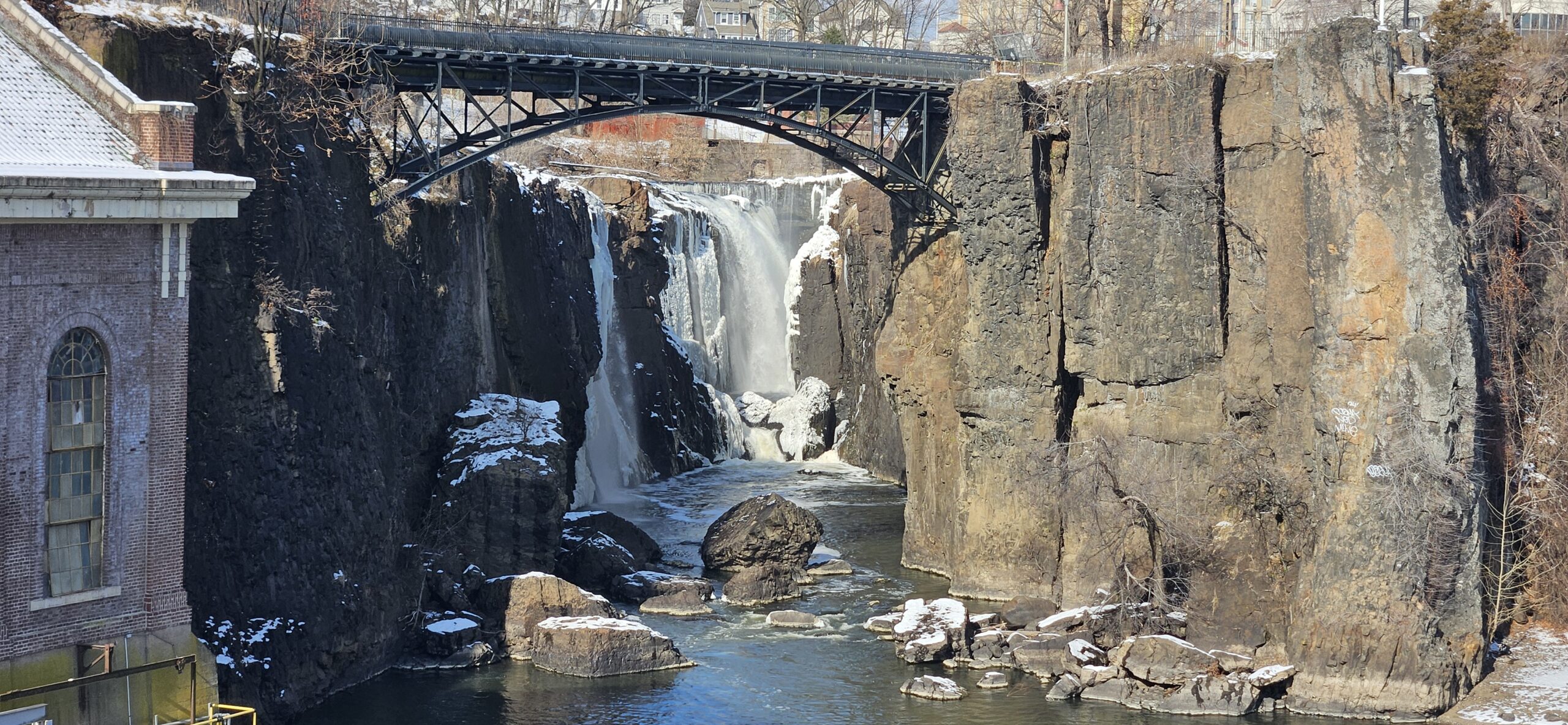
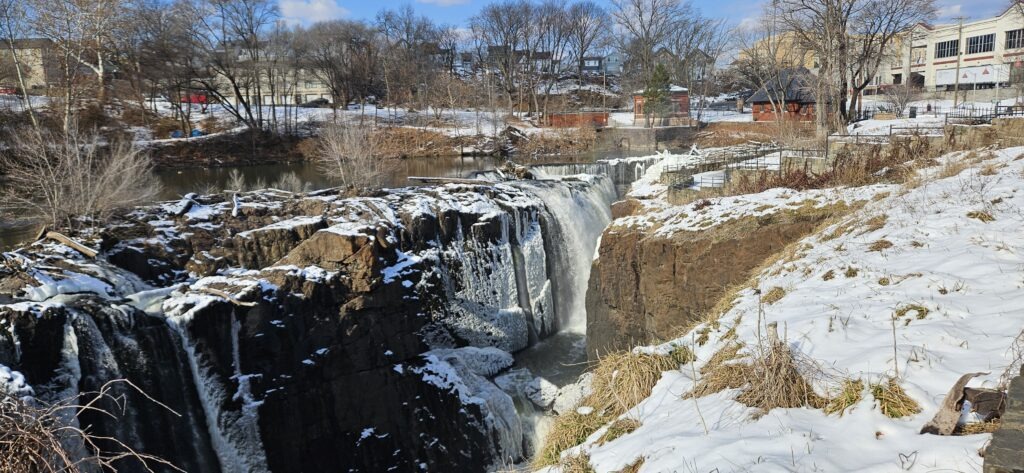
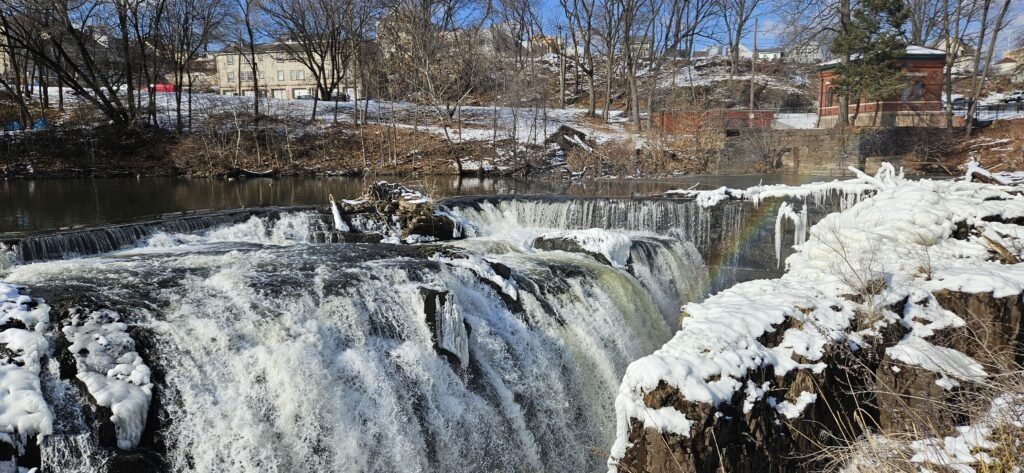
The 77-foot Great Falls of the Passaic (also known as the Paterson Great Falls) is the largest waterfall by volume in New Jersey and also the only urban waterfall in the state. While many waterfalls in New Jersey tend to dry up in the summer, reducing to a trickle or ceasing to flow at all, the Great Falls look great all year, even in the driest of summers.
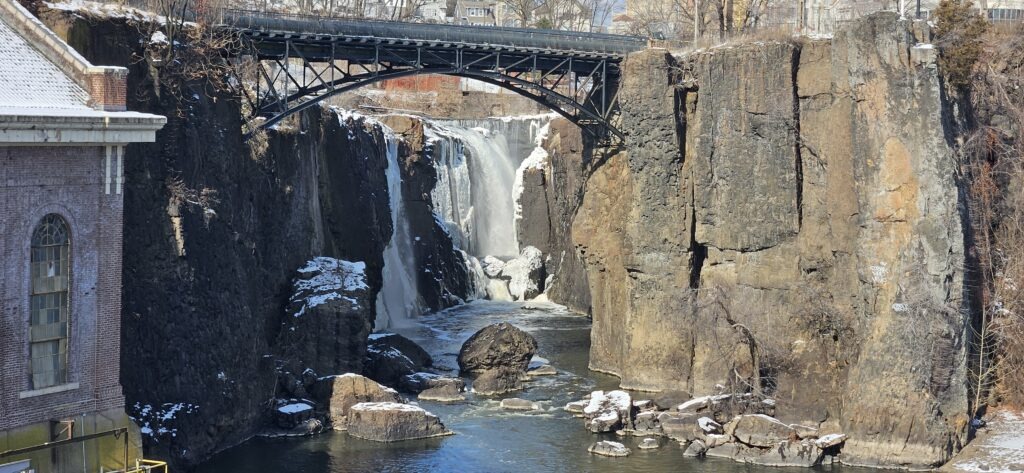
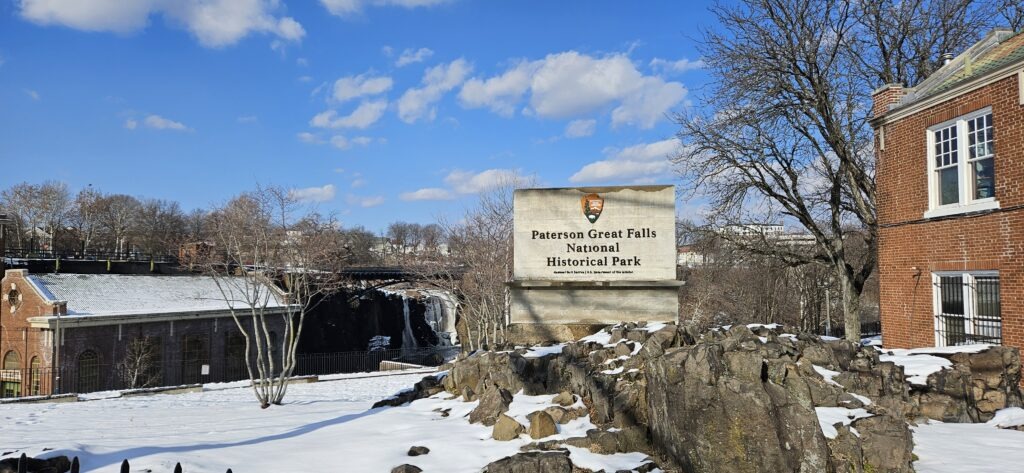
There are many viewpoints of the waterfall. The classic view is from Overlook Park, which offers an excellent head-on view of the massive waterfall. Additionally, you can see the massive hydroelectric plant directly next to the waterfall from here. The City of Paterson is currently expanding the park downstream to include more picnic areas and historical sights, and it should open by 2026.
Reopened in 2026, the footbridge over the Passaic River just below the drop is a popular attraction. This bridge offers incredible up-close views of the waterfall and provides access to a nearby observation deck, which is often covered in spray in the summer and ice in the winter. Aside from the views offered from the bridge, the reopened bridge makes accessing the whole property much easier and negates the need for an out-of-the-way road walk.
Geology
The Great Falls of the Passaic formed about 13,000 years ago, near the end of the last Ice Age. As the glaciers melted, the Passaic River’s previous course was blocked by debris, creating the large Glacial Lake Passaic (now Troy Meadows and the Great Swamp). This lake and the debris caused by the glacier caused the Passaic River to take on a new route, which included the site of the Great Falls.
The cliffs at the falls are made of basalt, a very hard volcanic rock formed by lava around 200 million years ago during the formation of the Watchung Mountains. Because basalt resists erosion, the water cut downward, creating the narrow chasm into which the falls plunge. Below the Great Falls, the rock changes to sandstone, which erodes much more easily.
Industrial History
The power of the Great Falls played a key role in American industrial history. In the 1790s, Alexander Hamilton chose this site for the nation’s first planned industrial city. An engineered system of raceways (canals) was constructed to divert water from the Passaic River and channel it to mills and factories, providing reliable waterpower for manufacturing.
Parking
Visiting the falls is easy, and the City of Paterson has been steadily improving the area. While Paterson sometimes has a reputation for being dangerous, the area surrounding the falls is safe and easy to reach from Interstate 80.
The best place to park for the falls is Overlook Park at 72 McBride Ave Ext, Paterson, NJ 07501. Additional street parking is available near Hinchcliff Stadium, but for most visitors, the main parking at Overlook Park is the easiest and most convenient option.
Great Falls of the Passaic Information
Click here for explanations on the information below
| Waterway | Passaic River |
| Drainage Area (square miles) | 786 |
| Drainage Area Size | Very Large |
| Height (feet) | 77 |
| Latitude and Longitude | 40.91652, -74.18142 |
| Location | Paterson, Passaic County |
| Type | Block |
| Best Time to Visit | Anytime |
| Property Type | National Park-Paterson Great Falls National Historical Park |
| Ease of Access | Easy |
Posts Featuring The Great Falls of The Passaic

The 10 Best Waterfalls in New Jersey
Did you know that New Jersey is home to over 80 incredible waterfalls? With that many waterfalls, it can be hard to determine which ones are the best and most worthwhile to visit. For that reason, we have compiled the 10 best waterfalls in New Jersey, ranging from easy-to-reach roadside waterfalls to others involving a…

Visiting the Paterson Great Falls in Winter: New Jersey’s Largest Waterfall
In the heart of Paterson, New Jersey’s third-most-populous city and once a major industrial area, sits the state’s largest waterfall: the Great Falls of the Passaic (also commonly known as the Paterson Great Falls). While it might be surprising for such a large waterfall to be located in a city, the Great Falls led to…
Gallery

Leave a Reply