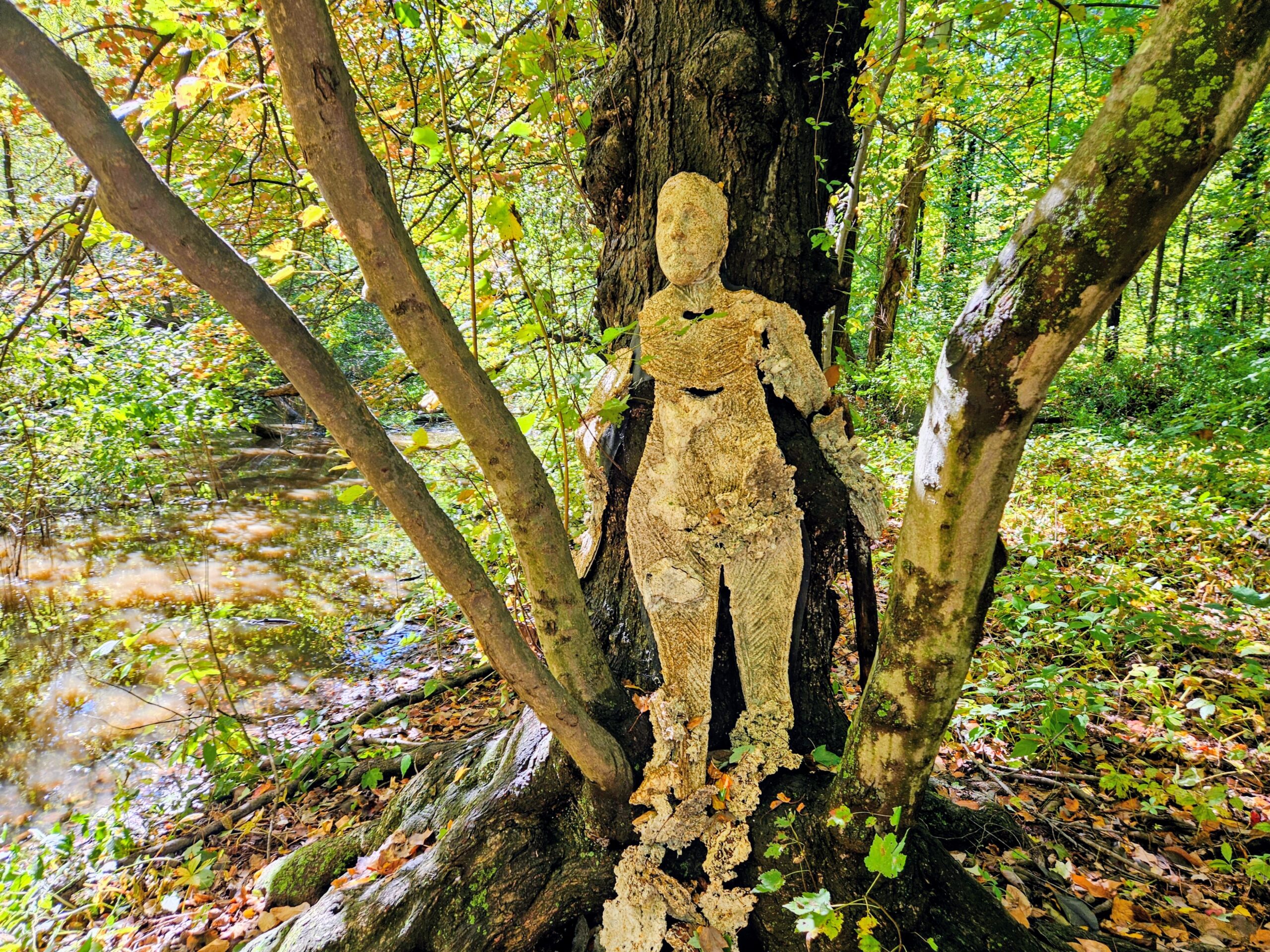
One of the most unique aspects of Essex County’s South Mountain Reservation is its Wildflower Sculpture Park. The park is a small section of the much larger reservation, featuring numerous small and large pieces of art. The collection stays fresh by constantly rotating new works in and out, featuring a mix of permanent and temporary installations. Most of the smaller pieces are in the hiker-access-only Wildflower Forest Preserve, which also serves as a protected nature sanctuary. Continue reading to learn more about this underrated section of South Mountain Reservation
Hike Information
Distance: Varies, but typically about a mile
Ascent: Negligible
Difficulty: Very Easy
Background
Wildflower and Forest Preserve
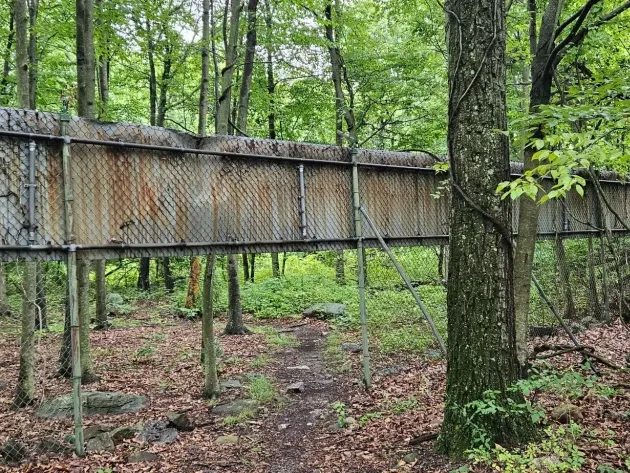
Created in 2008 as part of a 20-year forest restoration program, the Wildflower and Forest Preserve features deer fencing to protect the forest understory from grazing animals. It is the largest of 42 regeneration sites across South Mountain Reservation, which together total just over one million square feet. At more than 600,000 square feet, the preserve alone accounts for roughly 60% of all restored land in the program.
Wildflower Sculpture Park
Located in and around the Wildflower and Forest Preserve, the Wildflower Sculpture Park was established in 2012 and displays a mix of permanent and rotating works. As of October 2026, the featured exhibition, titled “Root System,” showcases 10 new pieces.
Parking
Parking for the Wildflower Sculpture Loop is in the dog park area. It is in the Crest Drive section of the park, a lollipop-shaped road with a one-way section around Summit Field. The parking area is once the one-way section of the road begins. There are some signs, but it is obvious you are in the right place because of the number of large, visible sculptures from the road.
There is no address, but the exact parking coordinates are 40.739750, -74.289389.
Exploring the Park
The Wildflower Sculpture Park has two main areas: inside the Wildflower Forest Preserve and outside the preserve. The park is small, so we recommend exploring both sections.
Exterior Sculpture Park
The exterior area is the section visible from the road and is outside the deer exclosure fence. Here you will find the larger sculptures, which makes sense, since anything inside the fence must be carried in by hand and must fit through the fence gate.
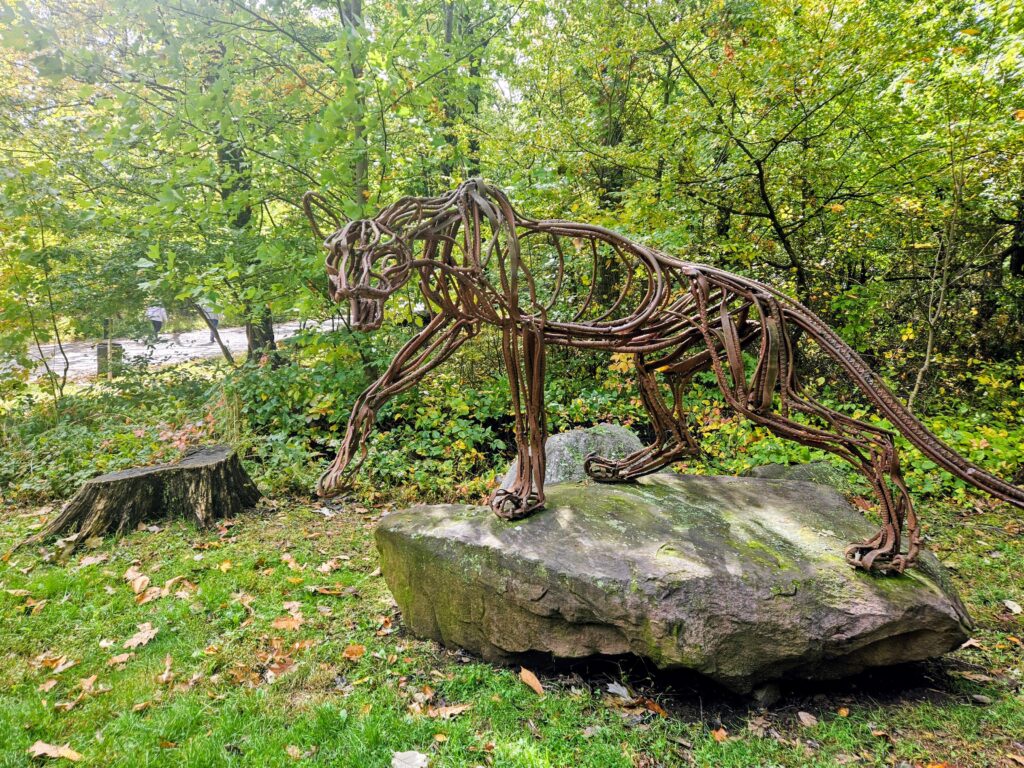
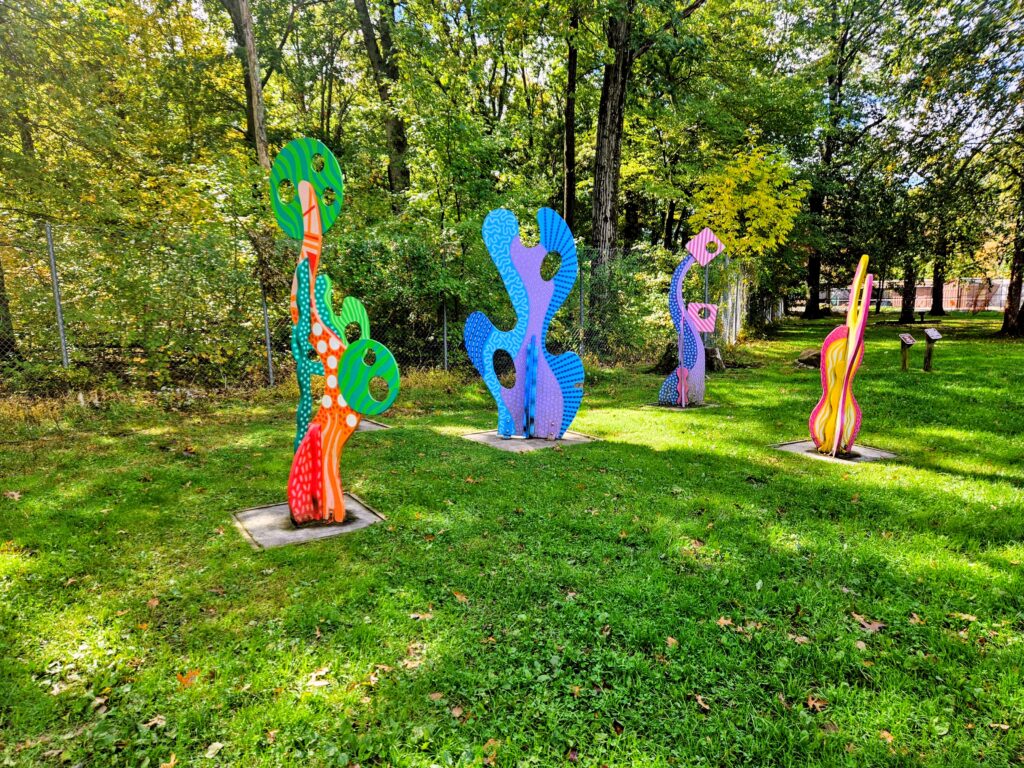
Most sculptures are placed here long-term, though a few are part of temporary exhibitions. During the 2026 Root System exhibition, three temporary sculptures were placed outside the fence.
Interior Sculpture Park and Forest Preserve
The Wildflower Sculpture Park and the Wildflower and Forest Preserve have two enclosed entrances. These entrances are on either side of the dog park. Both entrances have a gate that lets you into the deer exclosure area. Upon entering, a sign warns about poison ivy. I noticed a lot of it, which is expected in an area designed to keep grazing animals out. If you remain on the trails, you will be fine.
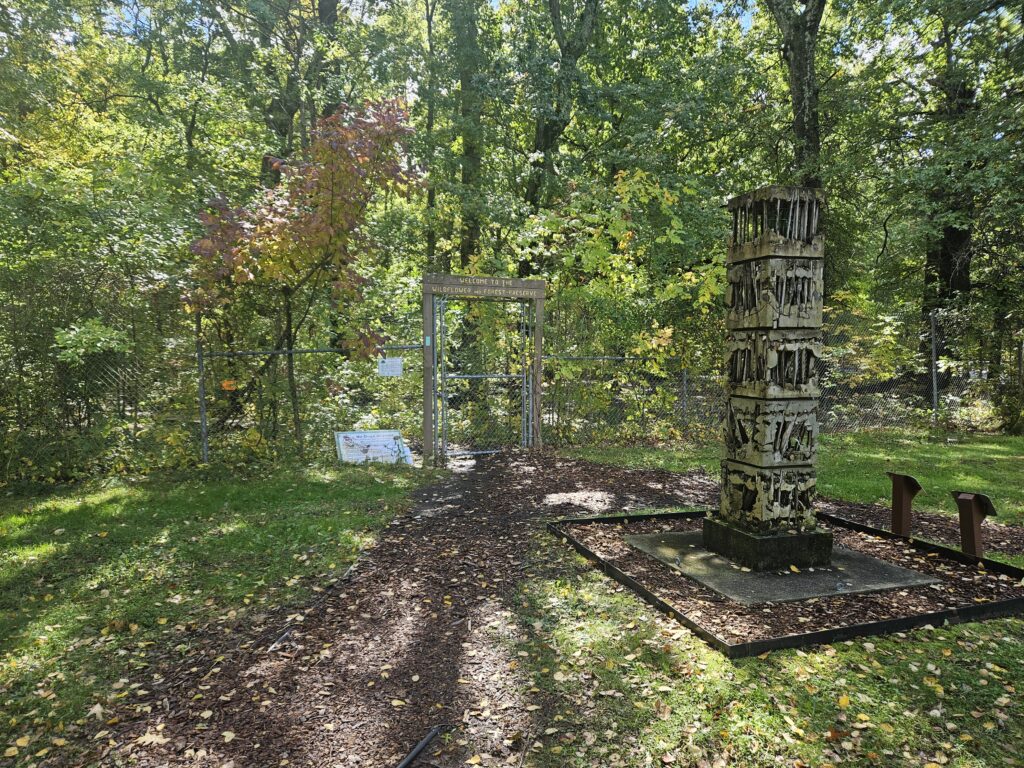
Both entrances feature laminated guides to the preserve, with a detailed map of all temporary pieces and the trail network. The reverse side includes more information about each piece, including the name, artist(s), and materials used. You may take the guide with you through the preserve, but you are asked to return it when you’re done so other visitors can use it. You can also find the exact guide online. The link to the current (2026) guide is here.
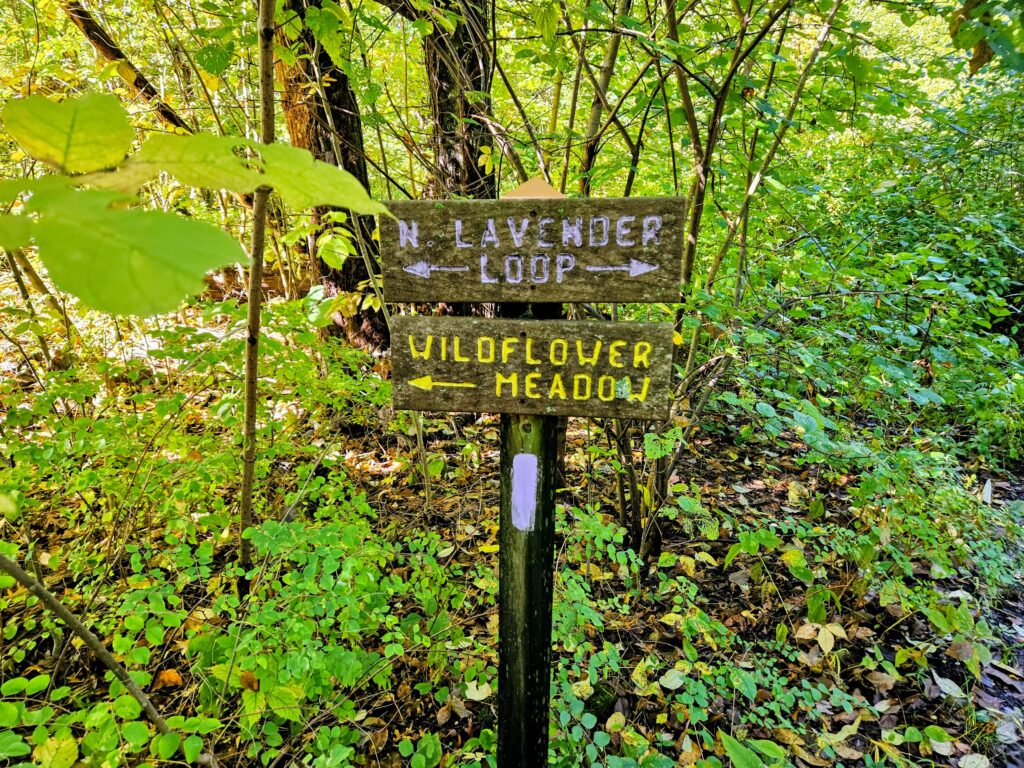
At each intersection, you will find wooden directional signs. There are two main loops: the Lavender Loop and the Aqua Loop. While these signs are nice, they aren’t necessary; the preserve is easy to navigate.
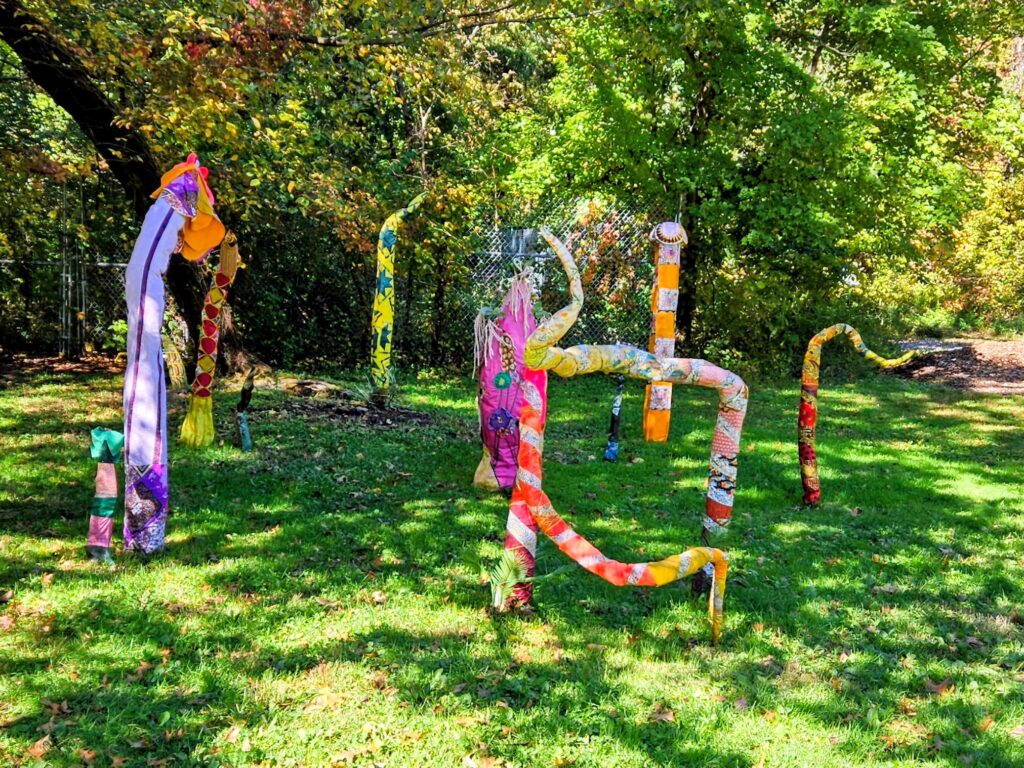
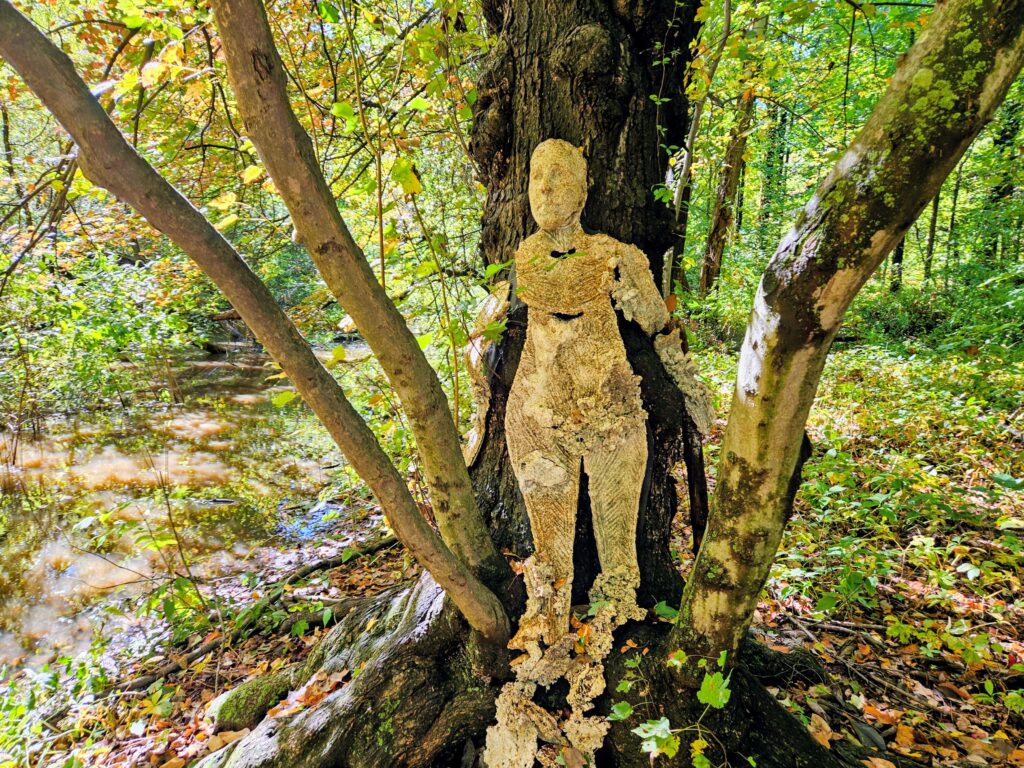
Throughout the preserve, you will find the sculptures, though you will find they are more spread out than those outside the fence.
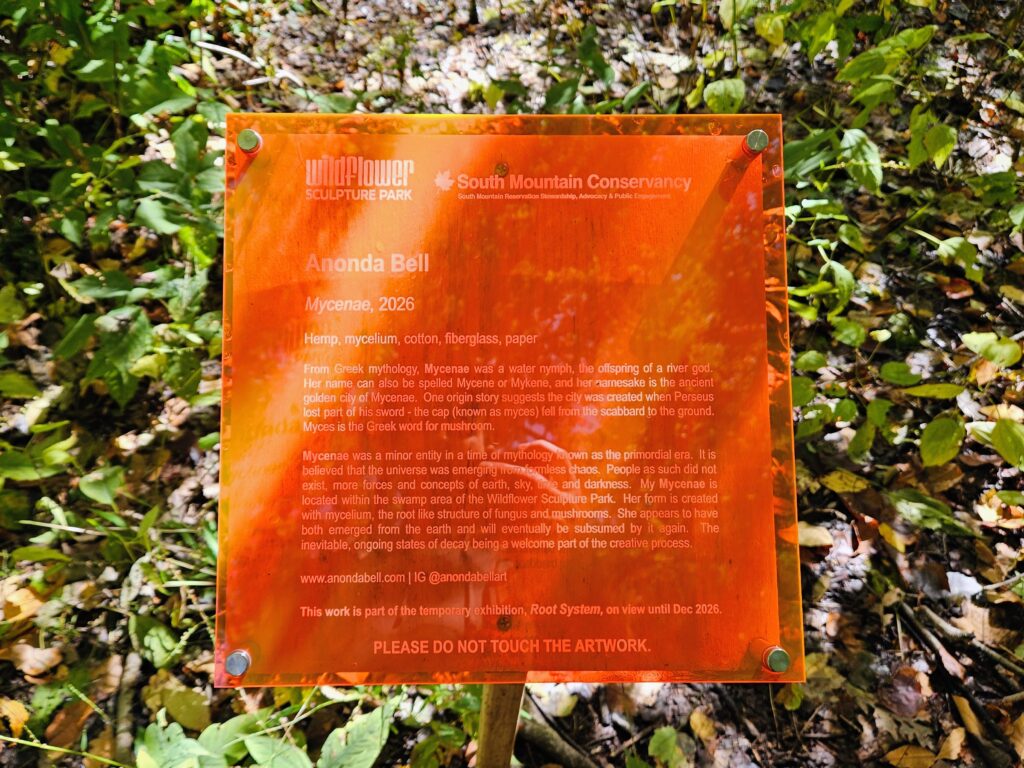
All temporary sculptures feature orange acrylic signs with information about the piece, including the artist, title, materials, and background. The signs also include information on how to find other pieces by the artist.
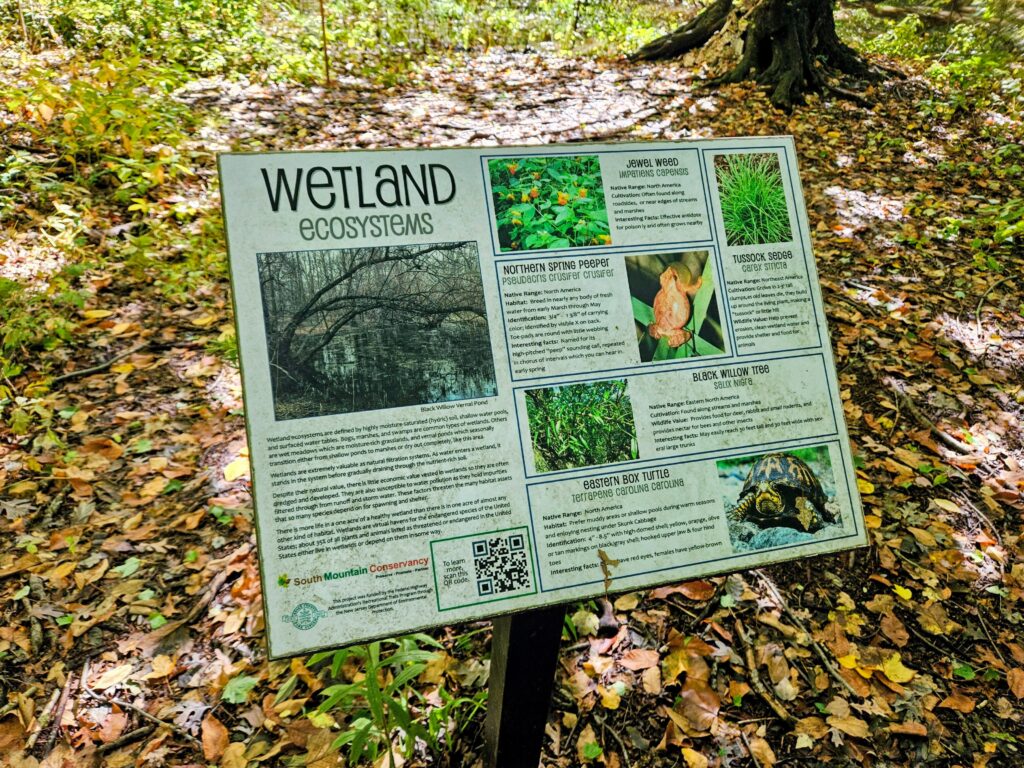
Because the area also serves as a forest preserve, numerous permanent signs are posted throughout the natural environment. As the area also doubles as a forest preserve, there are numerous permanent signs on the natural environment throughout. Some, but not all, of these are marked on the map.
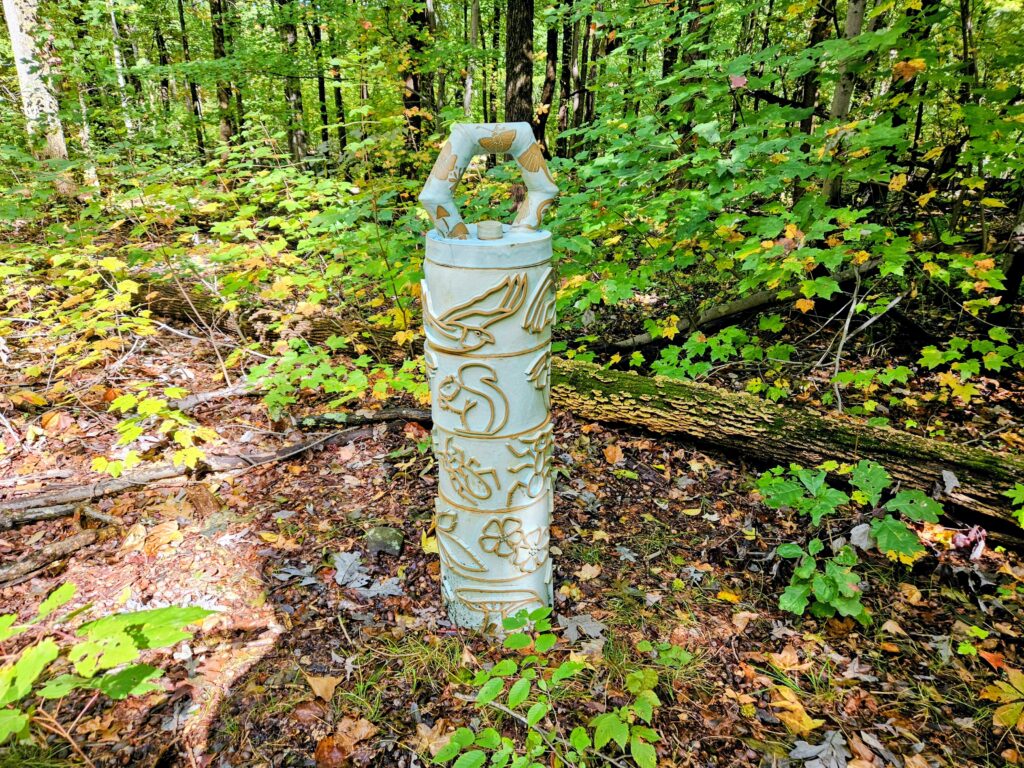
In general, the pieces inside are smaller, as they need to be brought in by hand, though there are some larger pieces.
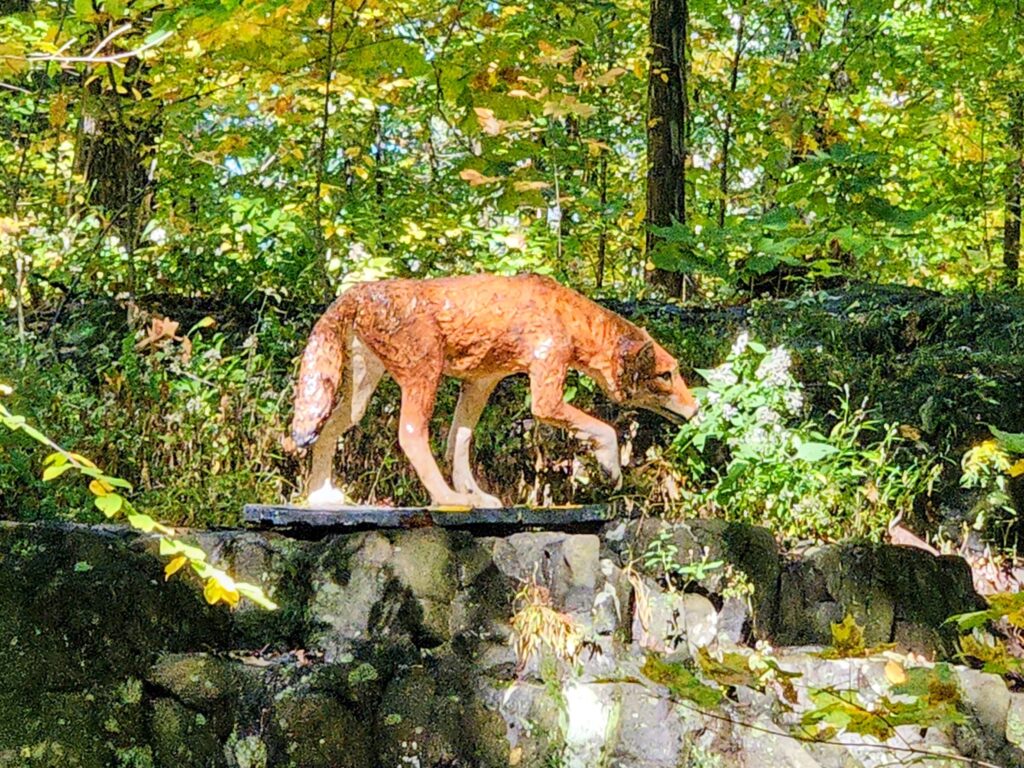
While the majority of the sculptures inside the deer exclosure are temporary, there are some permanent pieces such as a fiberglass fox atop a small ledge.
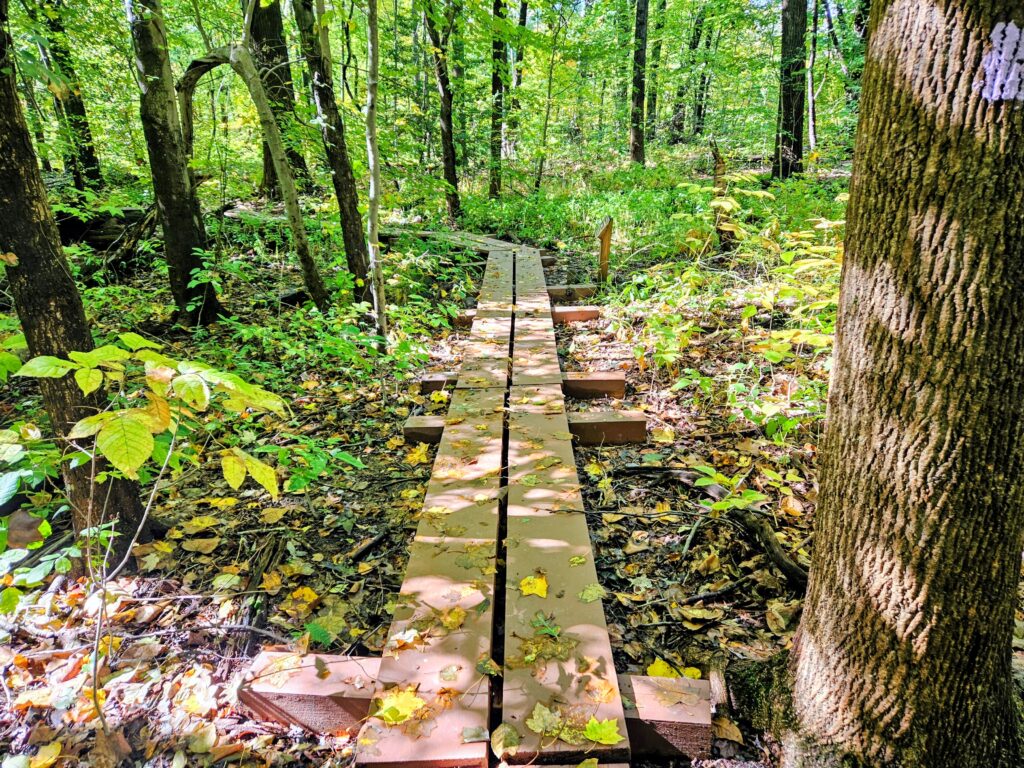
Aside from the art pieces, the trail is very enjoyable and features numerous bridges and boardwalks.
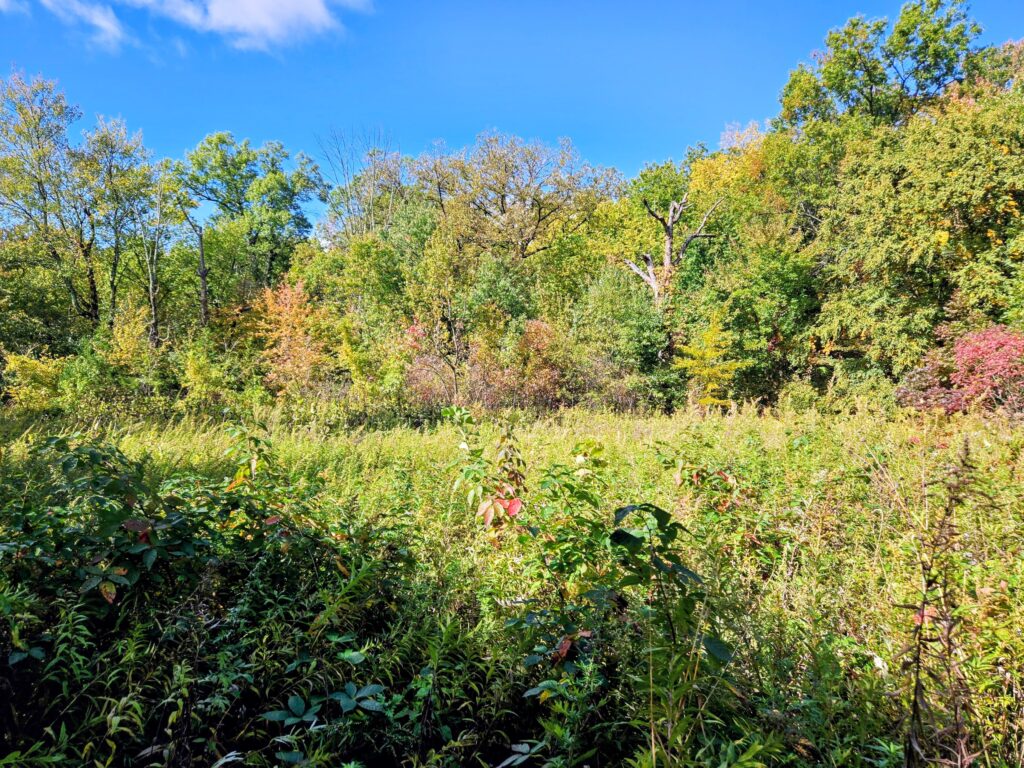
The far interior features a small wildflower meadow. Unfortunately, I visited after wildflower season. The meadow has numerous birdhouses and a pollinator habitat, so it is likely very lively in the summer.
As a reminder, the Wildflower Sculpture Park is always changing. In 2027 and beyond, expect different pieces each year. Also, note that many more pieces are on display than those pictured above.
Review
The Wildflower Sculpture Park is well worth a visit, even if you aren’t particularly into art. Usually, when parks try to do an art trail, it starts strong for a year or two and then gets neglected. It’s great to see the South Mountain Conservancy actively maintaining and updating this trail. They’ve kept pieces rotating since 2013 and still give the preserve so much care over a decade later, which is a welcome sight, especially since the entire park is free. Plus, it’s a great spot for plant enthusiasts. Since deer are kept out, there is far more flora here than in the surrounding South Mountain Reservation. While this is not my favorite New Jersey art trail (that goes to the Ringwood Sculpture Loop), it is still far better than most.

Leave a Reply