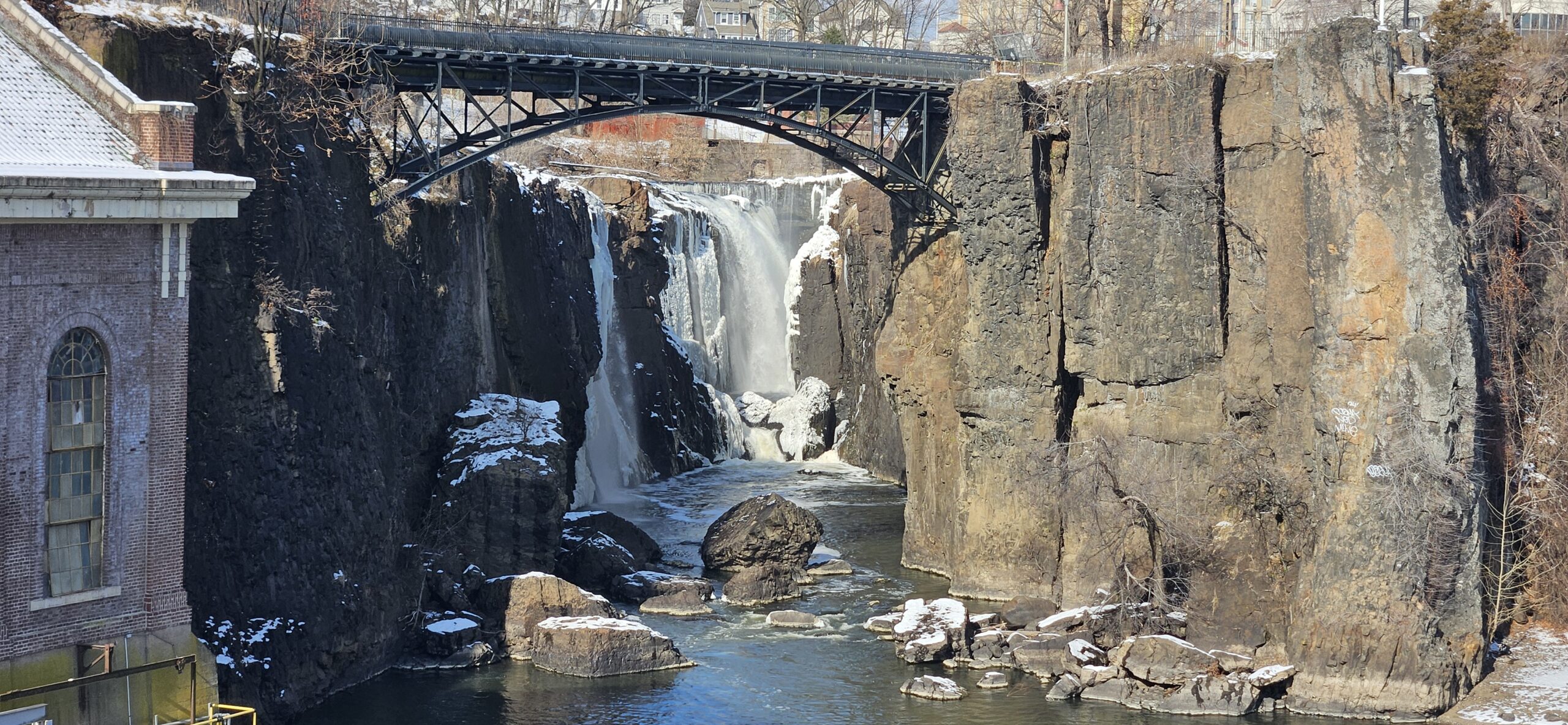
In the heart of Paterson, New Jersey’s third-most-populous city and once a major industrial area, sits the state’s largest waterfall: the Great Falls of the Passaic (also commonly known as the Paterson Great Falls). While it might be surprising for such a large waterfall to be located in a city, the Great Falls led to the formation and growth of Paterson, which used the power of the waterfall for industrial development.
At 77 feet tall, the Great Falls are not the highest in the state, falling just short of Greenbrook Falls and Buttermilk Falls. Despite this, it is still fair to call it the largest waterfall in the state, as the Great Falls are by far the most voluminous and powerful in New Jersey. In fact, the Great Falls have been described as the second-most-powerful waterfall east of the Mississippi River, after Niagara Falls.
The Great Falls can be visited year-round. Winter visits offer unique views of ice formations, though there are a few important caveats to keep in mind, which are described below.
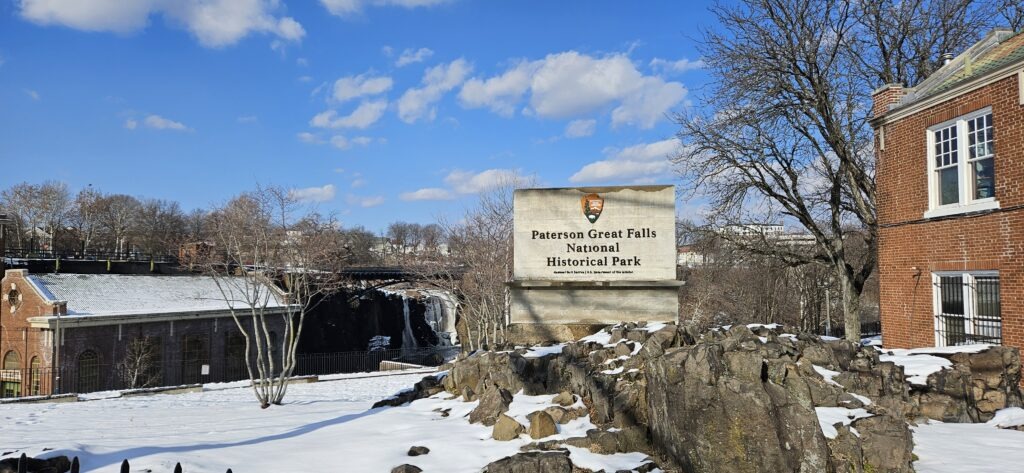
Paterson Great Falls National Historical Park
Background
The Great Falls of the Passaic (also known as the Paterson Great Falls) formed about 13,000 years ago, near the end of the last Ice Age. As the glaciers melted, the previous route of the Passaic River was blocked by debris, creating the large Glacial Lake Passaic (now Troy Meadows and the Great Swamp). This lake and the debris caused by the glacier caused the Passaic River to take on a new route, which included the site of the Great Falls.
The cliffs at the falls are made of basalt, a very hard volcanic rock formed by lava around 200 million years ago during the formation of the Watchung Mountains. Because basalt resists erosion, the water cut downward, creating the narrow chasm into which the falls plunge. Below the Great Falls, the rock changes to sandstone, which erodes much more easily.
The power of the Great Falls played a key role in American industrial history. In the 1790s, Alexander Hamilton chose this site for the nation’s first planned industrial city. An engineered system of raceways (canals) was constructed to divert water from the Passaic River and channel it to mills and factories, providing reliable waterpower for manufacturing.
Today, modern hydroelectric plant operates at the site, using water diverted from above the falls to spin turbines and generate electricity before returning the water to the river below. Although the plant is relatively small compared to most hydroelectric plants, it continues the tradition of using the Great Falls as a power source.
In 2011, the Great Falls was designated a National Historical Park and the 397th unit in the National Park Service. Interestingly, there is a second Great Falls operated by the National Park Service on the Potomac River.
Visiting
When visiting, the best place to park is at the dedicated parking lot at Overlook Park. Previously, you could easily park near the top of the waterfall at Mary Ellen Kramer Park, but the renovations of Hinchcliff Stadium removed most of the parking, leaving only tight street parking.
Great Falls of the Passaic
Height: 77 feet
Waterfall Coordinates: 40.91652, -74.18142
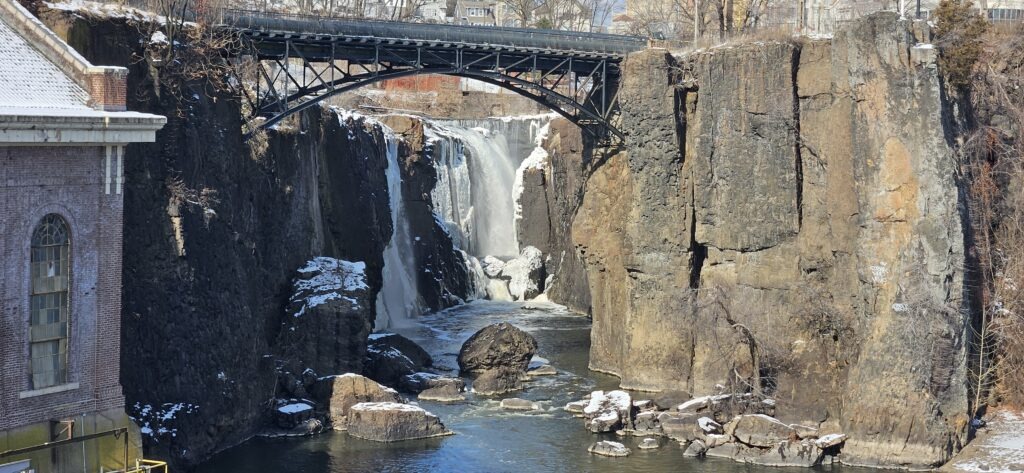
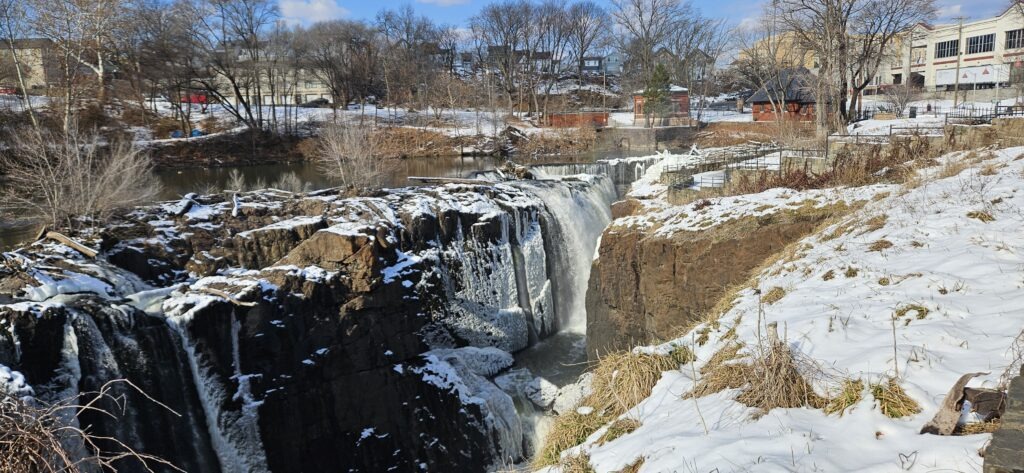
From the parking lot, you get what is currently the best view of the waterfall. In the warmer months, you can head down a set of steps to the Passaic River for a closer look. Even though you cannot get quite as close in the winter, the view is still very good.
There is also a viewpoint from the top of the waterfall. To reach it, walk along Wayne Avenue upstream and cross the vehicular bridge over the Passaic River. After crossing, turn right and follow the footpath to Mary Ellen Kramer Park. During the warmer months, a footbridge spans the river, removing the road walk and offering the best views of the Great Falls. Unfortunately, it is closed in the winter.
Update: As of February 19, the new footbridge is open, allowing winter access.
At Mary Ellen Kramer Park, you will find a small overlook that brings you close to the drop. You cannot see the entire Great Falls from this spot, but it is still an impressive view. Note that the overlook is often covered in spray from the waterfall year-round and can be slippery, especially in icy conditions.
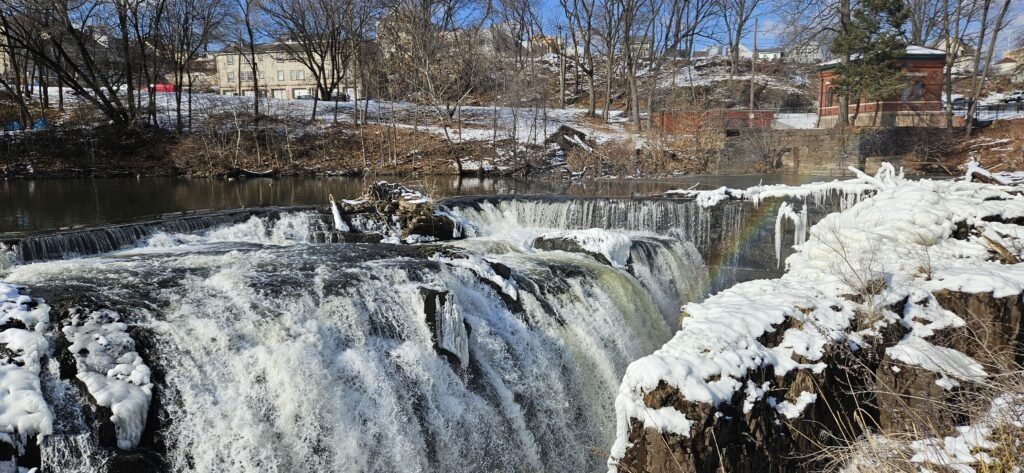
You can also walk toward the footbridge area for an even better angle, though not as good as it would be in the summer when you can cross the bridge itself.
Raceway Park
Across the street at the intersection of McBride Avenue and Wayne Avenue is the small Raceway Park. The park features a short trail parallel to the remains of a former water raceway that was used to generate power.
The trail is short and not particularly exciting, except for those especially interested in the city’s industrial history. The raceway at this location was essentially a rectangle, so the trail follows a very basic rectangular loop. A short spur trail also leads to a city pool and playground.
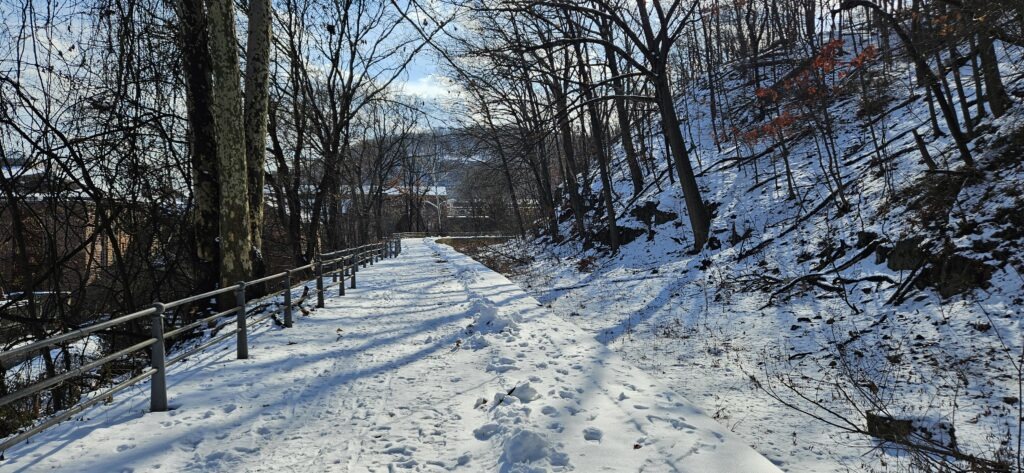
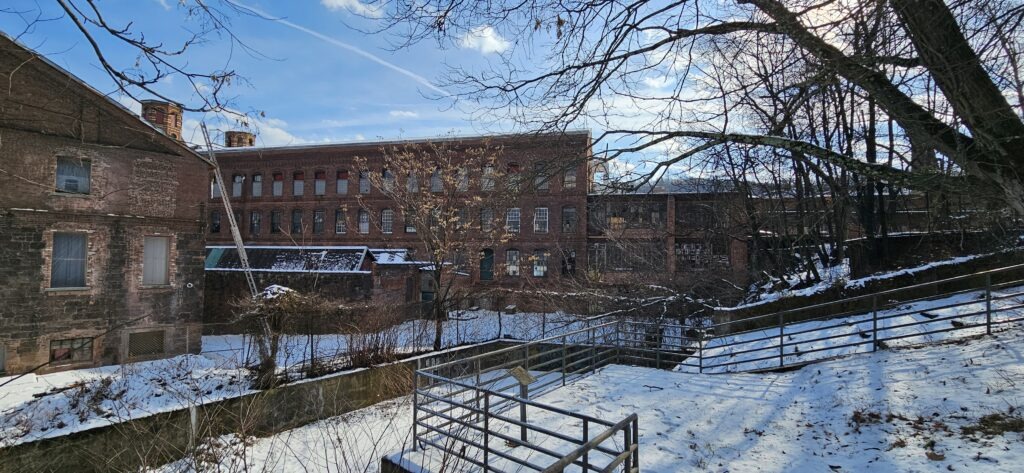
As the raceway provided waterpower, many factories were built along the course. The lower level of the trail passes next to many of these abandoned factories.
Review
The Great Falls are impressive, but winter significantly diminishes the experience. While it’s interesting to see ice forming at the top of the falls, the two best viewing areas are closed in the winter: the base of Overlook Park and the footbridge spanning the waterfall. Although a similar view is available from above in the Overlook Park parking lot, it is not as impressive as the view from the base. More impactful is the closure of the footbridge. This is most disappointing, since the bridge offers the best views of the falls by far. Additionally, when the bridge is closed, visitors must detour around the river via Wayne Avenue and Maple Street; while sidewalks exist, the walk is not exactly pretty. As for Raceway Park, it is okay and best served as an add-on to the main Great Falls. The trail is short and mostly unremarkable, except for those interested in Paterson’s industrial history.
Leave a Reply