
Most people know Thomas Edison for his many innovations, especially the light bulb. What most people are not aware of is that Edison briefly entered the mining industry. In the late 19th century, Edison established his own mining operations in northern New Jersey, hoping to modernize and automate the region’s iron-ore industry through his new technology and large-scale processing.
Today, along the mountainous stretch of Edison Road between Sparta and Ogdensburg, the remnants of this failed effort remain. Although mining activity ended more than a century ago, the property where the mining company once resided is full of old pits, shafts, foundations, and scattered industrial ruins. Continue reading to learn more about this little-known property in Sparta, New Jersey.
Sparta Mountain Wildlife Management Area
Location: Sparta Township, Sussex County
Website: Sparta Mountain WMA (no information on the mines)
Restrooms: No
Background
Sparta Mountain lies within the New Jersey Highlands, a rugged, mineral-rich region of the state. During the 18th and 19th centuries, Sussex County, especially the area surrounding Sparta, was heavily mined. Other notable mines near Sparta Mountain include the Franklin Mine and Sterling Mine. Miners excavated iron ore, which are rocks such as magnetite from which iron was extracted. Today, while limited forms of mining persist elsewhere in New Jersey, iron mining has ended.
In 1891, Thomas Edison founded the Edison Mines on Sparta Mountain, creating both the New Jersey and Pennsylvania Concentrating Works and the Edison Ore Milling Company. The new mining complex was built on the site of several older, smaller mines and used the already established Ogden Mine Railroad. This railroad transported extracted materials down the mountain to the Morris Canal in Lake Hopatcong.
Edison’s goal was to automate much of the work by using powerful electromagnets to separate usable iron from large quantities of low-grade ore (rock containing iron). Despite the ingenuity behind the project, the operation was not successful. By 1900, the mines shut down because other regions of the country were producing higher-quality iron ore at shallower levels and at significantly lower cost. Edison lost about 2 million dollars in this venture.
Although generally considered a failure, Edison’s Mines yielded one unexpected benefit. Edison discovered that the waste sand produced during ore processing could be repurposed as a key ingredient in cement, and Edison went on to sell and manufacture cement through the Edison Portland Cement Company.
Exploring the Property
The best way to experience the mines is simply to explore and follow the maze of trails. There is only one official trail, the Audubon Trail, but its blazes are sparse and it bypasses some of the more impressive features in the area. Because of the network of unmarked trails, I will not provide a detailed turn-by-turn description. Instead, I recommend exploring freely (with a GPS). There are historic remains on both sides of Edison Road, and I recommend visiting both sides.
Although the Edison Mines were the final operation on Sparta Mountain and absorbed many earlier sites, the area has a long mining history. Along your walk, you will encounter remnants of several other significant mines, including the Ogden Mine and the Roberts Mine. A map of many of Sparta’s abandoned mines can be found here.
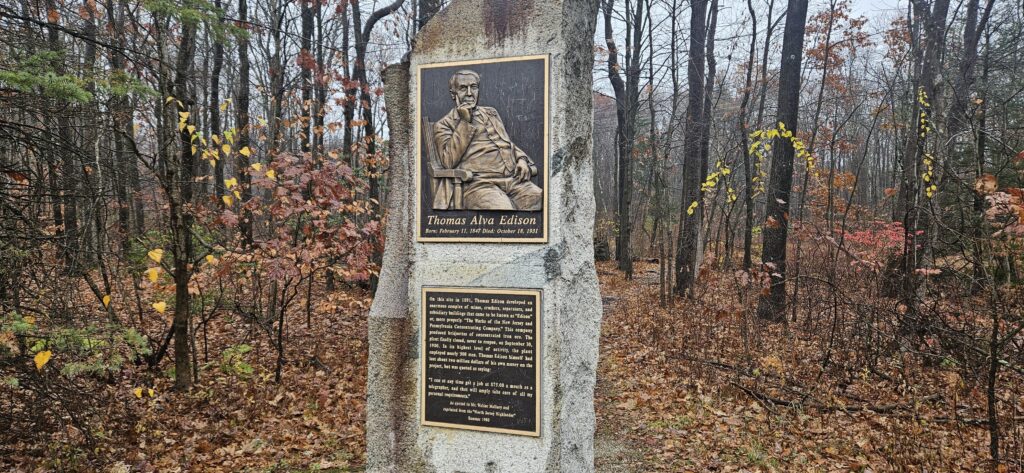
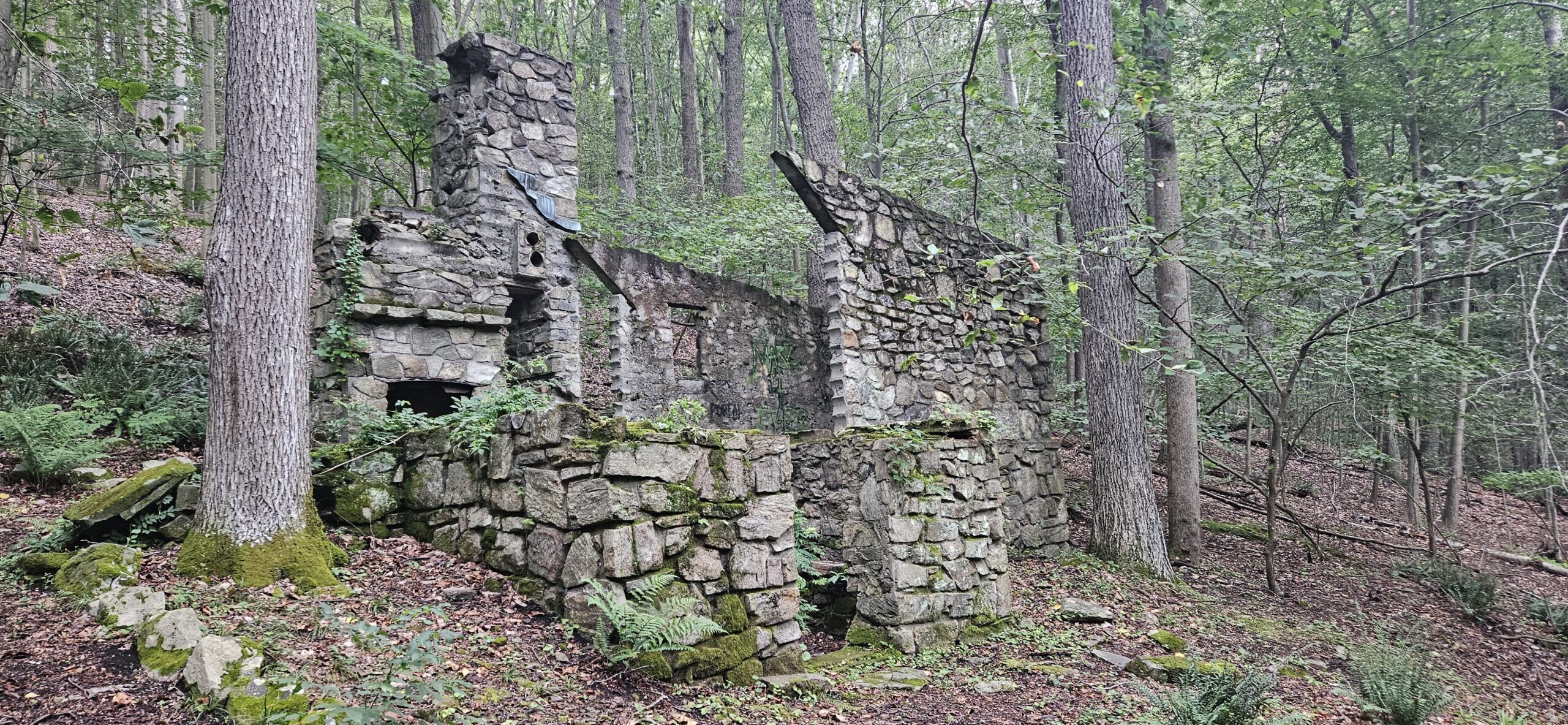
Behind the monument is an obvious trail where you will almost immediately see foundation ruins to the side of the trail.
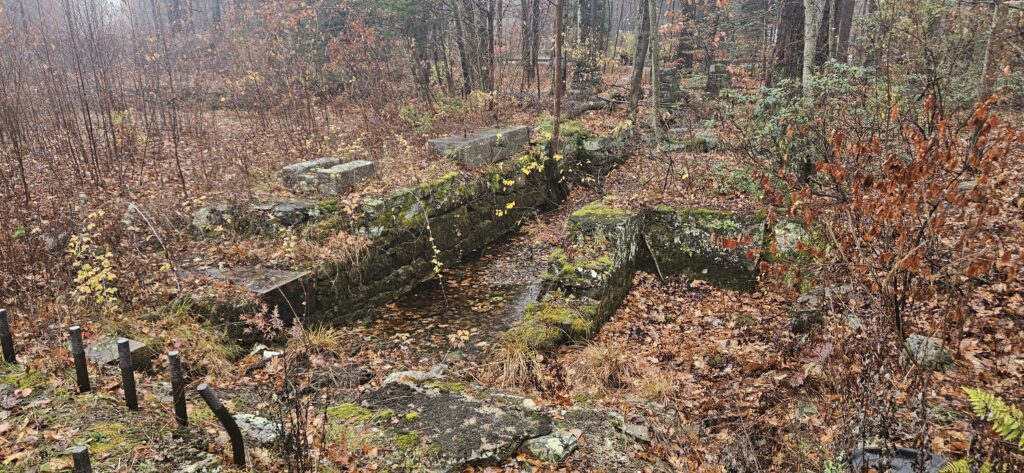
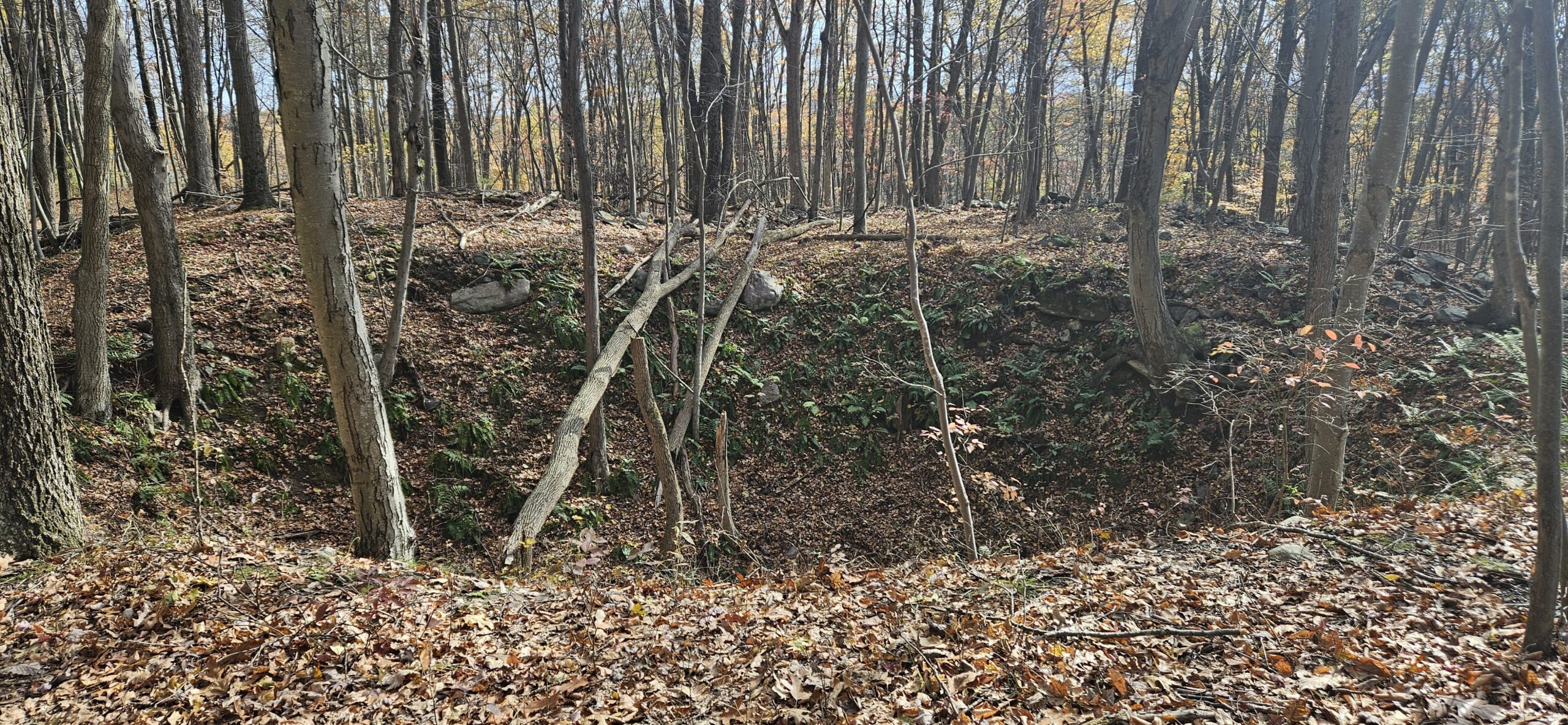
Just past these ruins, you will find a series of fenced-in open mine pits. A series of unmarked trails weave through this area and around the fences.
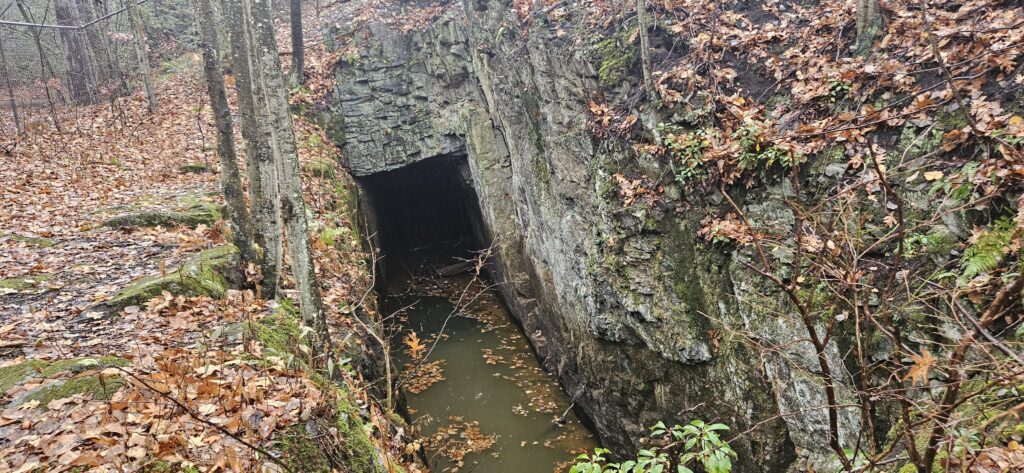
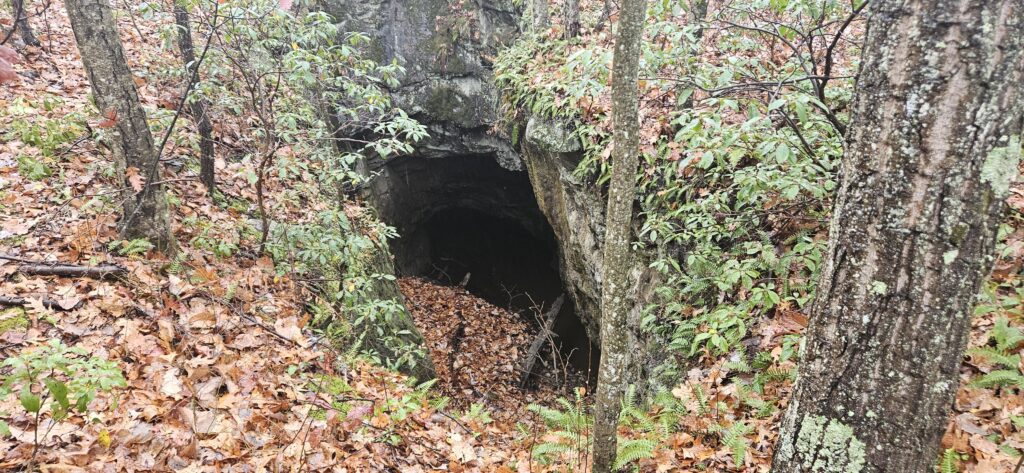
A little further is a large quarry. A larger quarry is also visible directly across Edison Road from the parking area, but it is harder to see due to fencing.
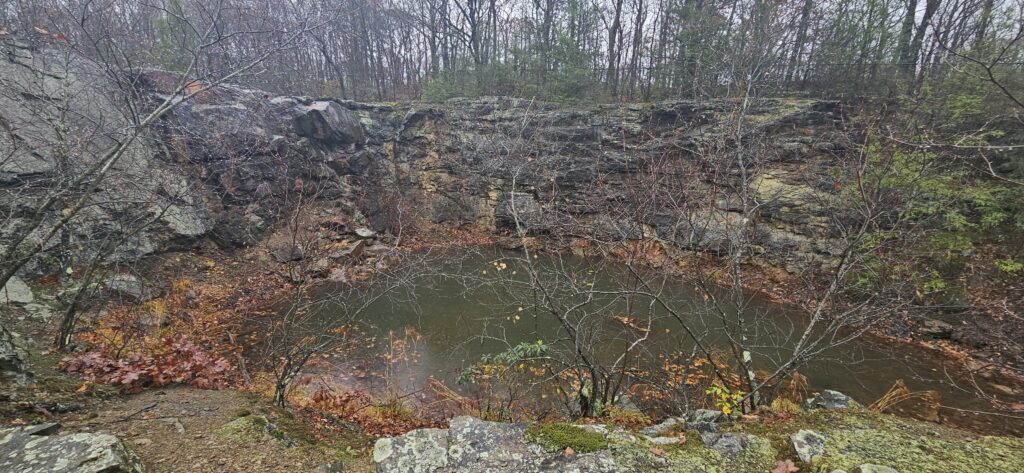
The largest and most impressive remains are located less than a five-minute walk from the parking area on both sides of the road. The further into the park you go, the more sparse and smaller the remains become, but they are still frequent compared to many places in New Jersey.
Cautions
The Edison Mines are located on public property, and visitors are permitted. That being said, a hike here has a few more hazards than many other hikes in New Jersey to be aware of. Please be safe so that access is not restricted in the future.
- Many of the deep mine openings are fenced in. Most of these fences have holes in them. Stay behind the fence.
- Sparta Mountain is a Wildlife Management Area and is primarily used for hunting, as opposed to other parks that focus on hiking and other activities. Use caution during hunting season.
- There are many unmarked trails and limited/outdated maps available online. Make sure you use a GPS in the woods.
Review
The Edison Mines are worth visiting for those looking for something unique. Despite being a relatively short-lived operation, the remains visible today are some of the largest in the state. The lack of official trails makes the experience feel more exploratory, but also means that people who are not comfortable navigating without an official trail should reconsider visiting. I found the mines interesting, but this property is not for everyone.





Leave a Reply