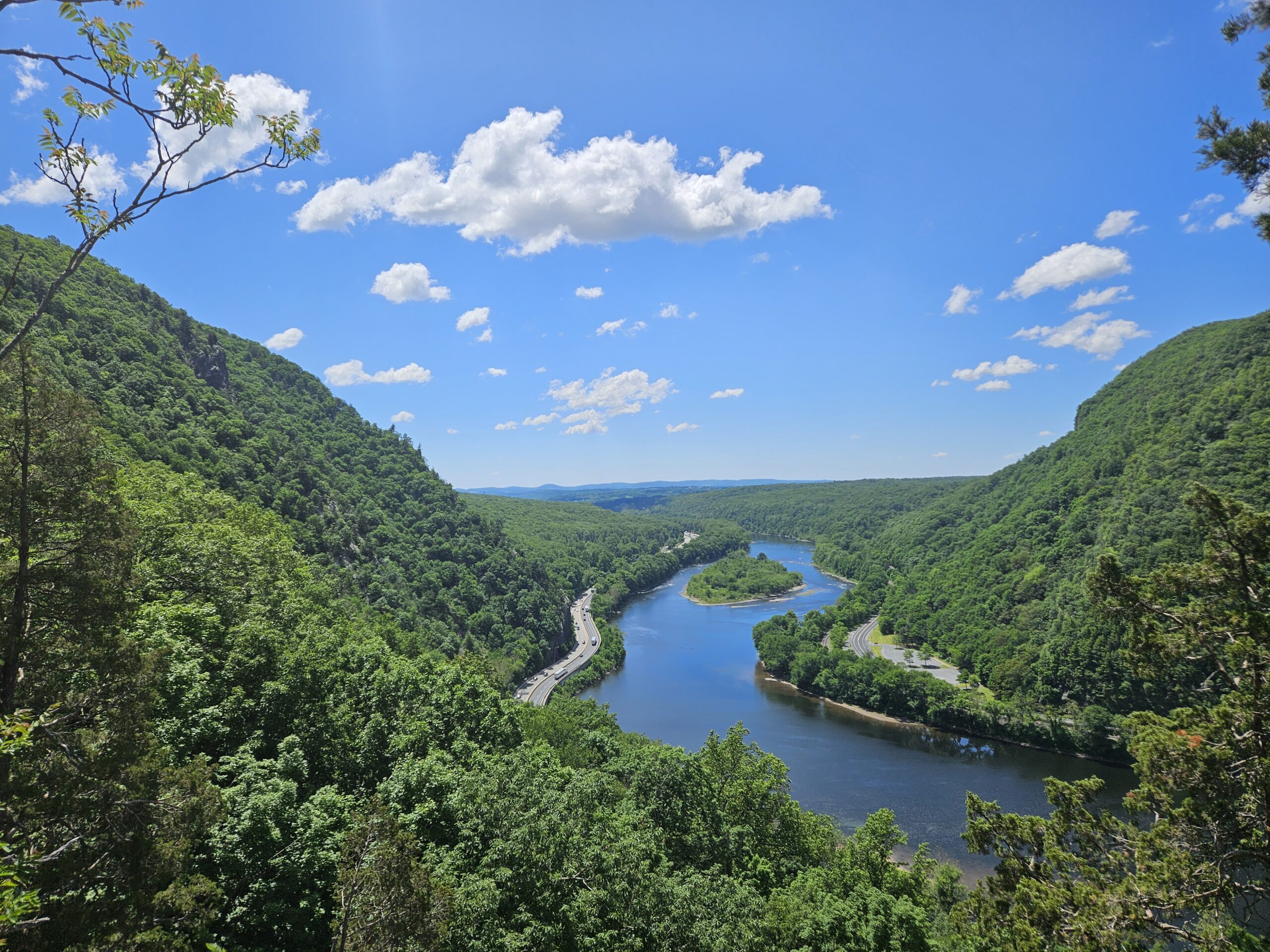
Mount Tammany, one half of the Delaware Water Gap, is arguably New Jersey’s most iconic mountain. At a summit elevation of 1,527 feet and a climb of 1,200 feet, this is also one of New Jersey’s most challenging hikes. The effort is worth it, though, as the views from both the midpoint of the mountain and the summit are incredible, offering expansive views of the Delaware River and Mount Minsi in Pennsylvania. A difficult 3.5-mile loop takes hikers up this rocky trail before ending on a scenic creek walk featuring a great waterfall.
Hike Information
Distance: 3.5 miles
Ascent: ~1,200 feet
Difficulty: Difficult
Mount Tammany is justifiably one of the most popular hikes in New Jersey. It is also one of the most challenging. With this popularity, there are many unprepared visitors.
On my most recent visit, I saw two hikers in flip-flops; this is an incredibly rocky trail, and while you can get away with sneakers, dedicated hiking boots are ideal.
I also frequently see people without water. While this hike is on the shorter side, it is very steep; the general recommendation is 0.5-1 liter of water per hour. At a normal pace, this is about a two-hour hike, so you should have at least two standard-sized 16.9-ounce (half-liter) water bottles.
Attached is the route as described below for reference. The elevation profile and route were created on AllTrails. Users can download the route to use on their preferred GPS. Click here for information on how to use the GPS routes on your phone.
Parking
There are a few parking areas for this hike. If possible, you want to park in the first parking area off Route 80 westbound (there is no access eastbound). This lot can hold about 40 legally parked cars and does fill up, even on weekdays in the summer. This parking area is ideal because it has the most direct access to the Mount Tammany trail.
If the first parking area is full, the next recommended lot is the circular Dunnfield Creek parking area, located just after the previously mentioned one. Unlike the first parking area, this one can be accessed from both directions of the highway. This parking area also holds about 30 cars and provides easy access to the Mount Tammany trail, though the trail access is a little less obvious.
If both of those parking areas are full, you have one more option. Exit the parking area and get on 80 West. Get off at the next exit (Exit 1), then turn left, passing below Route 80. Do not take the on-ramp back onto the highway; instead, follow the road until you reach a few additional parking areas on the right for the Kittatinny Point Visitor Center and boat launch. From here, follow the White Appalachian Trail under Route 80 back to the previously mentioned circular parking area. This lot should be used only as a last resort, as these lots can add up to a mile between the hike to and from the main trail.
If you visit on a summer weekend, try to arrive around 8:00 a.m.; any later and you risk having to park across the highway. Even on summer weekdays, the parking areas can fill up. If everything is filled up, you may have to find another hike. Do not park on the shoulder of Route 80.
The Hike
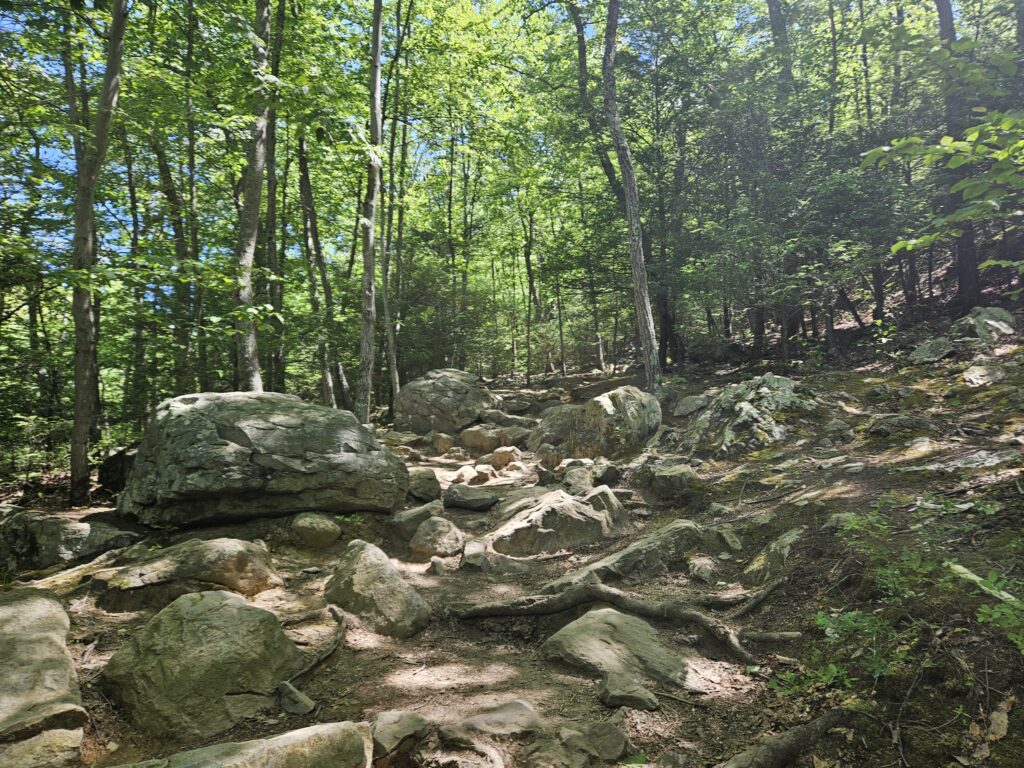
The hike up Mount Tammany is one of the most difficult in New Jersey, despite being only 3.5 miles long. This is due to the significant 1,200-foot ascent in the first mile and a half and the extremely rocky terrain. While the trail is naturally rocky, its popularity has compounded the problem: heavy foot traffic loosens the soil, making it more prone to erosion and leaving the more resistant rocks behind. Aside from the final stretch on the return to the parking area, expect what feels like endless rocks.
The most popular route to the summit is up the steeper Red Dot (on white blazes) Mount Tammany Trail and down the Blue Pahaquarry Trail. While it might seem counterintuitive to take the steeper route up, this is ideal since the trail is too steep and rocky to enjoyably hike down. During the COVID-19 pandemic, the trail was actually temporarily one-way, following this recommended route. If you want a slightly less steep route up, the Pahaquarry Trail is once again open to two-way traffic. If you take this trail up, you should also hike back down it.
The trail is very well-worn and easy to follow. There are clear blazes throughout the hike, but they are generally not needed. On the ascent, there are multiple sections of user-made shortcuts or wide rocky sections. If you can, try to follow the exact blazes in these sections, as they mark the easiest route. If you accidentally go off the official trail, it is not a big deal, as the general path is obvious and it is difficult to get lost, especially with how many other people will likely be on the trail.
Mount Tammany
If you are able to park in the first parking area off Route 80 West as recommended, walk towards the back of the parking area and locate the start of the Red Dot Mount Tammany Trail.
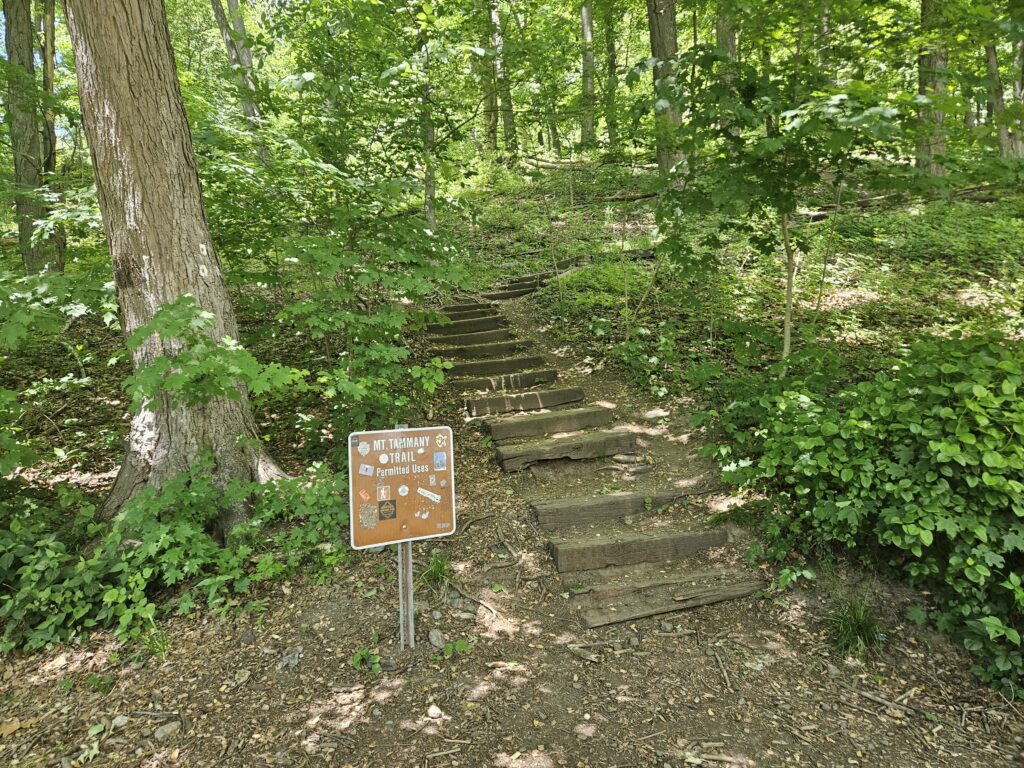
If you parked in the circular parking area, you can find the trail near the start of the parking area. This is not intuitive, as it seems as if you are walking towards the highway. Fortunately, there is a directory and sign here to confirm you are going in the right direction.
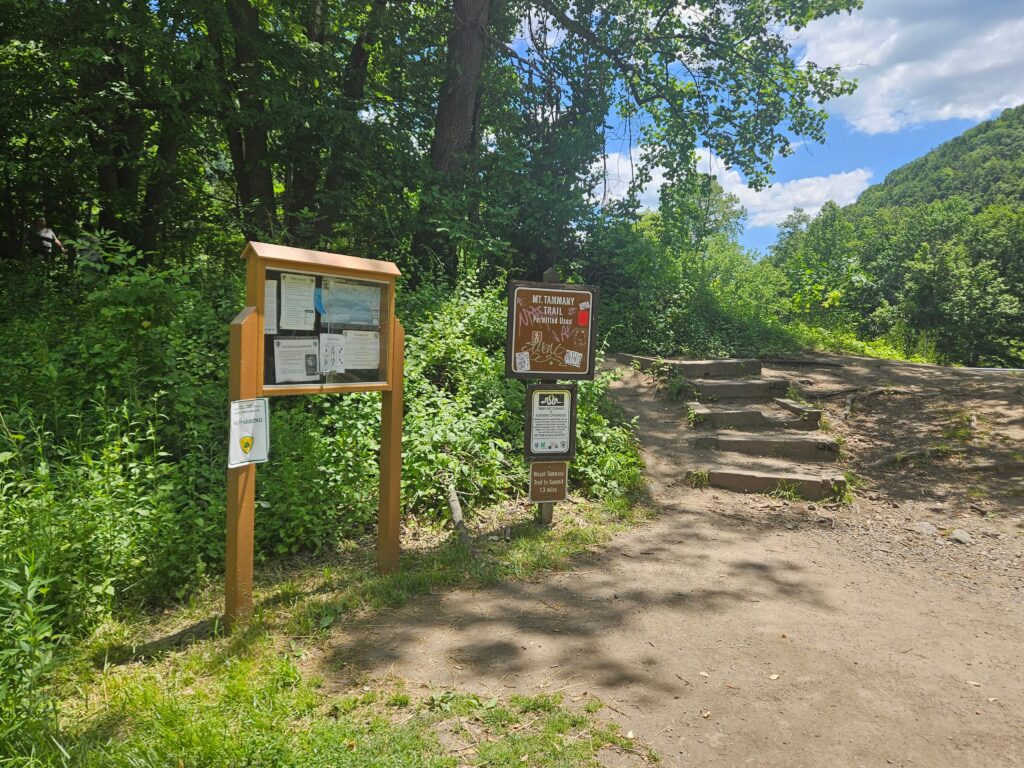
Regardless of which parking area you are in, the trails from both immediately begin by climbing a set of wooden steps before quickly merging.
After these steps, the trail flattens out, offering one of the only gentle sections of the hike. The brief flat section ends quickly as the trail rounds a bend and begins a very extended and rocky climb.
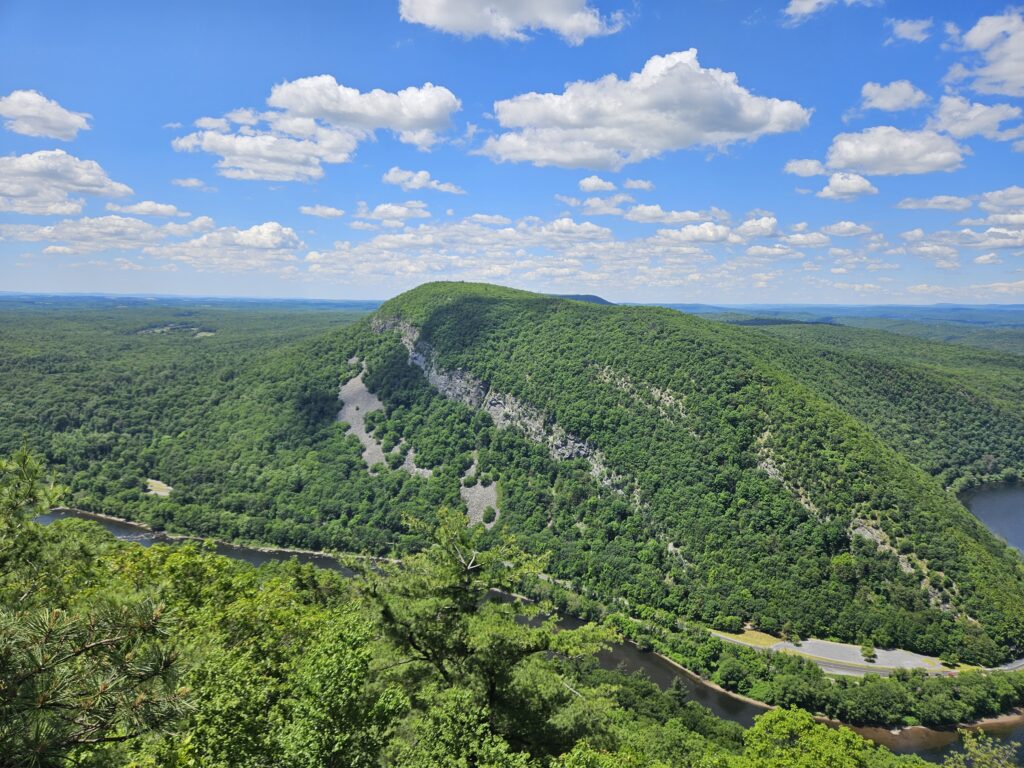
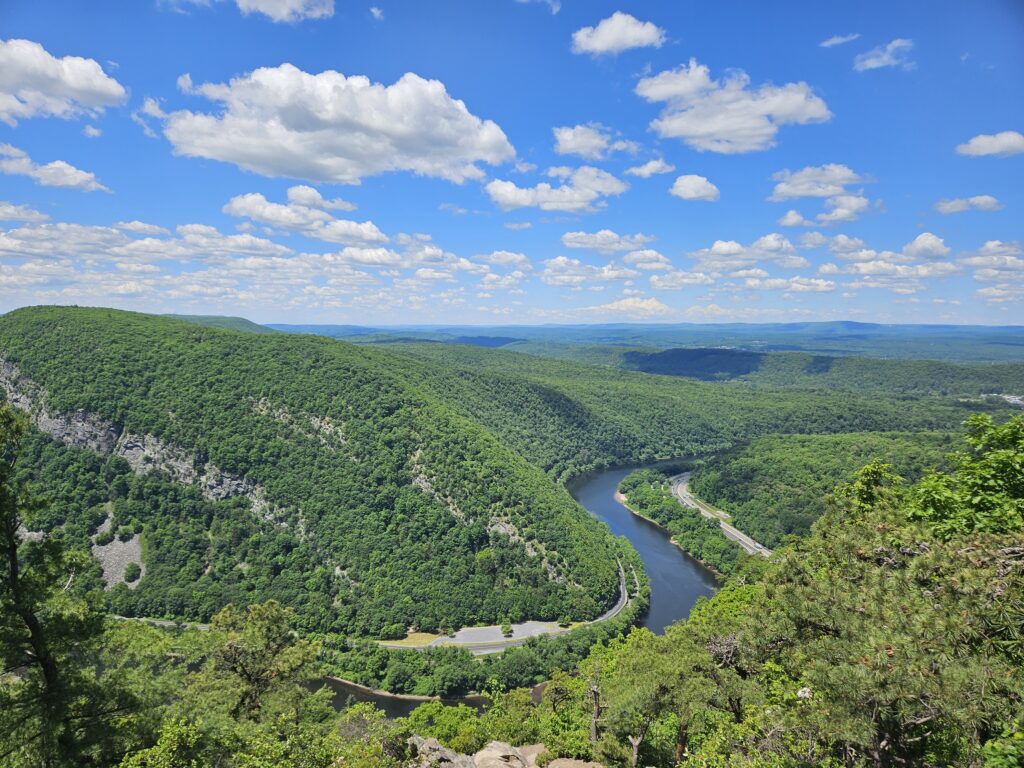
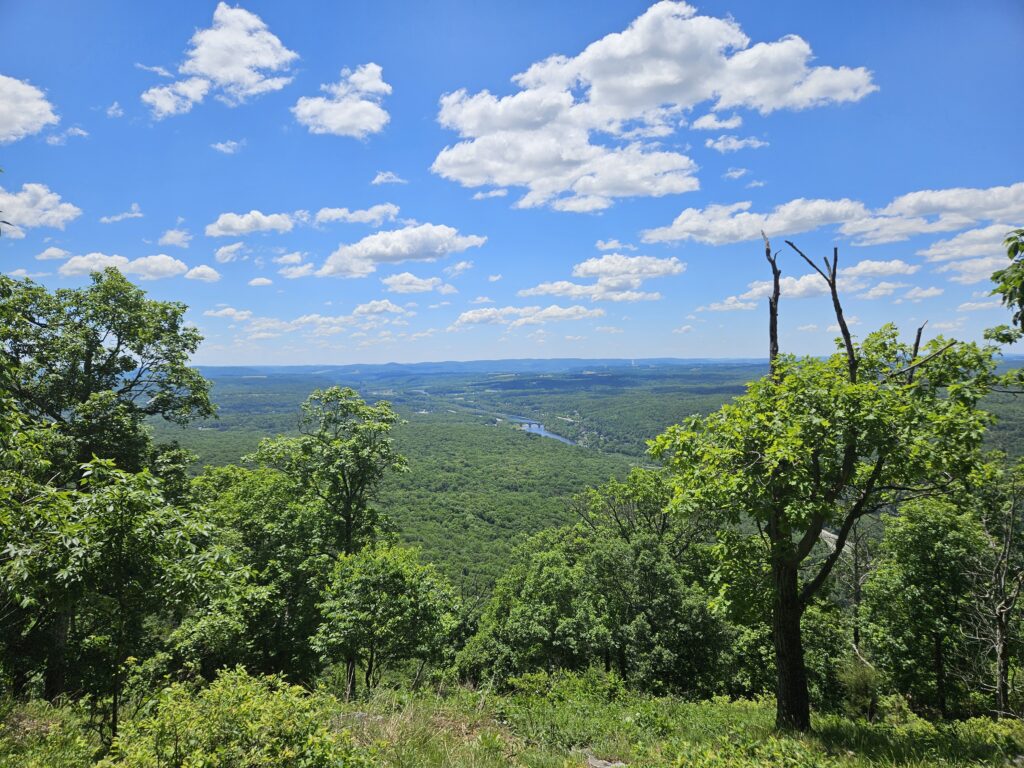
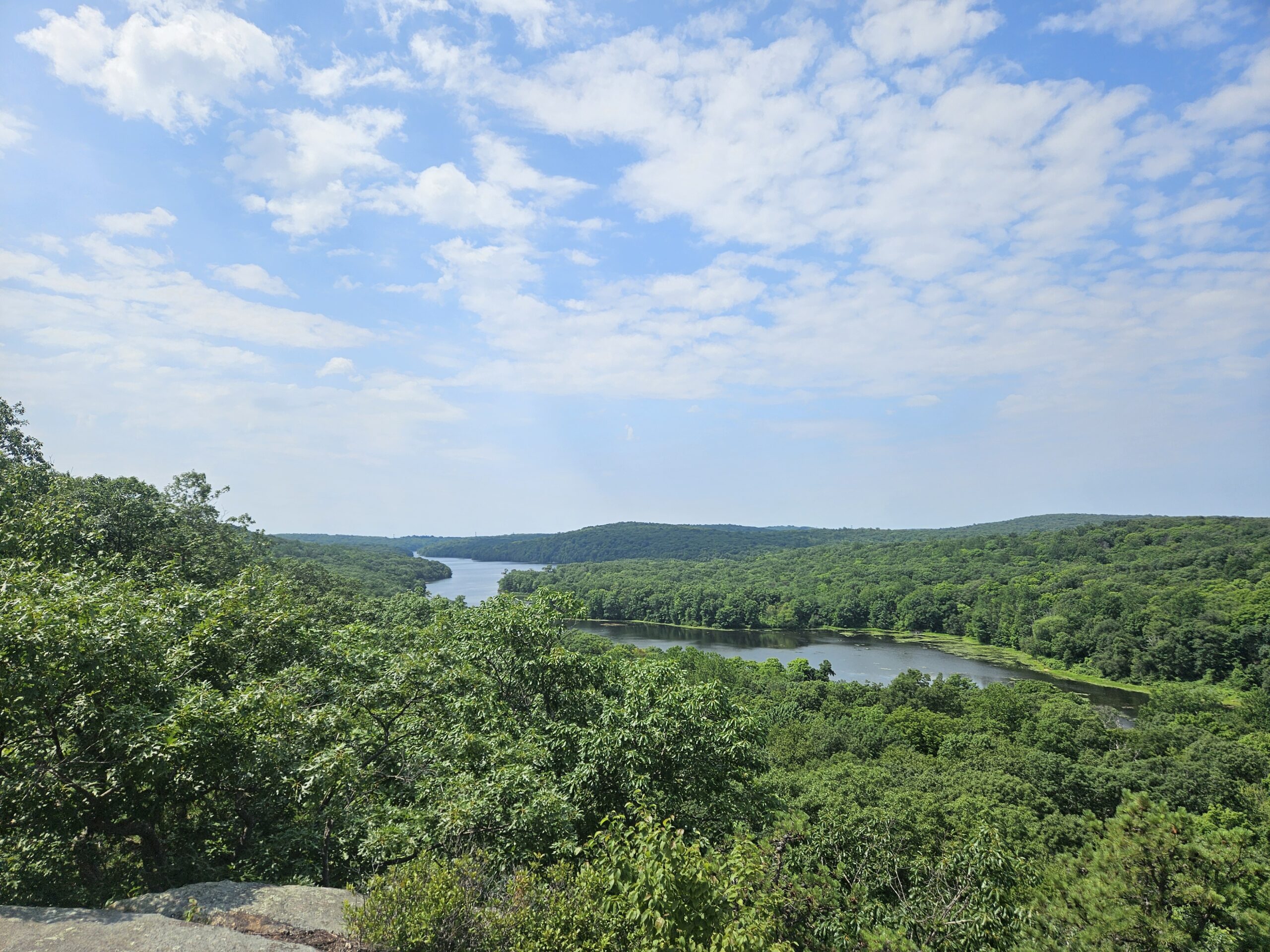
About 0.5 miles into the hike, you will be greeted with the first overlook of the hike: an excellent view of the Delaware River snaking between Mount Tammany and Mount Minsi in Pennsylvania which is across the river.
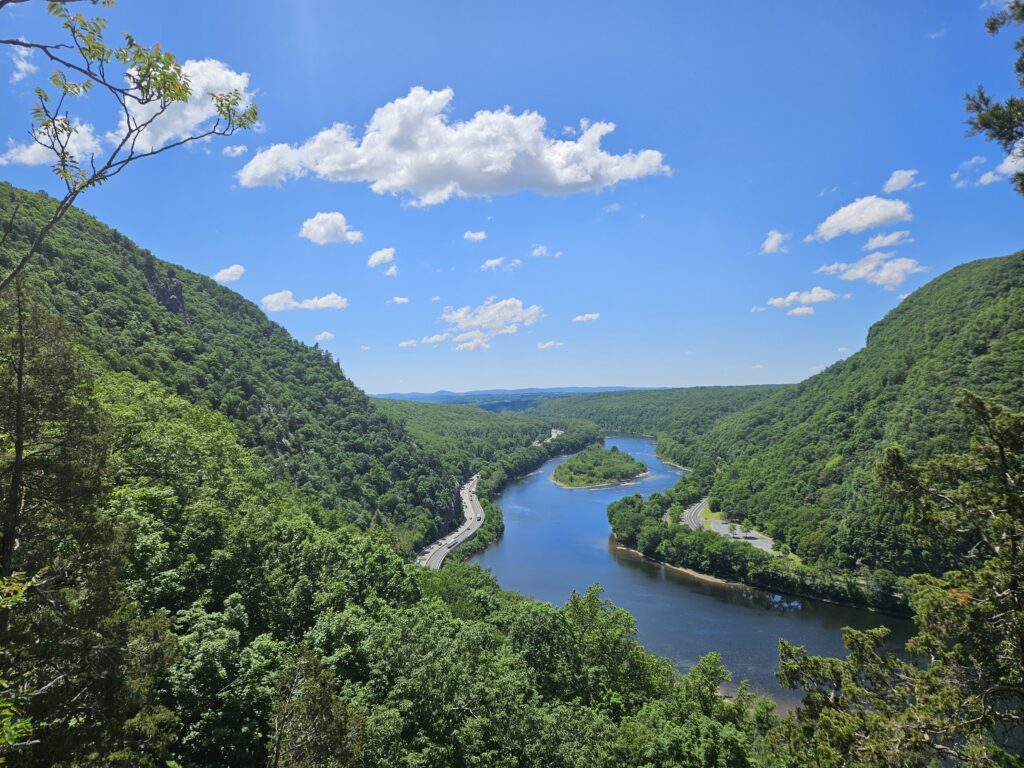
Despite being only half a mile into the hike, this is an excellent spot to take a break, as you have already climbed almost 450 feet. This is also my personal favorite view of the hike, although the summit view comes close.
When ready, continue uphill following the red-on-white blazes, following another gentler section of trail. Soon, though, the steepness returns, and the trail goes up a very steep rock scramble. If you follow the blazes, the scramble is not too bad as it winds its way up; of course, not a single person I saw on my most recent visit was following them, and they were all clearly struggling.
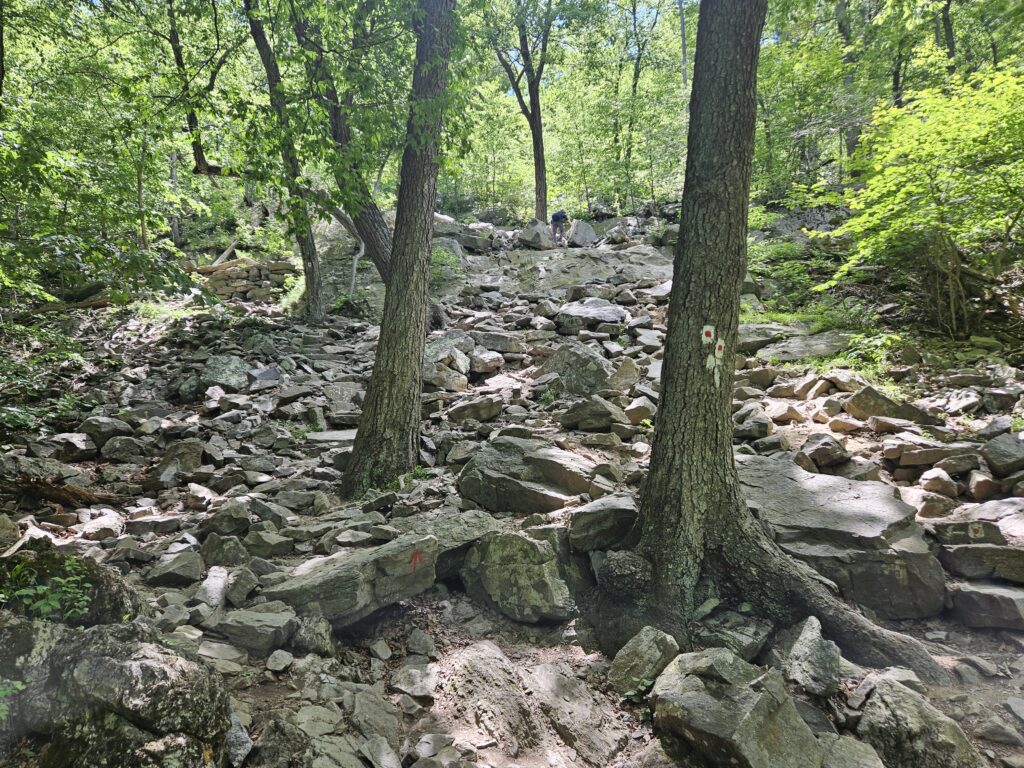
Soon after that scramble, there is another shorter, but equally rocky, scramble.
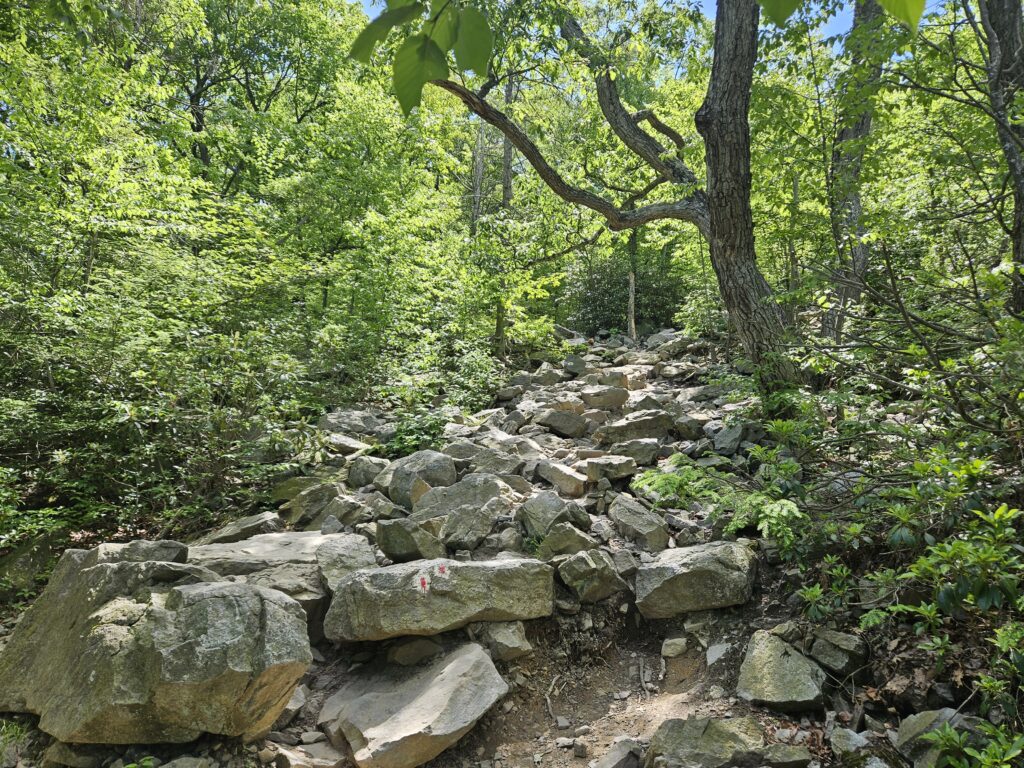
Eventually, the trail levels out before reaching the main summit view. To reach this point, you have climbed nearly 1,200 feet in 1.2 miles.
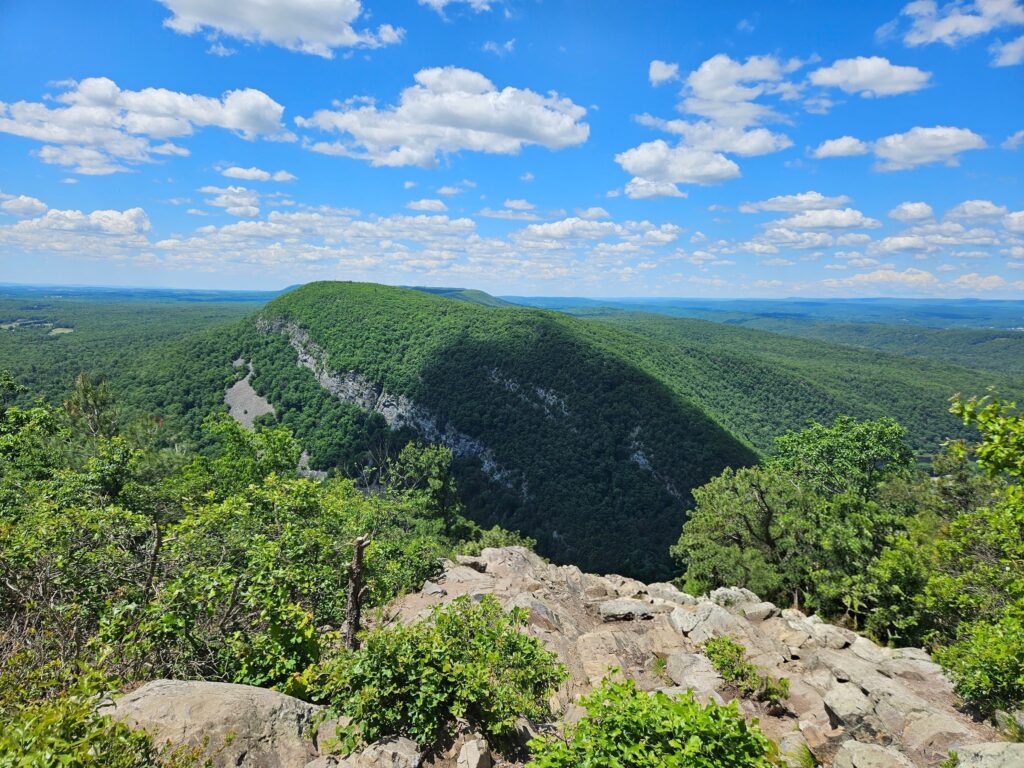
From the summit, you cannot actually see the Delaware River, but you do have an excellent view of Mount Minsi right in front of you. If you want to see a wider view, simply walk forward and down the rocky clearing in front of you. Here, you are greeted with a much wider perspective, including a very clear view into Pennsylvania.
Mount Tammany Fire Road and Pahaquarry Trail
From the summit, you are going to want to take the Blue Pahaquarry Trail back to the bottom. While still incredibly rocky, this descent is much easier than the one on the Mount Tammany Trail you just took.
To start the trail, locate the three blue blazes marking the start. There is also an official sign above the blazes that has been stickered to the point of illegibility.
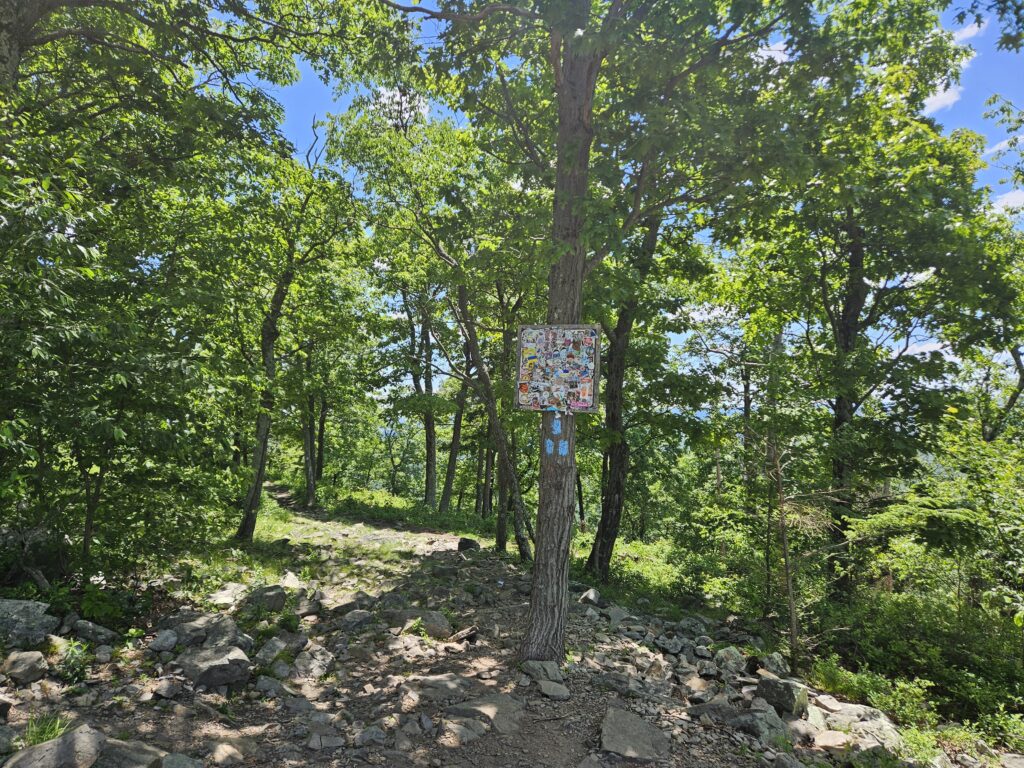
Follow this trail. Although designated a fire road, the first part of the road resembles more of a traditional trail. The trail eventually turns more into a traditional fire road, but this is after the Pahaquarry Trail exits it.
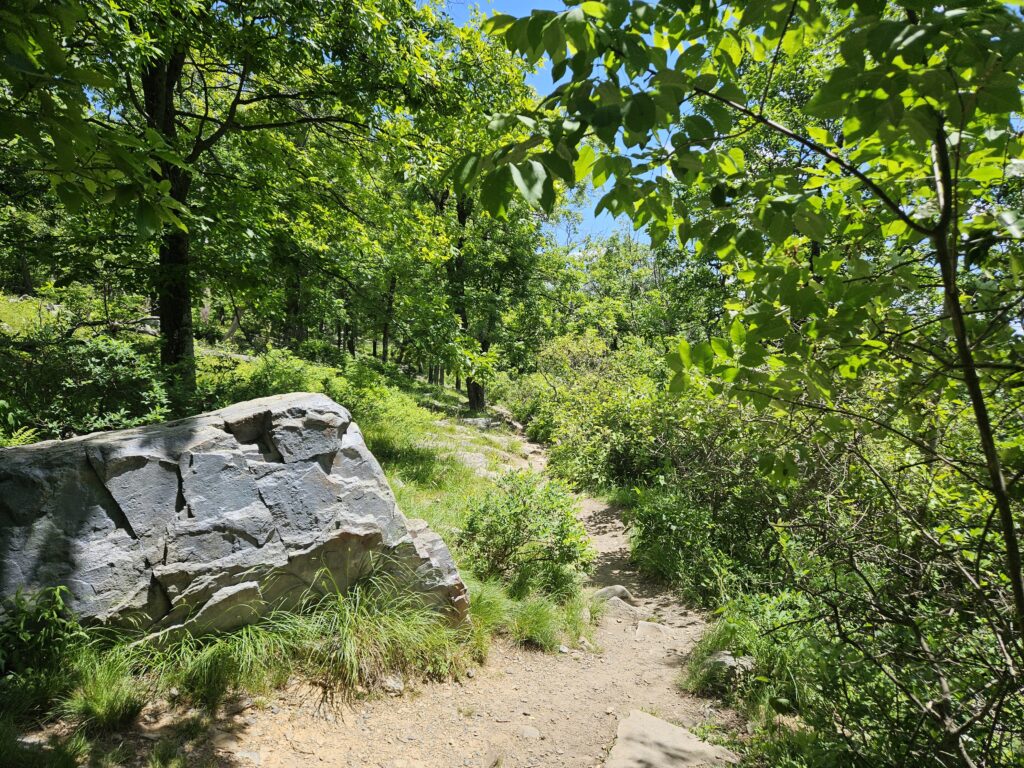
Along the way, there are a few small views through the trees to the right. These views are all good, but are not as spectacular as the previous overlooks. One highlight that you cannot see from the main overlook is the view of the Delaware River Viaduct crossing the river in the distance.
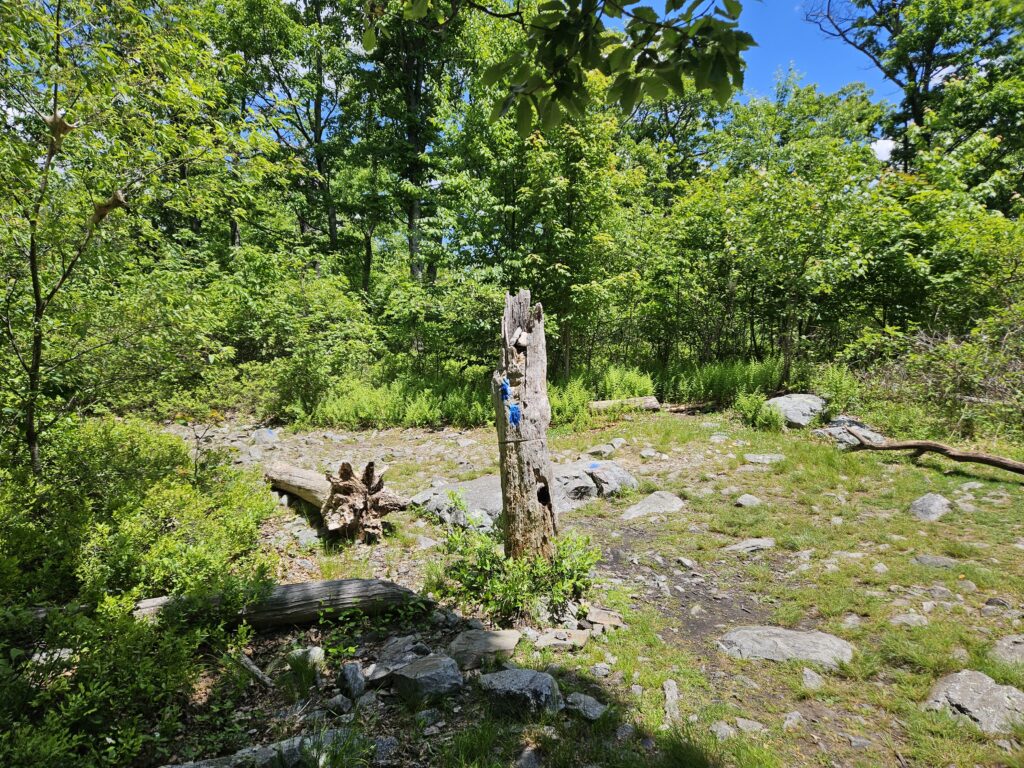
After about 0.3 miles on the fire road, the Pahaquarry Trail exits to the right. There are no signs here, but the park has done its best to make this turn-off clear; there are multiple blue blazes signaling the turn, most notably on a large dead tree in the middle of the trail. Previously, this was actually where the Blue Trail began (it was also not known as the Pahaquarry Trail at this point); before, hikers simply followed the unmarked fire road to this point.
From here, the trail begins its long descent. As previously mentioned, it is just as rocky as the initial climb; however, this route is slightly less steep.
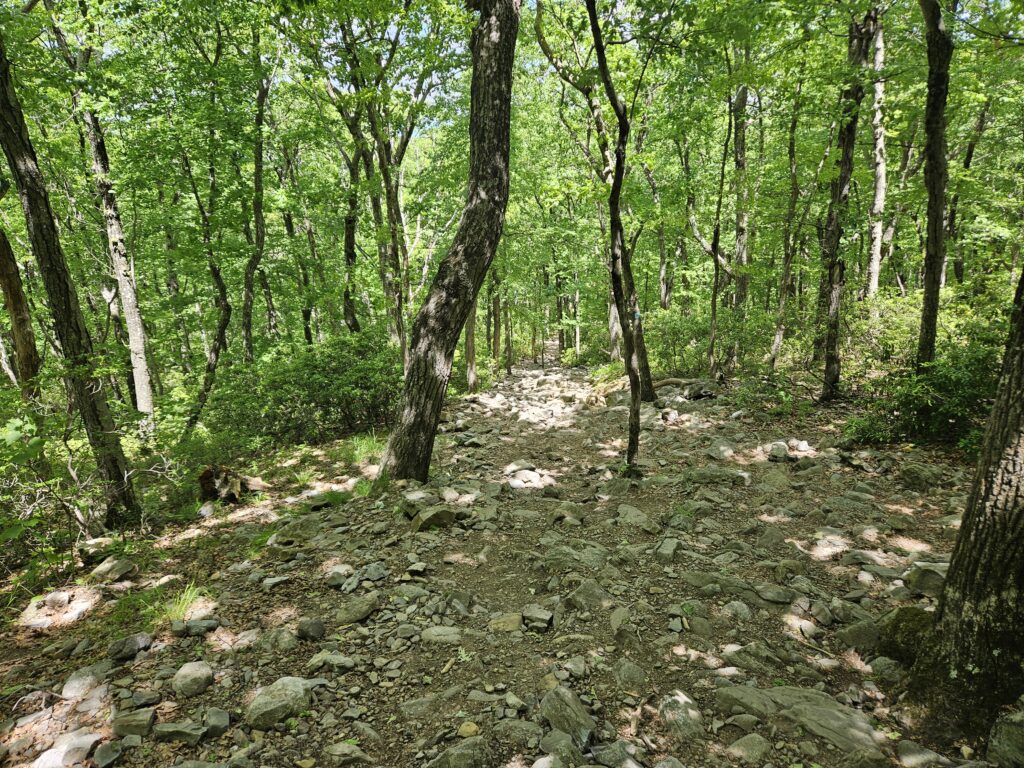
Follow this trail for about 1.2 miles until it ends at the Green Dunnfield Creek Trail.
Dunnfield Creek and Waterfalls
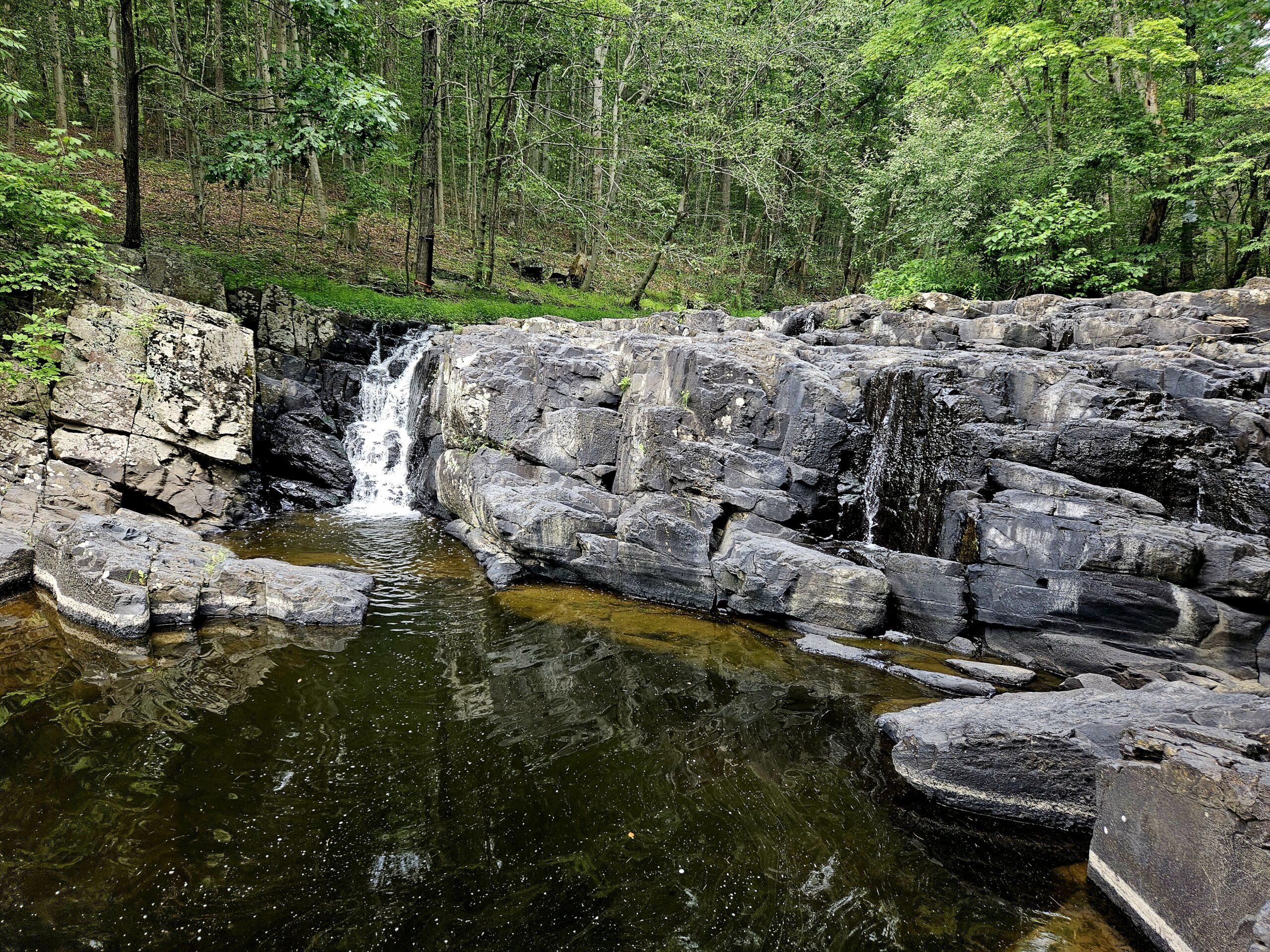
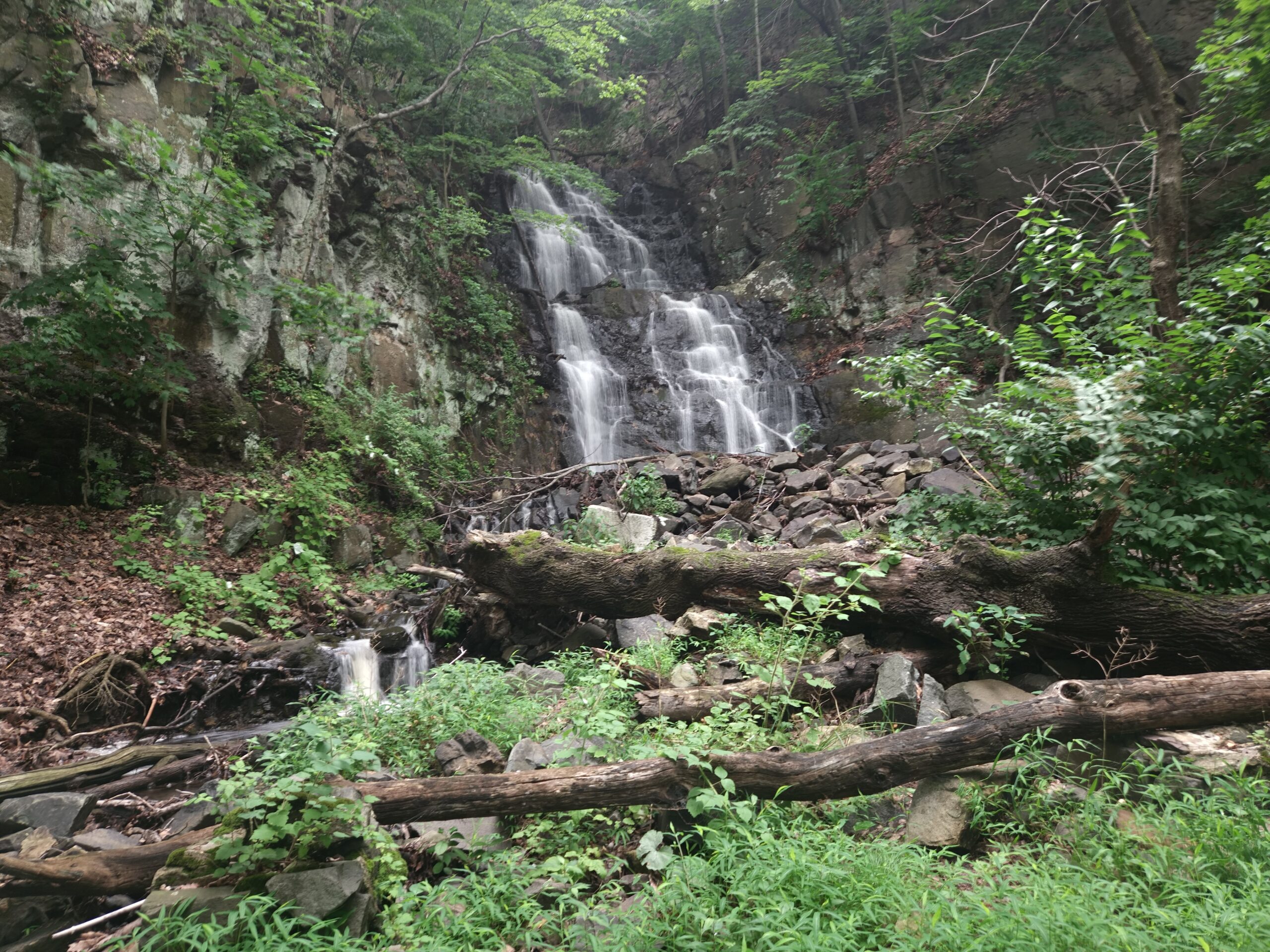
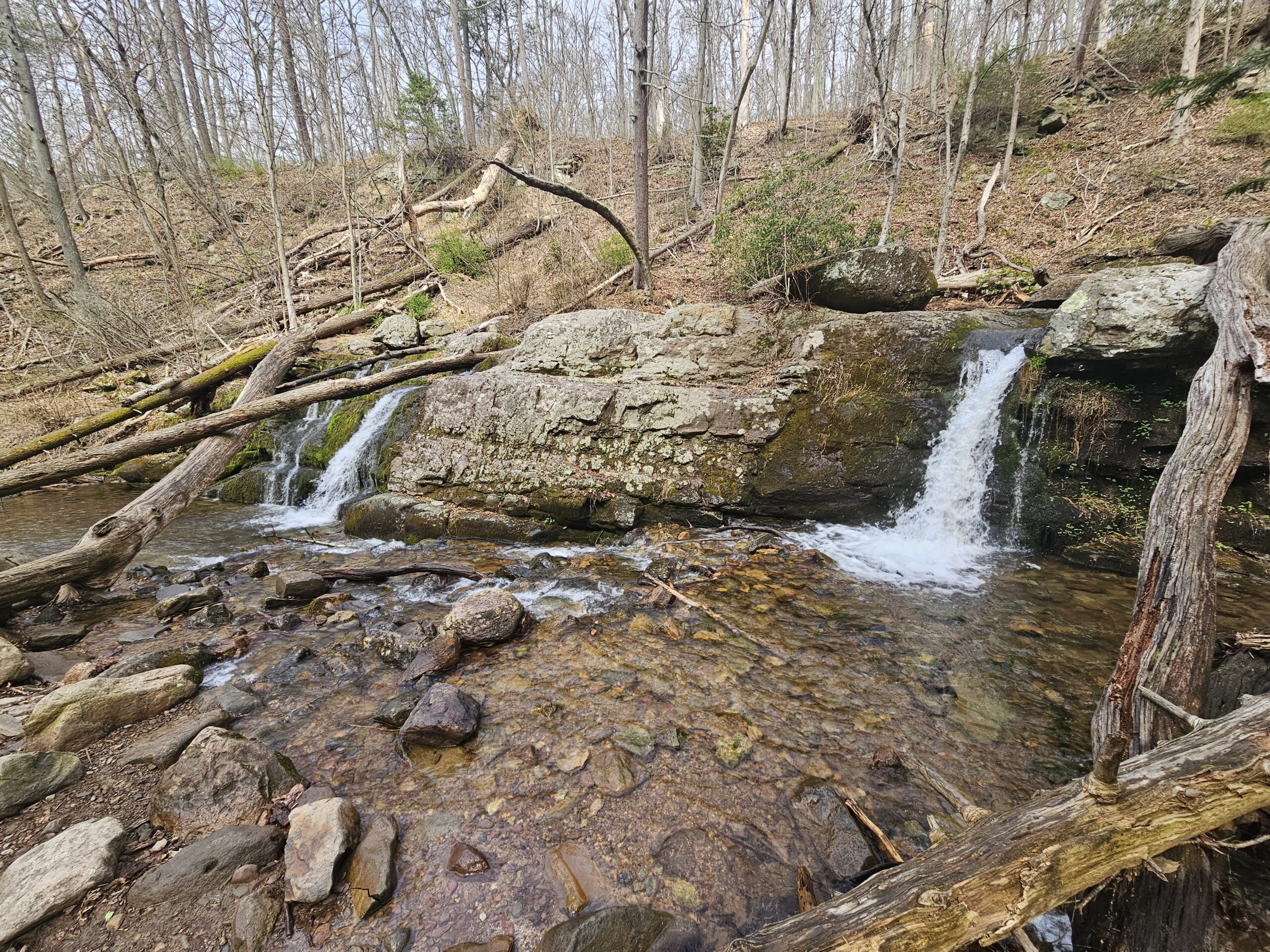
At the Dunnfield Creek Trail, make a left to return to the parking area. Almost immediately, you will also come across Dunnfield Falls, the largest and most impressive waterfall on Dunnfield Creek.
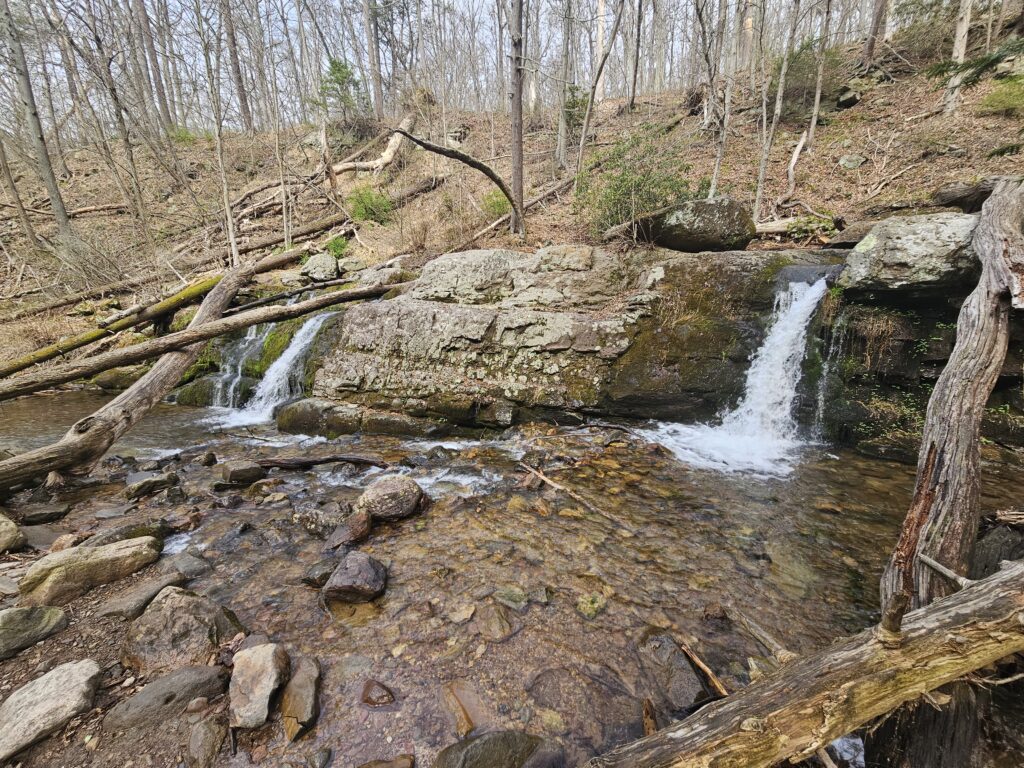
This nearly 18-foot waterfall is an excellent near-the-end stop on the hike. There are multiple vantage points on either side of Dunnfield Creek, which is crossed by a bridge here.
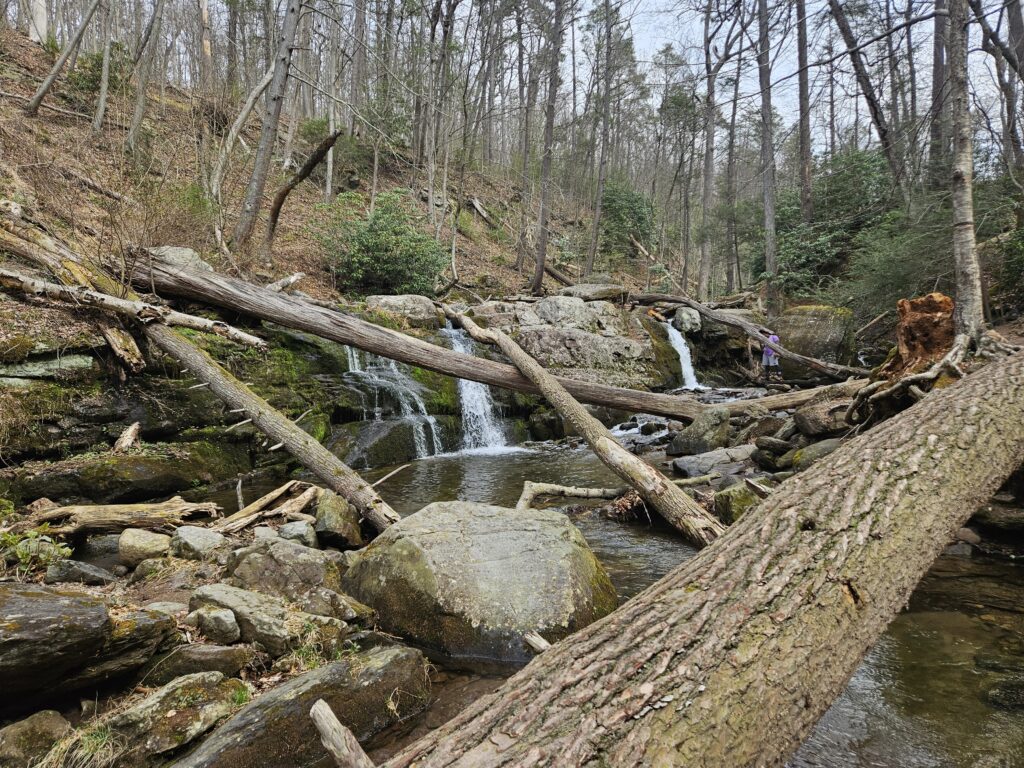
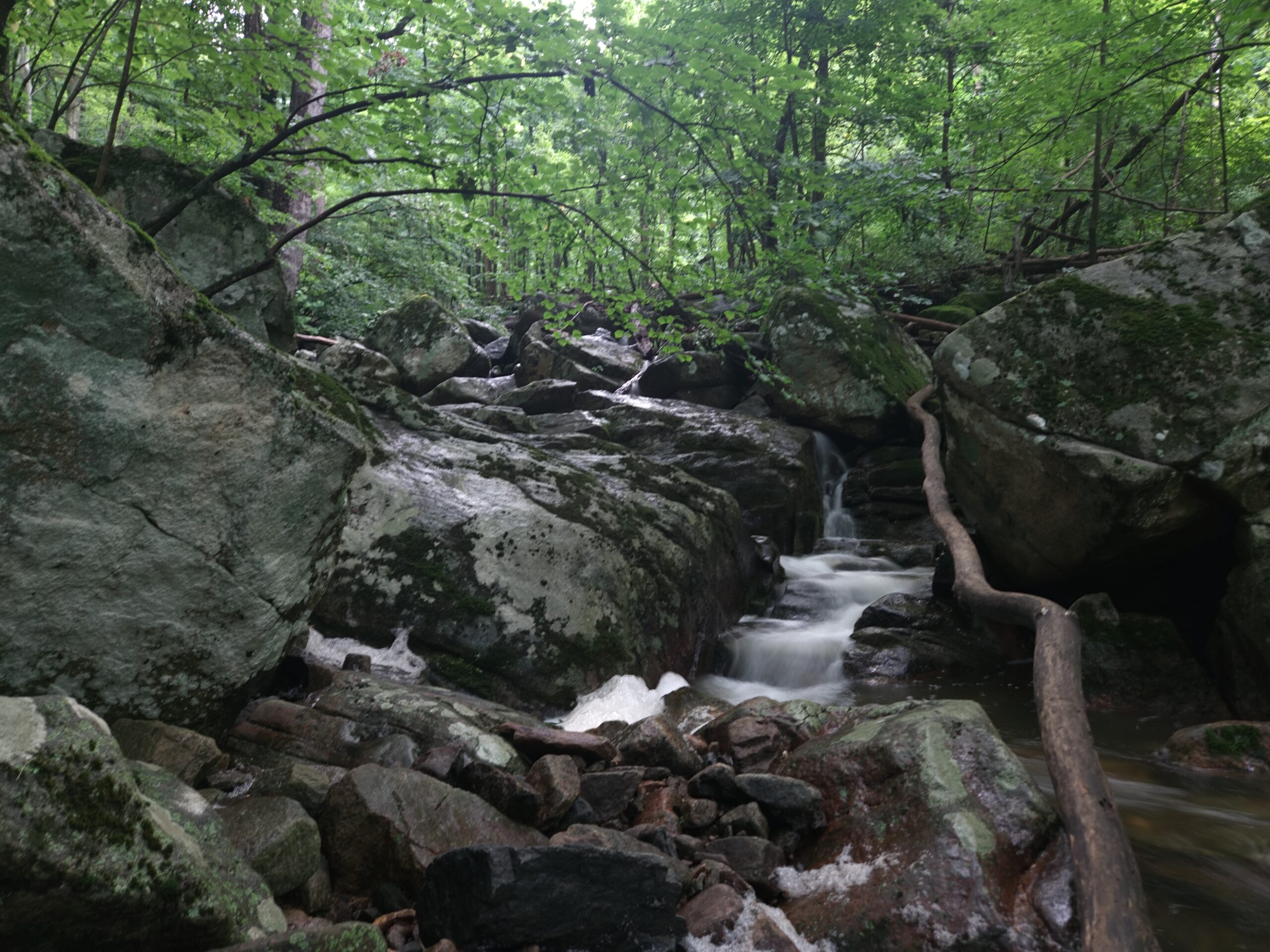
From Dunnfield Falls, continue following the Green Dunnfield Creek Trail downstream until you reach the White Appalachian Trail. Once at the Appalachian Trail, the trail finally turns to traditional dirt, and the rocky sections end.
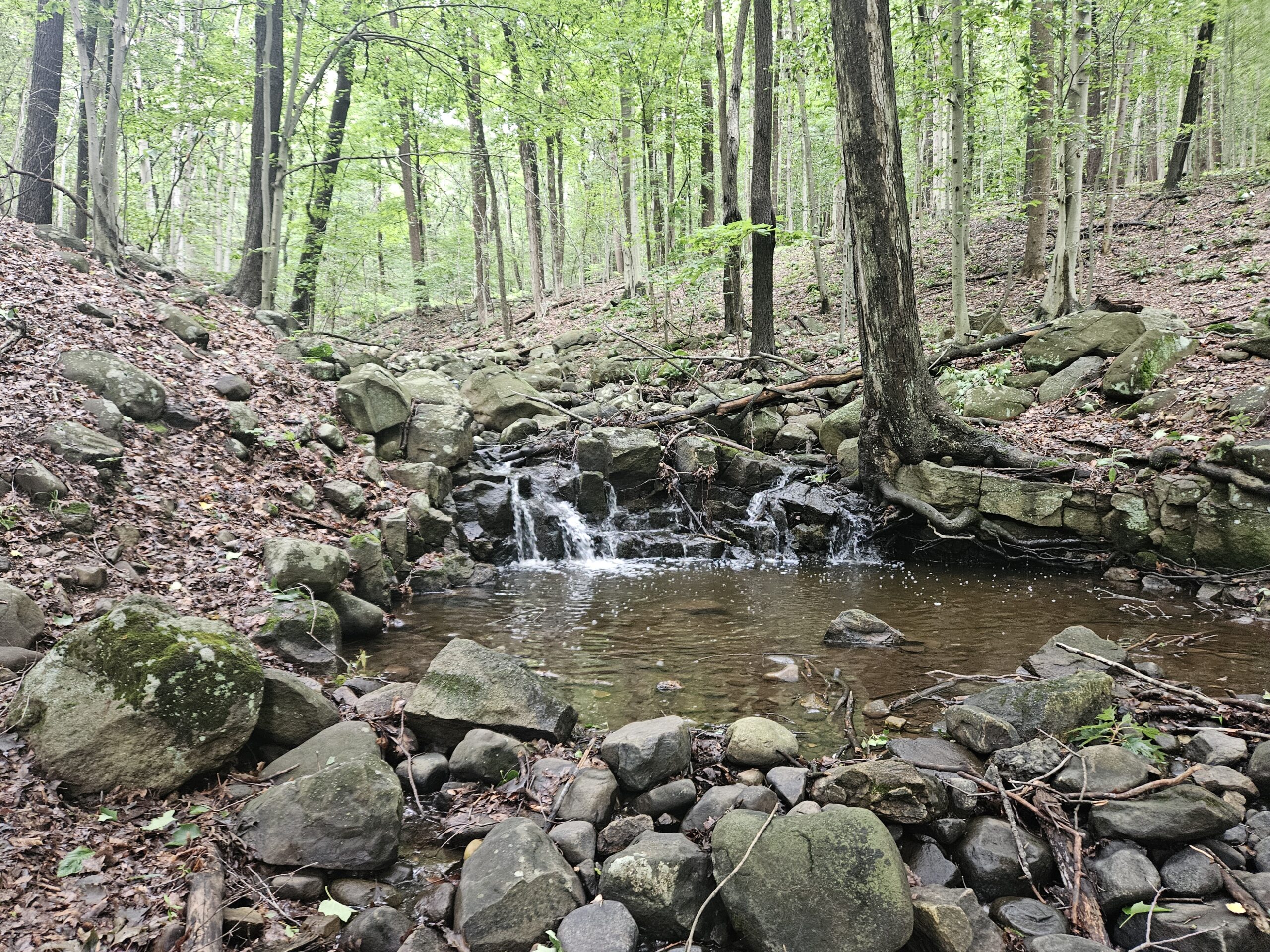
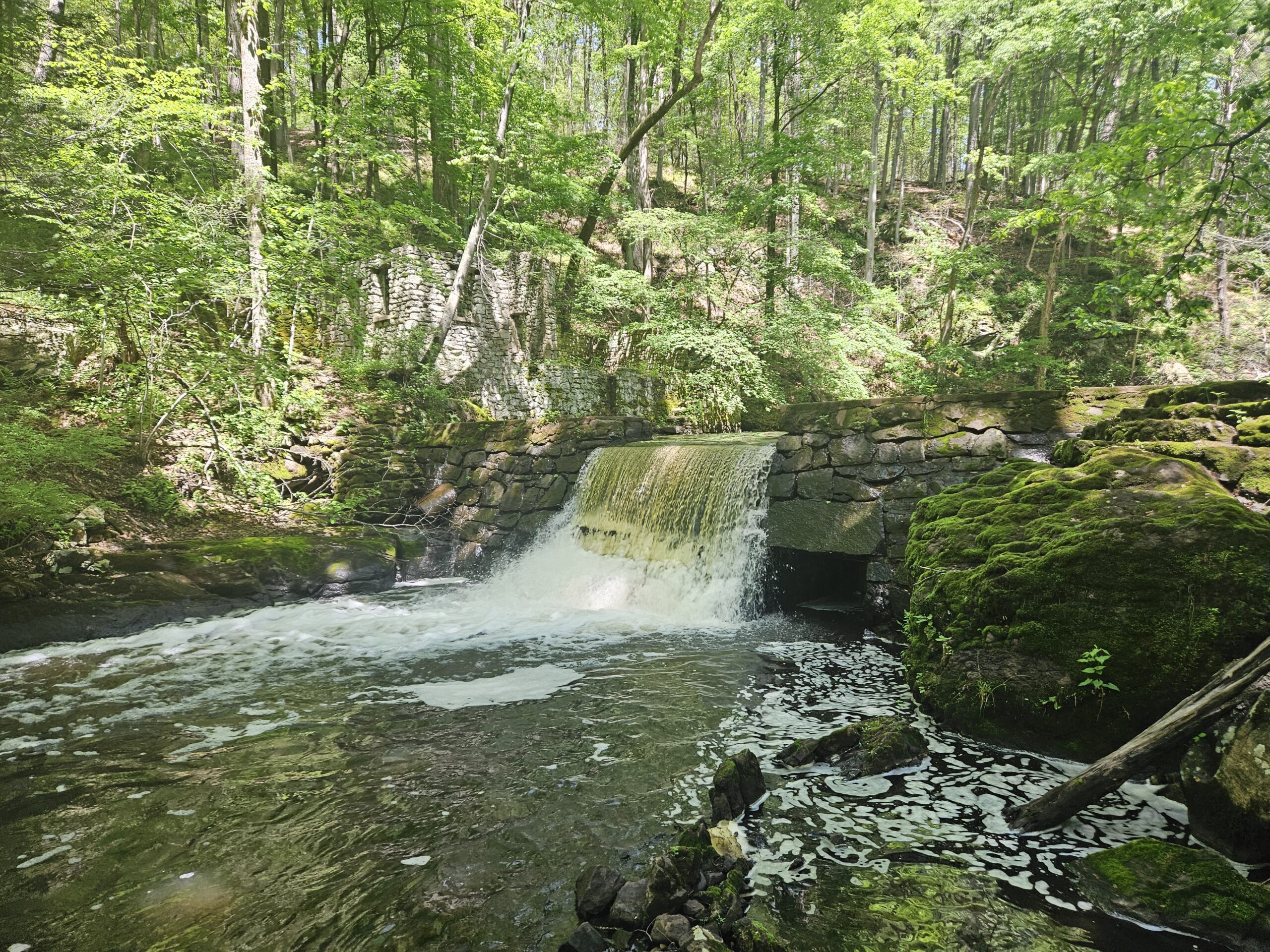
The Appalachian Trail runs above Dunnfield Creek and passes numerous small waterfalls, each around 6-8 feet tall. As the trail is about 20 feet above the water, some of these waterfalls can be challenging to see. There are incredibly steep side trails that lead closer to each of these waterfalls for those wanting a closer view.
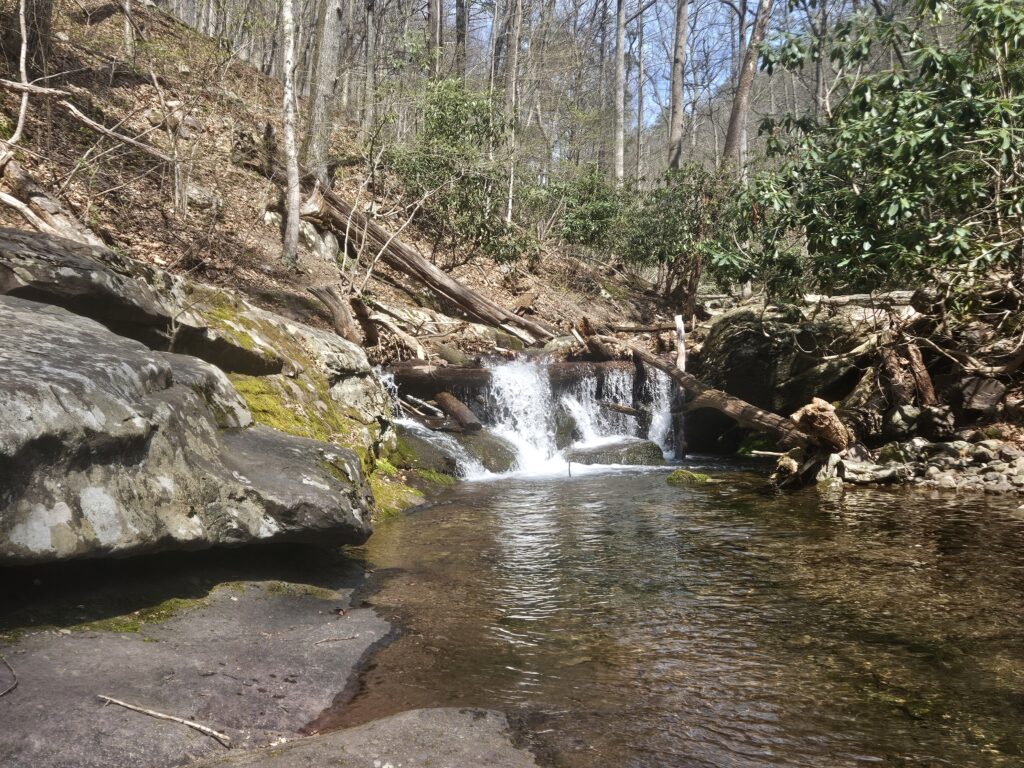
After about 0.3 miles, the Appalachian Trail ends at the circular Dunnfield Creek parking area.
If you were parked in the first parking area, as recommended, to return, you need to walk along the left side of the circular lot until you reach the Mount Tammany Trail start and directory. From here, follow the wooden steps (don’t worry, these are short) to where you reach a fork in the trail. At this fork, turn right and follow the short trail back to the parking area. This return is only a couple of hundred feet at most.
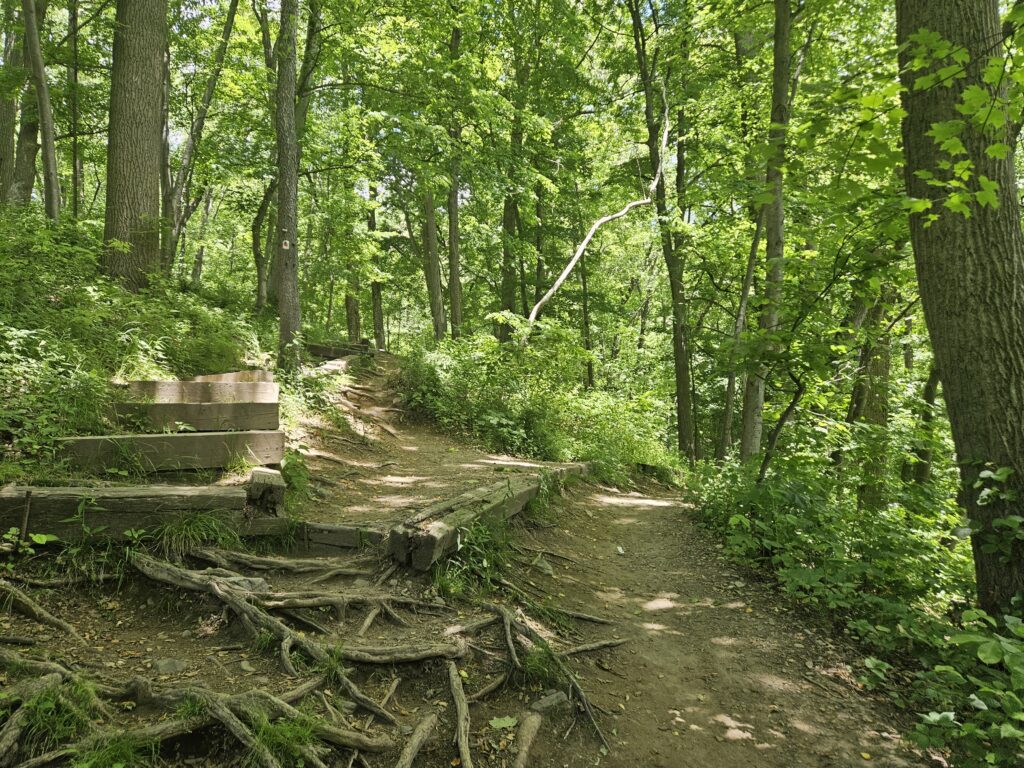
This trail takes you back to your vehicle, ending the 3.5-mile loop.
Review
Mount Tammany is one of New Jersey’s most popular hikes, and for good reason: the views at the two overlooks are spectacular, and while challenging, the rocky ascent is fun and engaging. To elevate the trail even further, Dunnfield Falls and the final creek walk at the end of the loop offer a perfect finish to the trek.
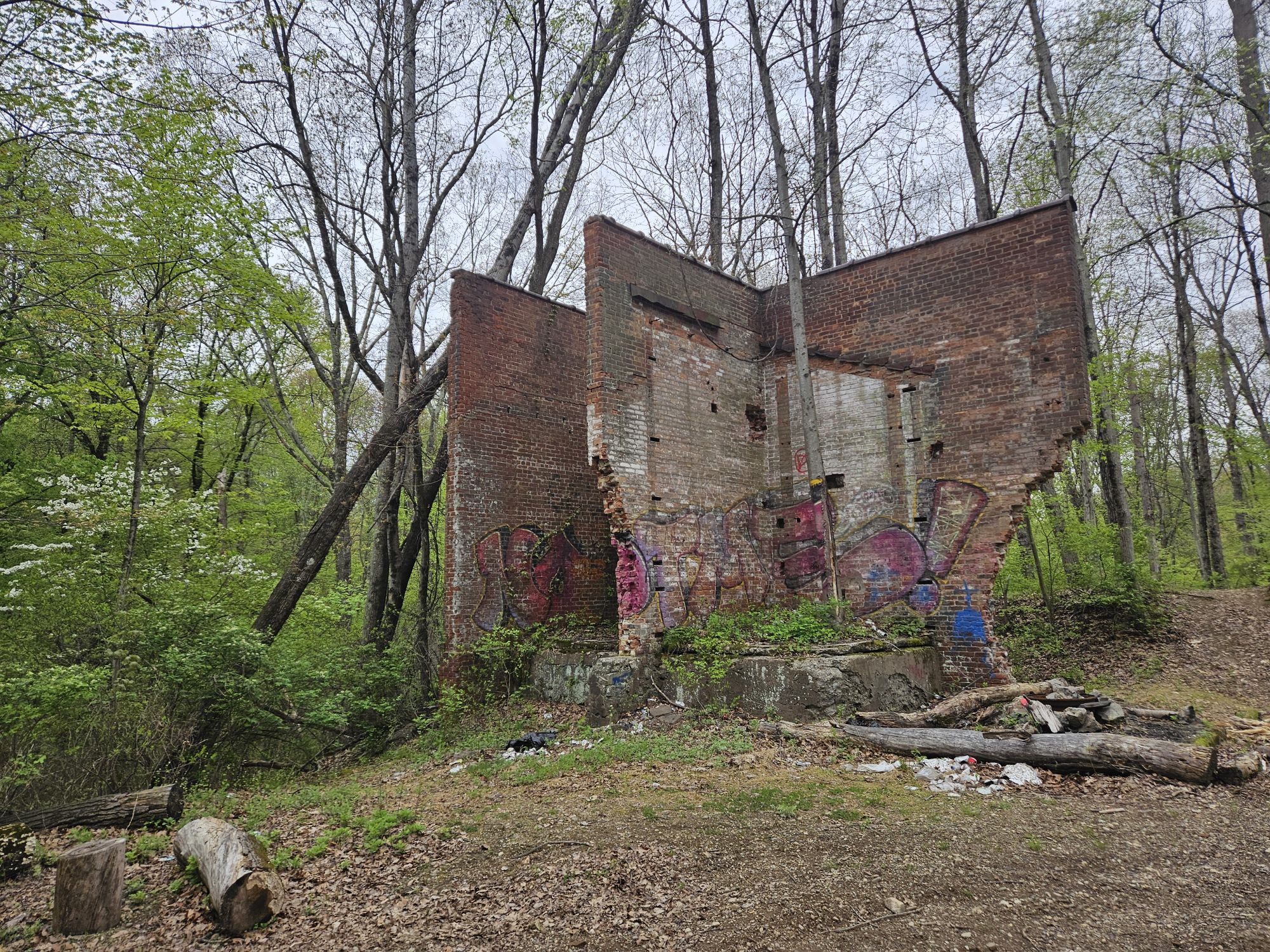
The trail’s incredible scenery and experience have one major drawback: overwhelming crowds. As mentioned above, securing a parking spot can be a challenge, even on nice weekdays. Once you do get on the trail, expect to share the path with many other visitors, especially at the main overlooks. Additionally, you will likely encounter some poor trail etiquette, such as litter, graffiti, and hikers playing loud music.
If you can visit on an off-peak weekday, want a challenging hike with a great payoff, and don’t mind sharing the trail, this hike is perfect. If you can only come on a weekend, try to arrive early or consider picking another destination.

Leave a Reply