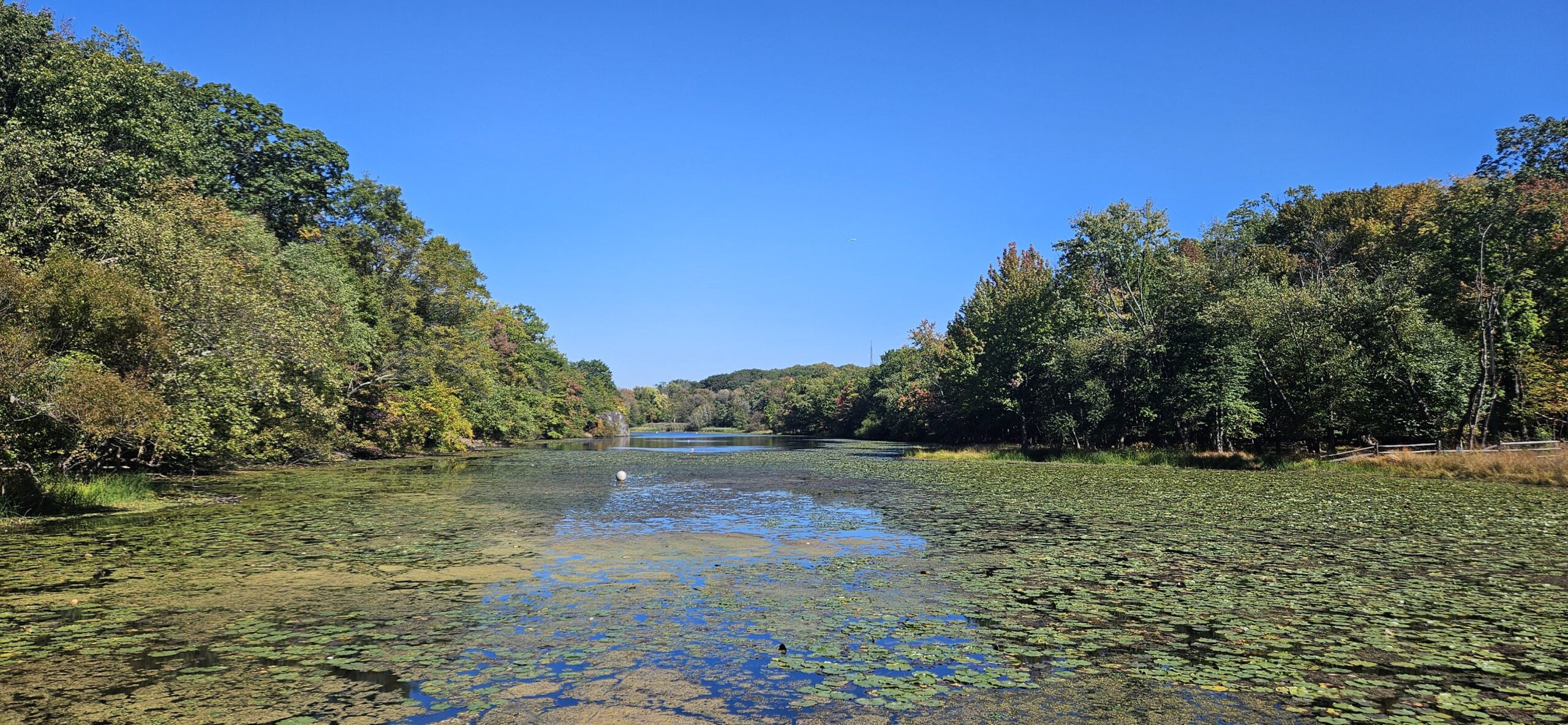
Garret Mountain Reservation, spanning the cities of Paterson and Woodland Park, is one of North Jersey’s most popular parks. The park is most popular with walkers utilizing the 2-mile park road, families looking to picnic and barbecue, and birdwatchers. Many people may be surprised to find that outside the busy picnic areas and Park Road, there are quiet hiking trails that are seldom used. The highlight of these trails is the Yellow Trail, which creates a loop around the perimeter of the park and passes by many notable sights, including several overlooks of New York City and Paterson, the 70-foot Lambert Tower, and Barbour Pond. Despite its proximity to one of New Jersey’s busiest urban areas, parts of the trail feel unexpectedly remote and rugged. Keep reading to learn more about hiking the Yellow Trail at Garret Mountain.
Garret Mountain Reservation
Hike Information
Distance: 2.8 miles
Ascent: ~400 feet
Difficulty: Easy-moderate
Background
Garret Mountain is the flagship park of Passaic County. Located next to (and partially in) the city of Paterson, as well as the other major municipalities of Woodland Park and Clifton, this 568-acre park is one of the most popular and busiest parks in North Jersey. The land the park sits on was acquired in 1927, and opened as a park in 1931 after careful design from the Olmsted Brothers Firm, the group responsible for designing Central Park in New York City.
The park, along with the nearby Great Falls of the Passaic, was designated as a National Natural Landmark in 1967. This designation was earned due to the basaltic lava flows, which shaped the area in the early Mesozoic period (about 200 million years ago). The park is also designated nationally as an Important Bird Area and in New Jersey as an Important Bird and Birding Area, with the Friends of Garret Mountain reporting that 245 species have been spotted in the park, and 37 species found breeding.
Garret Mountain is located on the First Watchung Mountain along with Rifle Camp Park, Eagle Rock Reservation, South Mountain Reservation, and Watchung Reservation (the latter two of which are also located on the Second Watchung Mountain). The Watchung Mountains are a set of three parallel ridges in northeastern New Jersey. During the breakup of Pangaea 200 million years ago, the area of the present-day Watchung Mountains started to rift. This area is known as the Newark Basin. The rifting caused lava to flood the region on three separate occasions. In between each volcanic extrusion, volcanic activity was limited. This allowed sediment to accumulate on top of the hardened lava (basalt). This process created an alternating geology of basalt and sedimentary rocks. During the Jurassic Period, the western end of the Newark Basin dipped into the crust, tilting the entire basin. Erosion since as eroded the sedimentary rock down, leaving the prominent and more erosion-resistant basalt Watchung Mountains.
Throughout the park, the characteristic basalt cliffs are visible, most notably on the Yellow Trail between the Garret Mountain Equestrian Center and the Crows Nest, as described below. As the park is located on the First Watchung Mountain, the multiple overlooks feature the most unobstructed views of New York City in the Watchung Mountains as there are no other peaks in between Garret Mountain and the city. Historically these cliffs were used by George Washington’s troops to observe incoming British soldiers from a distance.
The Hike
The Yellow Trail is the longest at Garret Mountain and circles the perimeter of the park. The 2.8-mile trail passes and goes through every notable location in the park. Despite being an extremely busy park, the trail itself is surprisingly quiet as most park visitors simply walk along the paved Park Road instead of on the hiking trails. Those taking the road are missing out though, as there are a few sites that can only be visited by hiking such as Lambert Tower and some excellent New York City views.
The hike is of easy-moderate difficulty due to some changes in elevation and rocky surfaces.
Where to Start
Garret Mountain has many parking areas located along the Park Road loop. As the Yellow Trail mostly follows the path of Park Road, most parking areas access the trail directly or are reasonably close to it. Two exceptions to this are the Tower Picnic Area and Rocky Hollow Picnic Area parking lots.
I personally recommend starting at the Pat Di Ianni Boathouse and Barbour Pond picnic area parking area. This is because Barbour Pond is the lowest point in the park, meaning that you end the hike by going downhill. Additionally, the parking area is not as busy as other areas in the park, and you are more likely to find parking there. The parking area is labeled with an obvious sign on Park Road.
The guide below begin and end from this location, but it is possible to begin the hike from most other locations except the two mentioned above.
Pat Di Ianni Boathouse
The hike begins at the Pat Di Ianni Boathouse. From the parking area, walk down the stone steps to a wide field. On the left you will see the boathouse. The boathouse is named after Pasquale “Pat” Di Ianni who passed away in 2013. Di Ianni was a local politician dedicated to promoting Passaic County and established the Passaic County Board of History and Tourism. Despite being named the boathouse, there is no boating at Garret Mountain.
The Yellow Trail begins behind the boathouse, opposite Barbour Pond. You will pass Barbour Pond at the end of the hike.
The trail begins as a crushed gravel road and passes beside a small stream. The Yellow Trail soon leaves the road which turns left while the Yellow Trail continues straight. The trail transitions to a natural surface, beginning to work its way uphill. The trail soon makes a left turn. On the right, you will see large basalt cliffs towering above the trail. The trail continues to work its way uphill and enters a small field, skirting the backyard of some homeowners. The trail then begins a short descent and reaches Park Road. Cross Park Road, where you are once again on a crushed gravel trail. At the next intersection, the Yellow Trail turns right and once again reaches, then crosses Park Road.
Garret Mountain Equestrian Center
After crossing Park Road, you will be at the entrance to the park’s equestrian center and stables. The equestrian center is leased to a private operator and offers boarding and lessons. The stables also house the mounted patrol unit of the Passaic County Sheriff’s Department. The trail never passes directly next to the horses, but you can see some on Park Road.
The Yellow Trail does not follow the road to the stables, but goes around, almost appearing to exit the park. Follow the trail as it hugs the treeline next to Weaseldrift Road before ascending to the outskirts of the stables.
The Cliffs
Following the equestrian center, the trail reaches the top of the basalt cliffs. At first, the trail simply hugs the top part of the cliffs without any views.
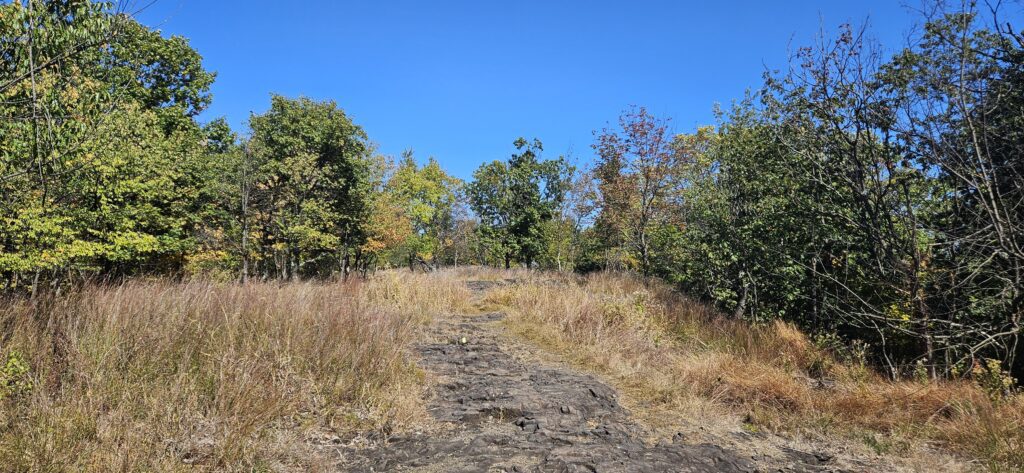
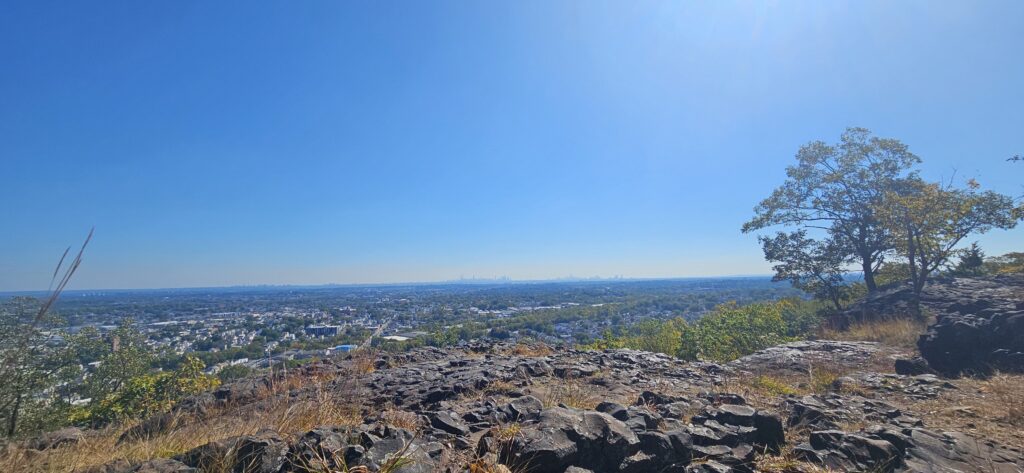
About a quarter mile from the equestrian center, the first and arguably best view of the hike appears. From the wide overlook, you have an excellent and clear view of the entire New York City skyline. Here you will also find many rocks to rest at and take in the impressive view.
Lambert Tower
Just after the overlooks, you will reach the 70-foot Lambert Tower. After multi-year renovations, the tower is once again open to the public.
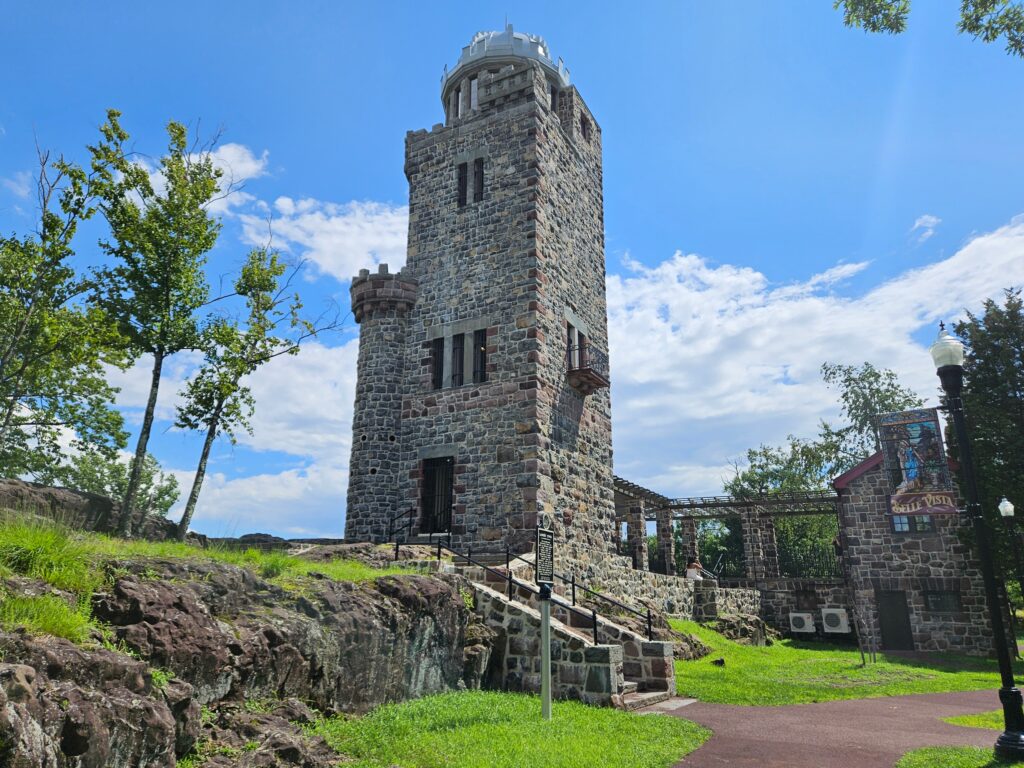
The tower is open to visitors free of charge Wednesday to Sunday, 9:00-5:00. The interior features multiple levels featuring signage, information, and artifacts pertaining to the tower, Garret Mountain, and Passaic County as a whole.
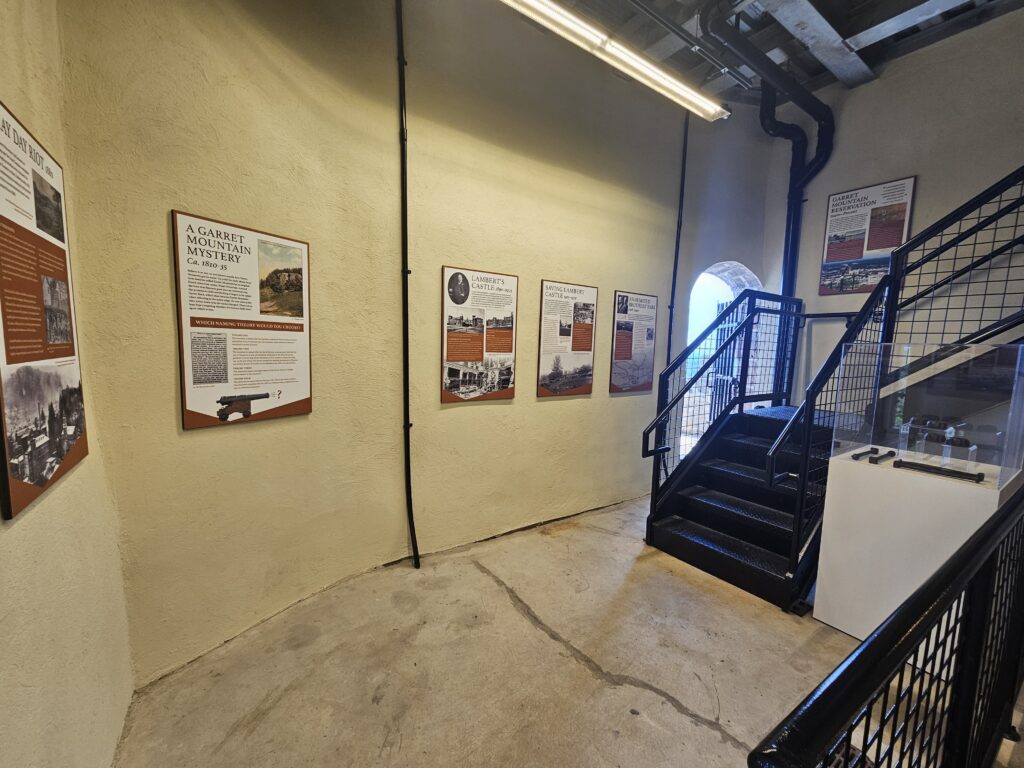
On the climb, there are two small balconies offering views of the cliffs.
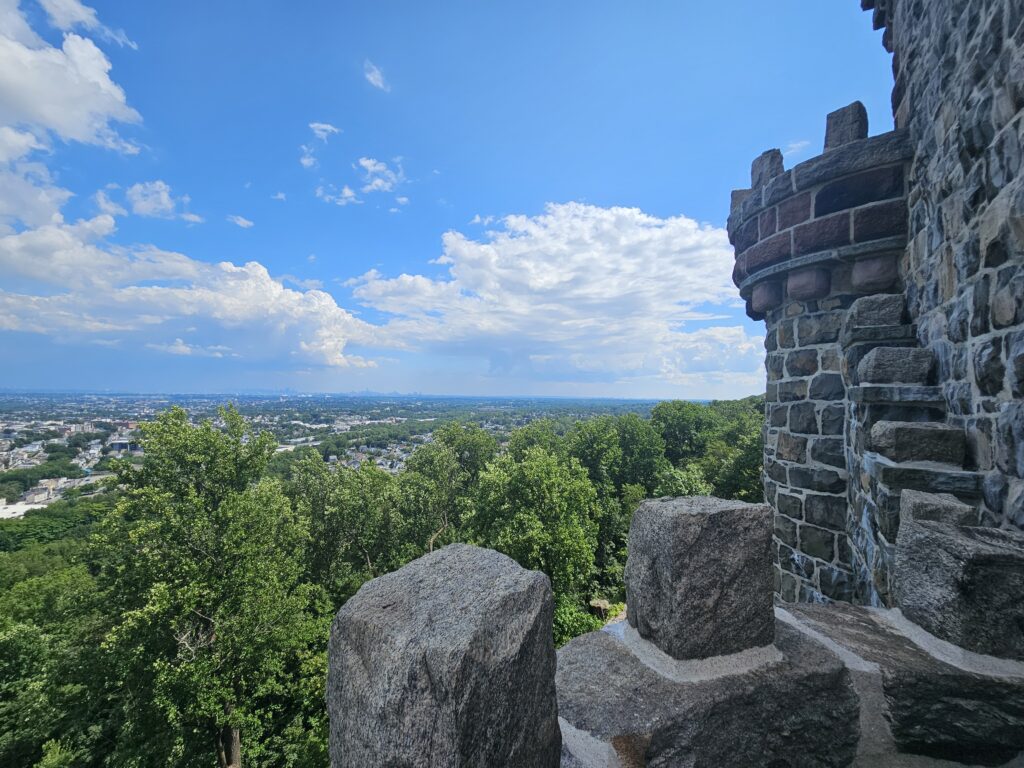
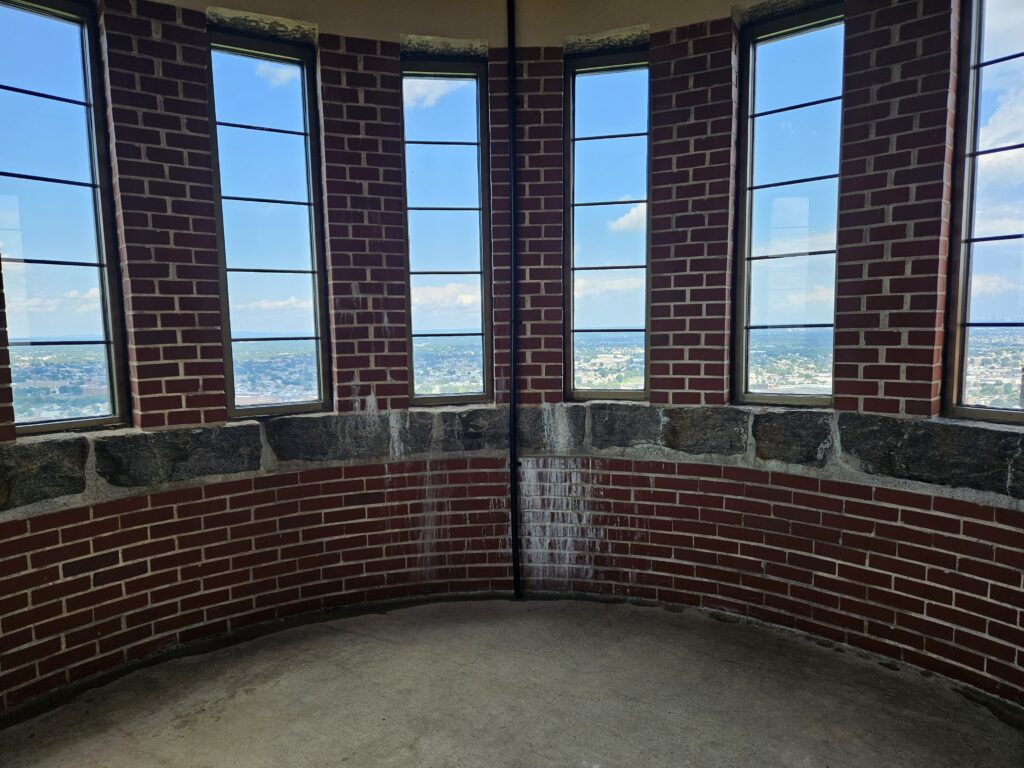
The top of the tower is a small rotunda. It is bare, but there are good views through the clear windows.
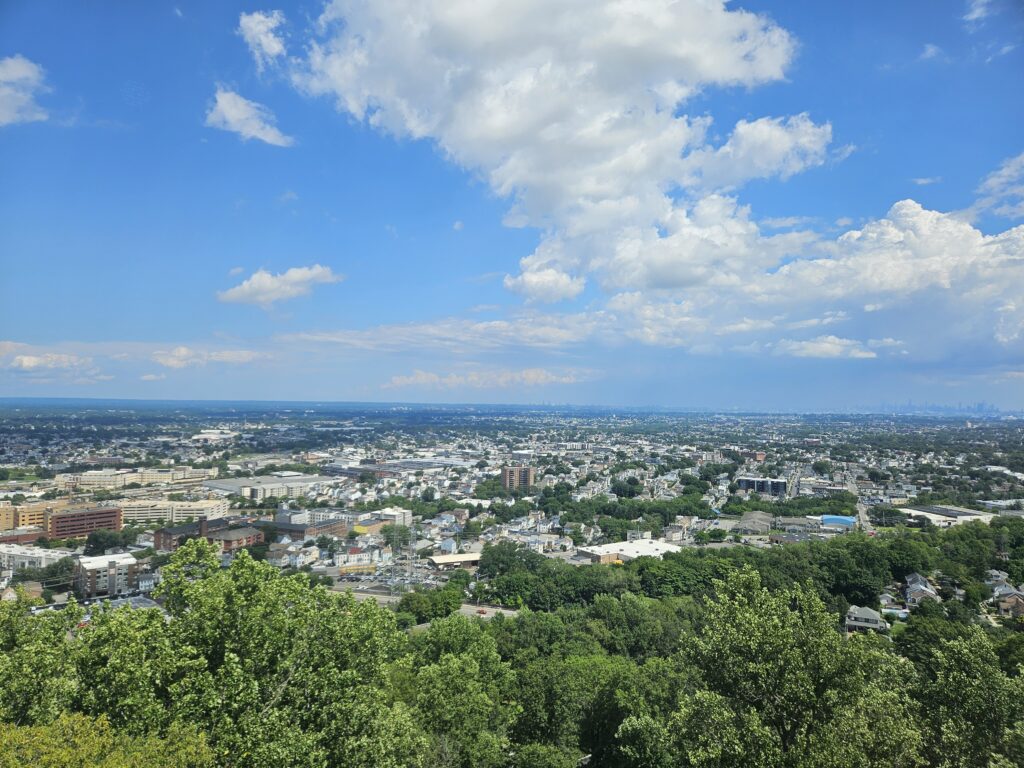
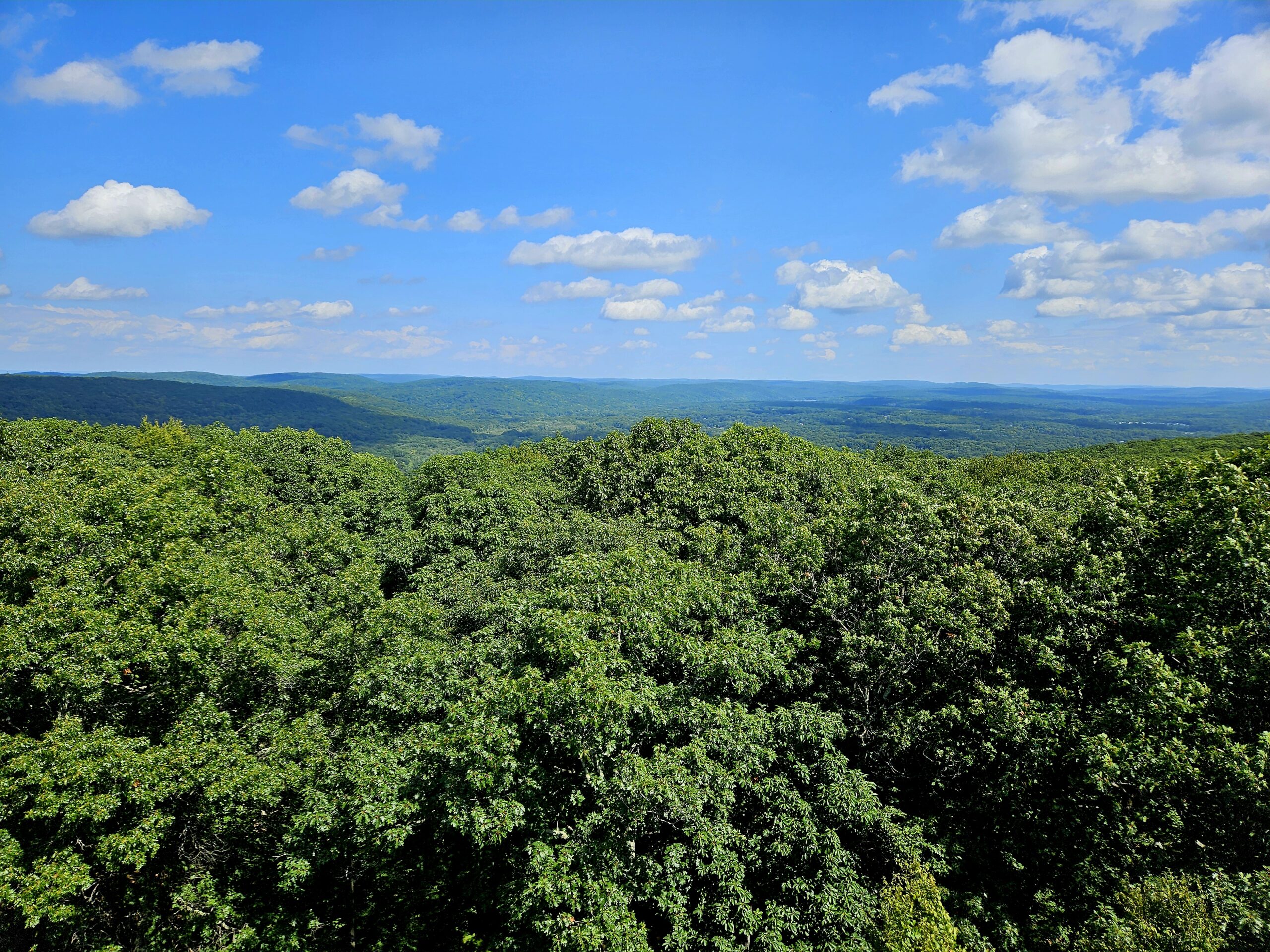
The rotunda features nearly 360-degree views of Passaic County, featuring both the urban areas immediately surrounding the park, as well as the mountainous areas in the distance.
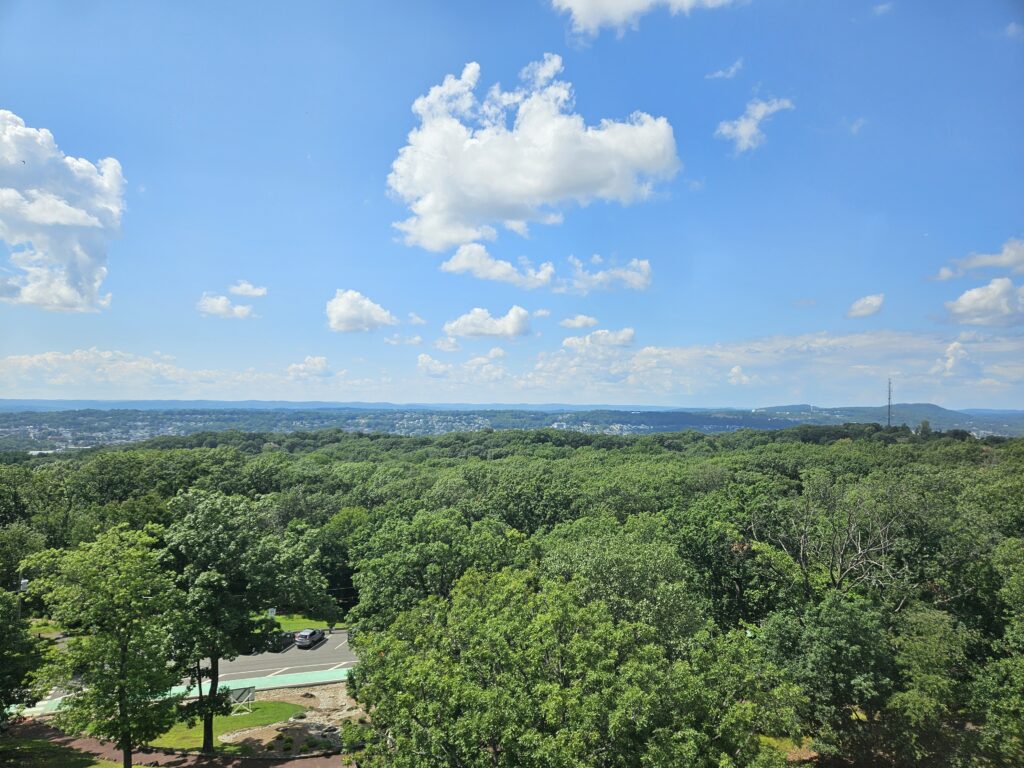
Following the tower, the trail continues to work its way along the cliffs. The trail itself features no views, but there are a few obvious unmarked side trails to some views.
Great Meadow, Overlook and Crows Nest
The trail then reaches the main activity hub of the park. Here, the Yellow Trail passes beside a fitness area and a large playground. Across Park Road from the fitness area and playground is Great Meadow, a large and wide-open field popular for picnicking. The Yellow Trail then reaches the main overlook of the park. This overlook is primarily over the City of Paterson and Interstate 80, although you can see some mountains in the distance and glimpses of New York City if you look to the far right.

If you look to the left, you can see High Mountain, the tallest mountain in the Watchung Mountains.

From the overlook, follow the Yellow Trail to Park Road. The Yellow Trail begins a short road walk to the Crows Nest. Follow the Yellow Trail markings onto the short but steep road off the main Park Road to the Crows Nest area. The Crows Nest is a small stone overlook atop Great Meadow. Unfortunately, the view is obstructed by trees and is not impressive.
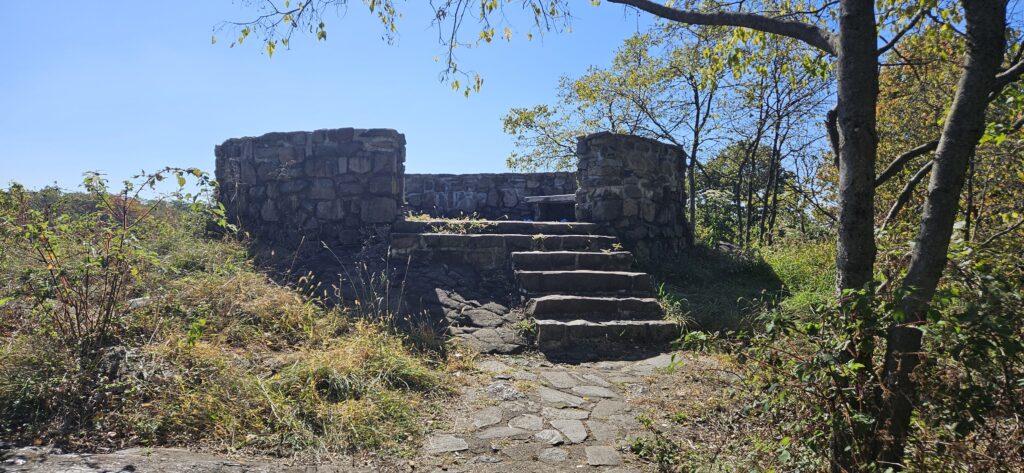
From the Crows Nest, continue to follow the Yellow Trail along a small ridge. The trail weaves through the trees and some boulders and features a few small hills over the next half mile before reaching the park entrance road. The section directly before reaching the road is a short but steep and rocky descent. This is the most challenging part of the hike. Cross the park entrance road once you reach it.
Barbour Pond
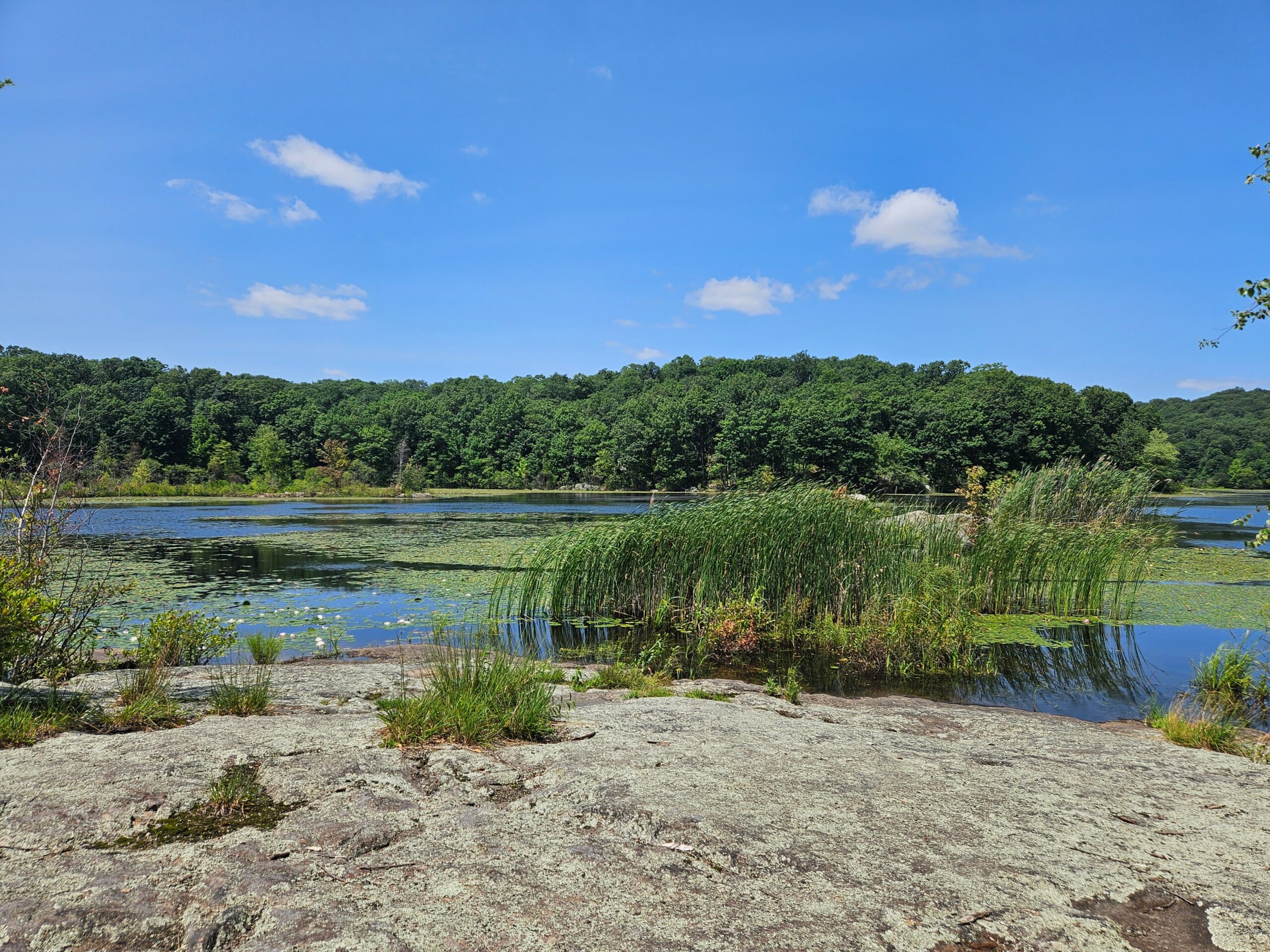
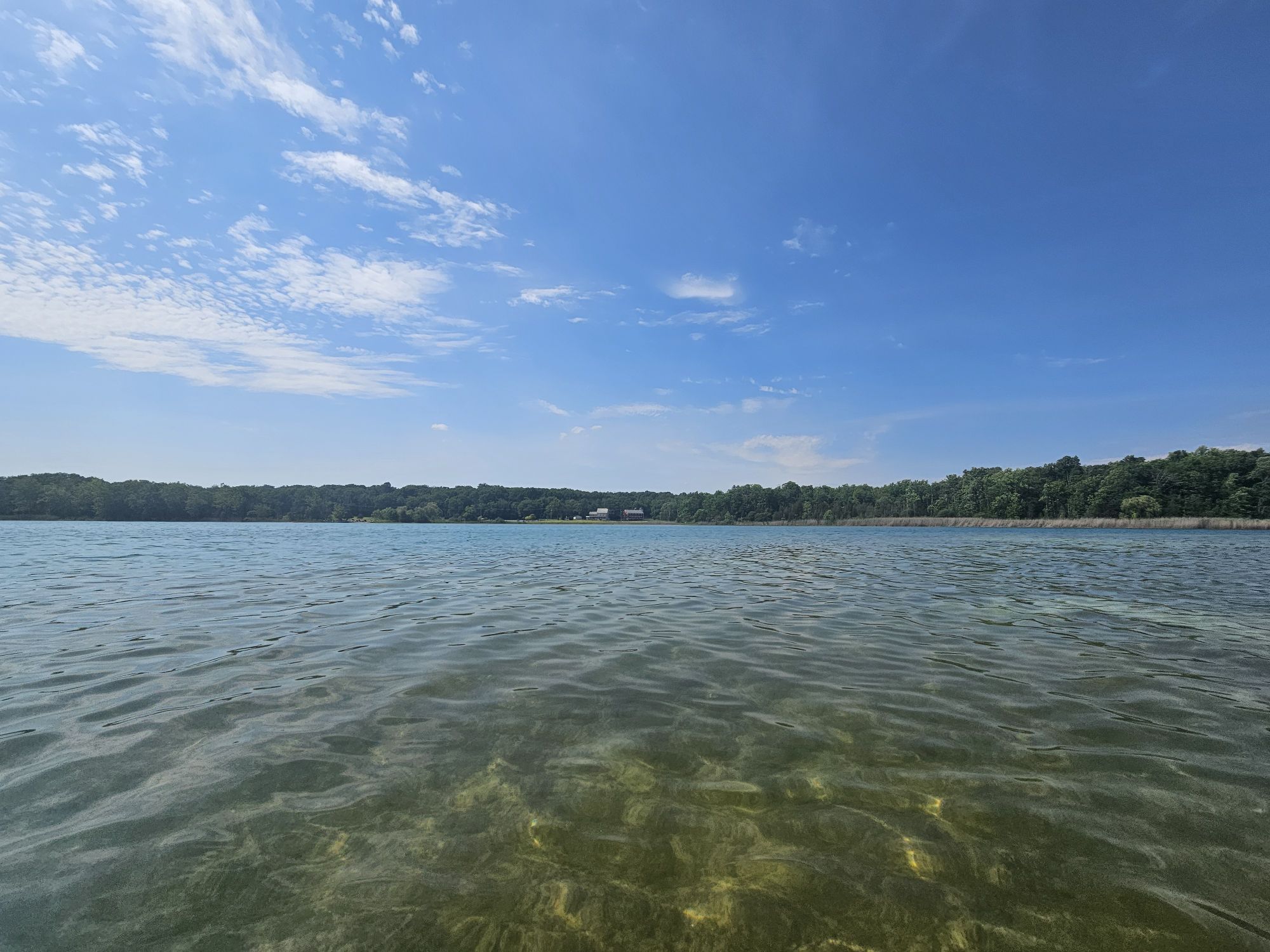
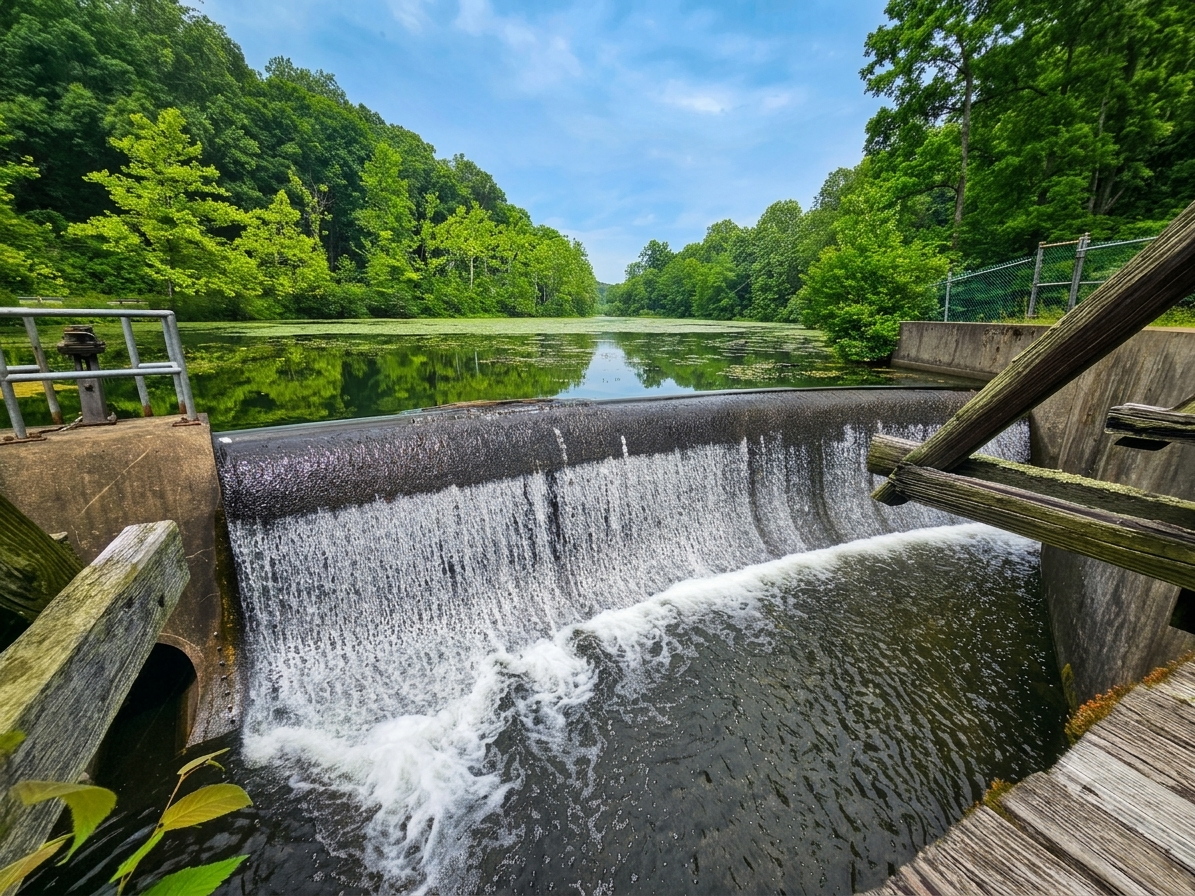
After crossing the road, you will reach one of the most scenic parts of the hike: Barbour Pond. The Yellow Trail only passes by the more interesting eastern shore, but there are trails around the western shore if interested. The pond was dammed in 1879 to be used by mills in Paterson.
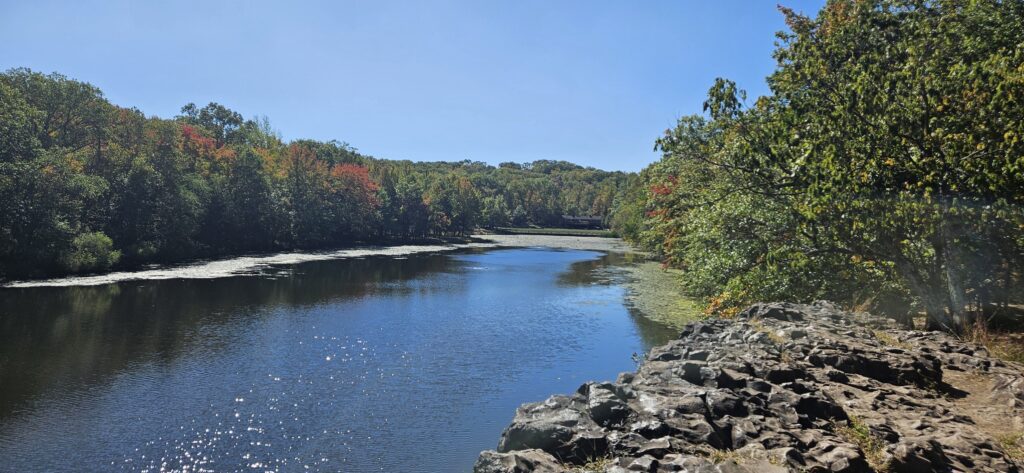
The Yellow Trail here first hugs Mountain Avenue briefly before crossing over a small bridge and the dam spillway. The trail then reaches a clearing with views of the pond. The trail follows the shoreline and begins working its way up a set of small cliffs overlooking the halfway point of the pond. The cliffs provide a clear view of the entire pond and is a popular spot to hang out.
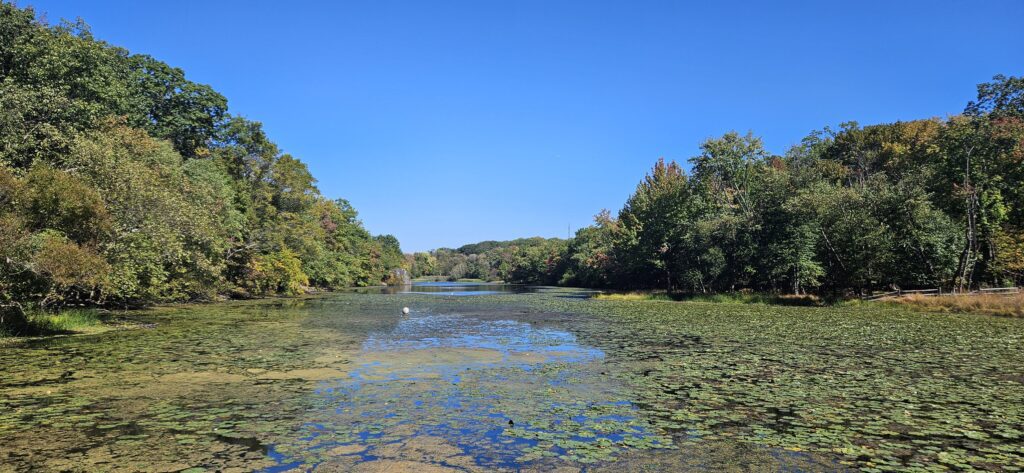
From the cliffs, continue on the Yellow Trail until you reach the boathouse again completing the hike. The boathouse features once last scenic view of Barbour Pond from the field.
GPS Route
Attached is the route as described above for reference. Additionally users can download the route to use on their preferred GPS. How to use the GPS routes on your phone.

Leave a Reply